Imagine that you are sitting on a park bench while your children play in the distance, their laughter a muted soundtrack to the actual object of your attention—the Instagram reels and YouTube shorts scrolling across the screen in your lap. You occasionally glance up from your phone to confirm your children’s safety, divvy out snacks, or kiss a small boo-boo before once again being swept up by the intrigue unfolding on your device. (This likely isn’t too difficult to imagine; if you’re like most parents, it’s a scene that might have been lifted from this very afternoon.)
Now picture the same setting, but instead of sitting on a bench while your children play, you are with them on the playground—climbing up ladders, careening down slides, and gliding on swings alongside your kids as you chase and joke and tease one another. You leave the playground exhausted but grateful for an afternoon spent talking, laughing, and playing together as a family and making memories that will stay with you long after the children are grown.
In both scenarios, you are technically with your kids. You are physically in the same area with your children—aware of their activities and available if a need arises—whether or not you are all playing together on the playground. But only in the second scenario are you genuinely present with your family and engaging with them in a meaningful and memorable way.
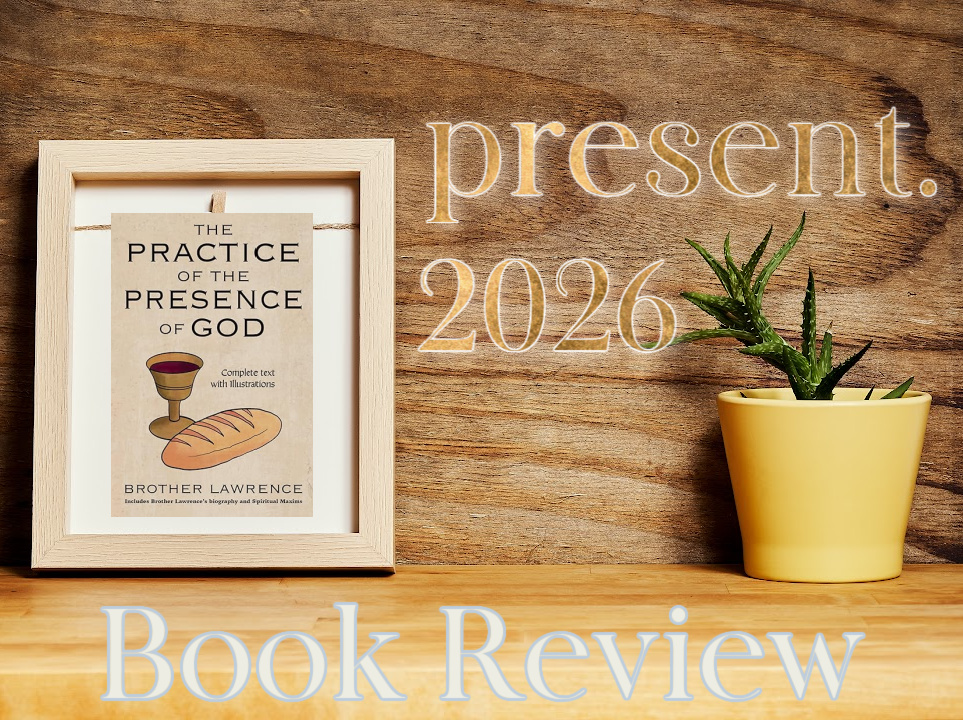
The discrepancies between these two situations is how I envision the disparity between the way that many of us currently engage with God and what our relationship with Him has the potential to become. Most of us are vaguely aware that He is nearby and available when we need Him; few of us are interacting with Him in ways that foster genuine connection. It is this deeper, connected relationship that Brother Lawrence models for us in The Practice of the Presence of God.
Brother Lawrence was a 17th century Catholic friar in Paris. Born Nicolas Herman, he grew up during the Thirty Years War and was forced to join the army as a young man. After a harrowing time as a soldier that involved his captivity by the opposing army and, later, a debilitating injury, he returned home where he spent five years in confusion and uncertainty before pursuing a full-time religious life. His primary assignments in his Parisian religious community were serving in the kitchen and, later, repairing shoes. Despite his lowly position, Brother Lawrence modeled a deep connection to God; his character was known to many, and he attracted numerous visitors who wanted to learn from this man of profound peace and sincere faith.
The Practice of the Presence of God is a compilation of Brother Lawrence’s letters as well as records of his conversations kept by Brother Lawrence’s interlocutors. My version of the text also includes hand-drawn illustrations, Lawrence’s complete set of Spiritual Maxims, a timeline of significant events in his life, and his personal biography. These varied writings form a composite portrait of a man whose central message was that we should strive to exist in a perpetual awareness of God’s presence and abide in communion with Him all day long.
After I chose Present as my One Word for 2026, I began searching for books that would relate to my theme, and this book topped every list. It’s remarkable that a humble monk who lived more than three centuries in the past would be viewed by so many as the most authoritative voice speaking into the practice of pursuing God’s presence. Brother Lawrence was never formally recognized as a saint, but he is known as a spiritual giant whose advice on the spiritual life was sought by a steady stream of individuals from both within the church and outside of it. “Brother Lawrence avoided theological quagmires and focused on God Himself as the beginning, middle, and end of the spiritual life. . . . Lawrence’s heart burned to know God—not as an idea, but as a present reality.”
Much of Brother Lawrence’s mission in life can be summarized by two passages from the book’s First Conversation:
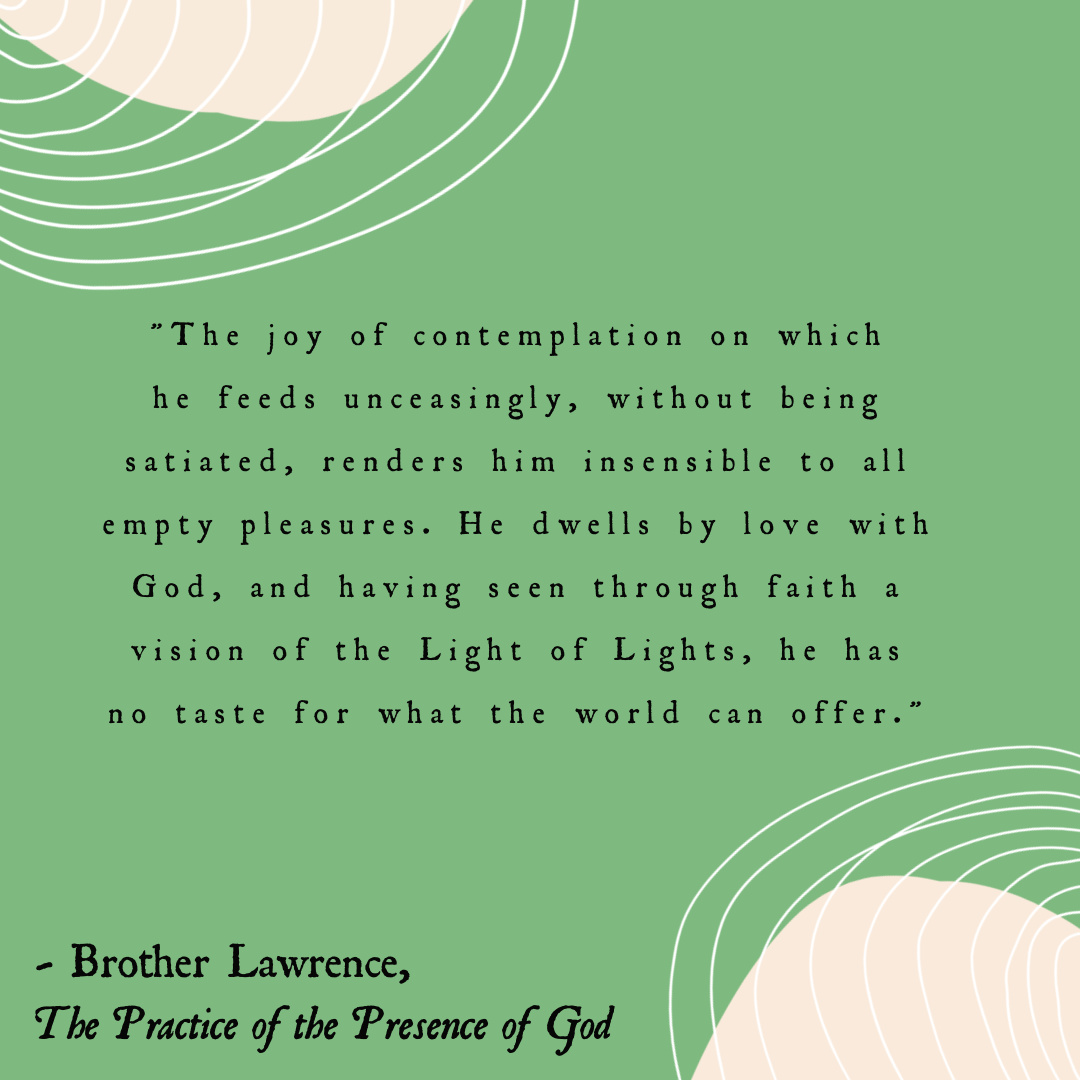
“That we should establish ourselves in a sense of God’s presence, by continually conversing with Him. That it was a shameful thing to quit His conversation to think of trifles and fooleries. That we should feed and nourish our souls with high notions of God; which would yield us great joy in being devoted to Him.”
“That we ought to give ourselves up to God, with regard both to things temporal and spiritual, and seek our satisfaction only in the fulfilling of His will, whether he lead us by suffering or by consolation, for all would lie equal to a soul truly surrendered.”
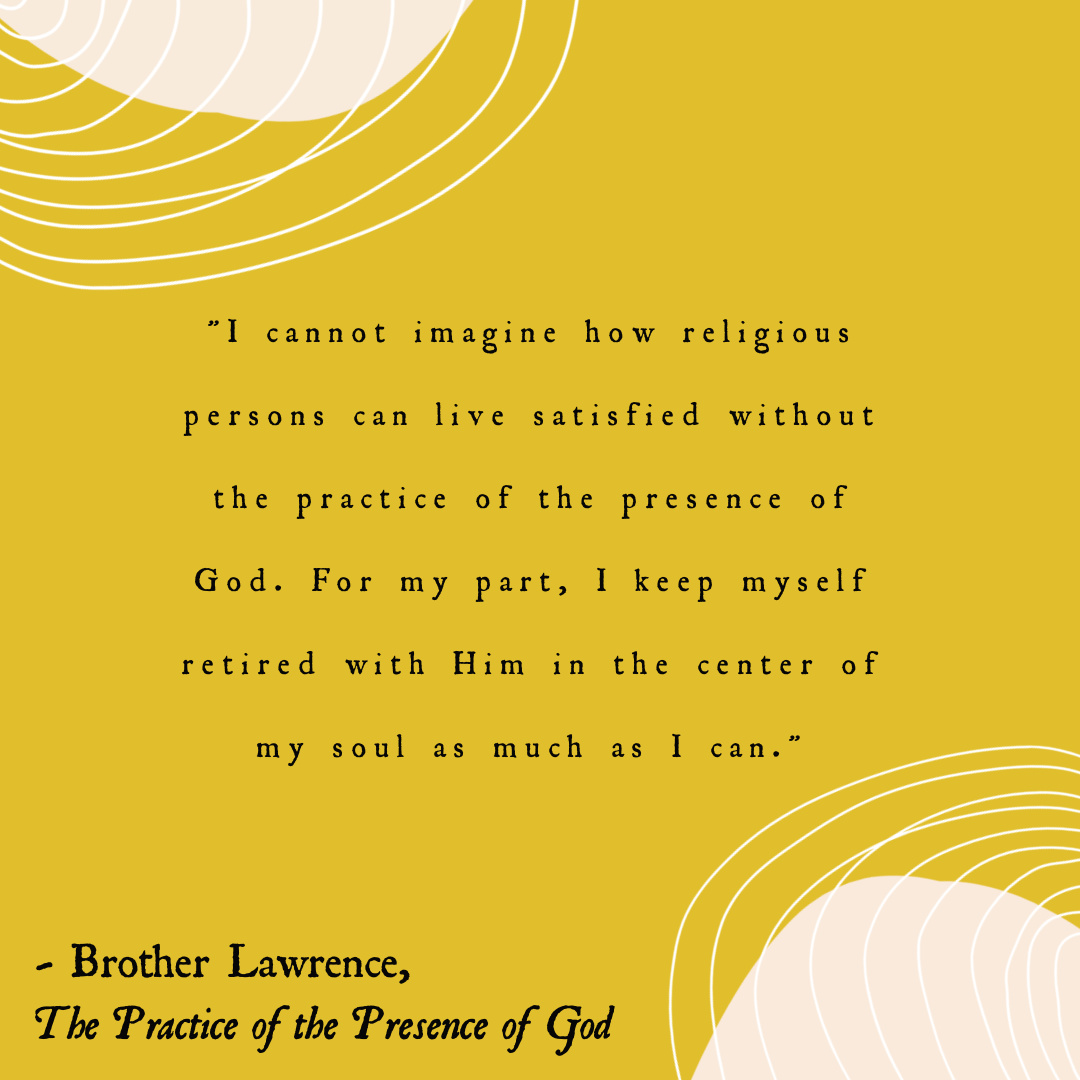
Through his writings and his interactions, Brother Lawrence paints a beautiful picture of what it looks like to pray unceasingly, devoting every word, thought, moment of suffering, and act of labor to the Lord.
While this brief book is filled with poignant spiritual gems, I have to acknowledge a few personal qualms with the content. I was uncomfortable with Brother Lawrence’s murky grasp of theology as well as the mystical undertones of his message. There are no Scripture references in the book and no evidence that Brother Lawrence truly understood and embraced the Gospel; instead of mercy and grace, we see references to paying penance and purgatory. I admire Brother Lawrence’s genuine devotion to God, but fear that He did not have a complete understanding of the Object of his worship.
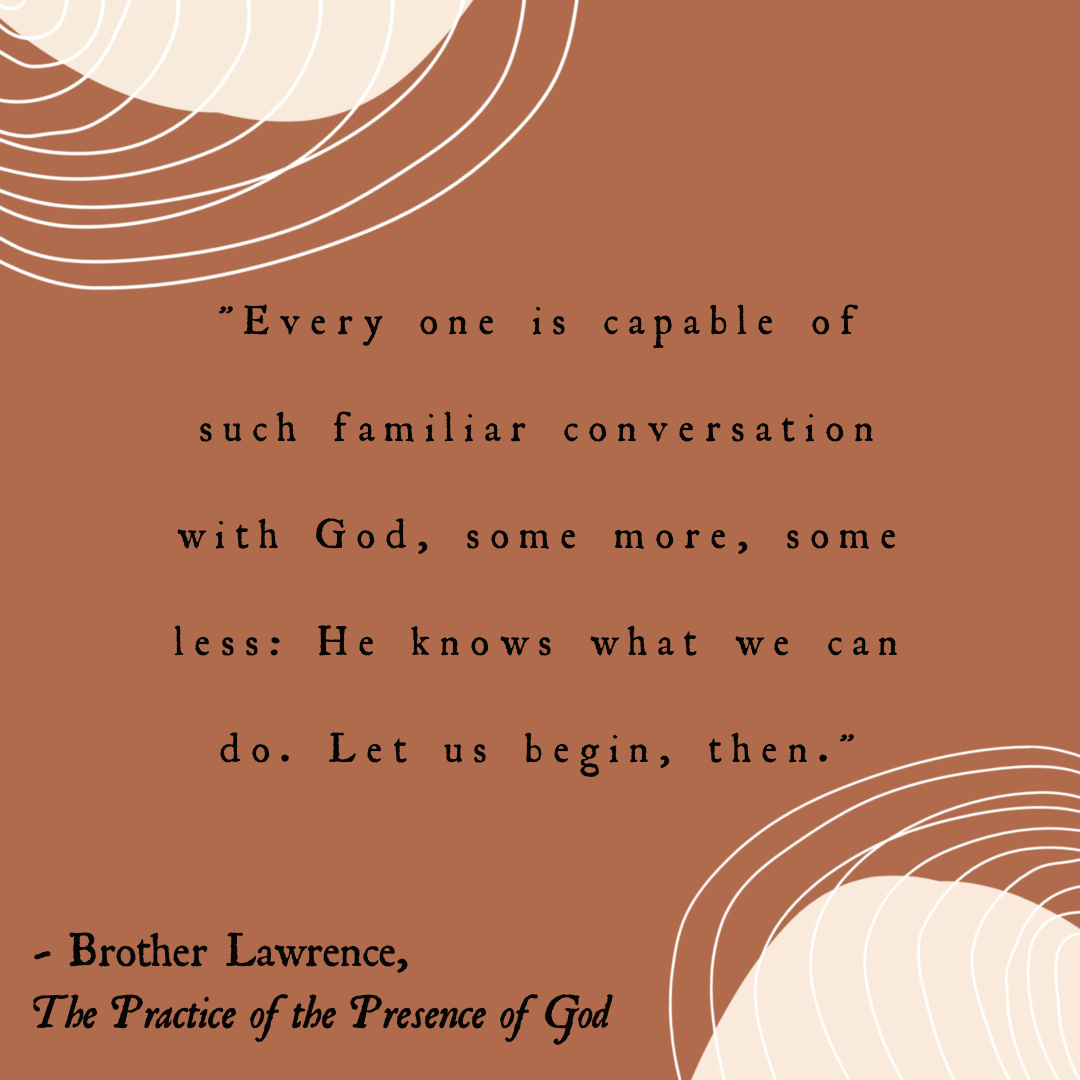
In spite of the book’s shortcomings, I came away feeling inspired by Brother Lawrence’s obvious love for the Lord and his desire to commit to Him in every way. I appreciated his thirst for knowledge about God, and his understanding of how our love for Him is enhanced by such knowledge: “Let all our employment be to know God: the more one knows Him, the more one desires to know Him. And as knowledge is commonly the measure of love, the deeper and more extensive our knowledge shall be, the greater will be our love.” His methods for practicing God’s presence are simple and straightforward (if not easy), and his life and its impact speak to the benefits of enhanced faith, strengthened hope, and deepened knowledge of God.
Walking in the footsteps of Jesus, who modeled a simple life guided by a vibrant prayer life and ceaseless devotion to the Father, Brother Lawrence offers inspiration and guidance for those of us who also desire to perpetually rest in His presence and seek Him above all else.