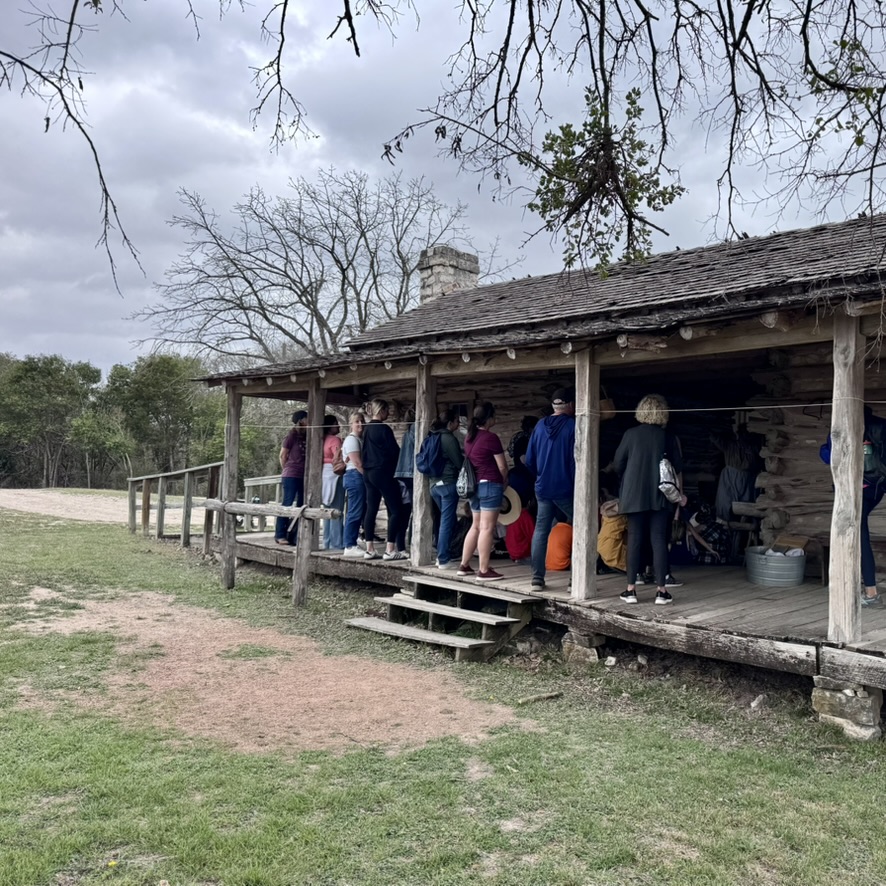
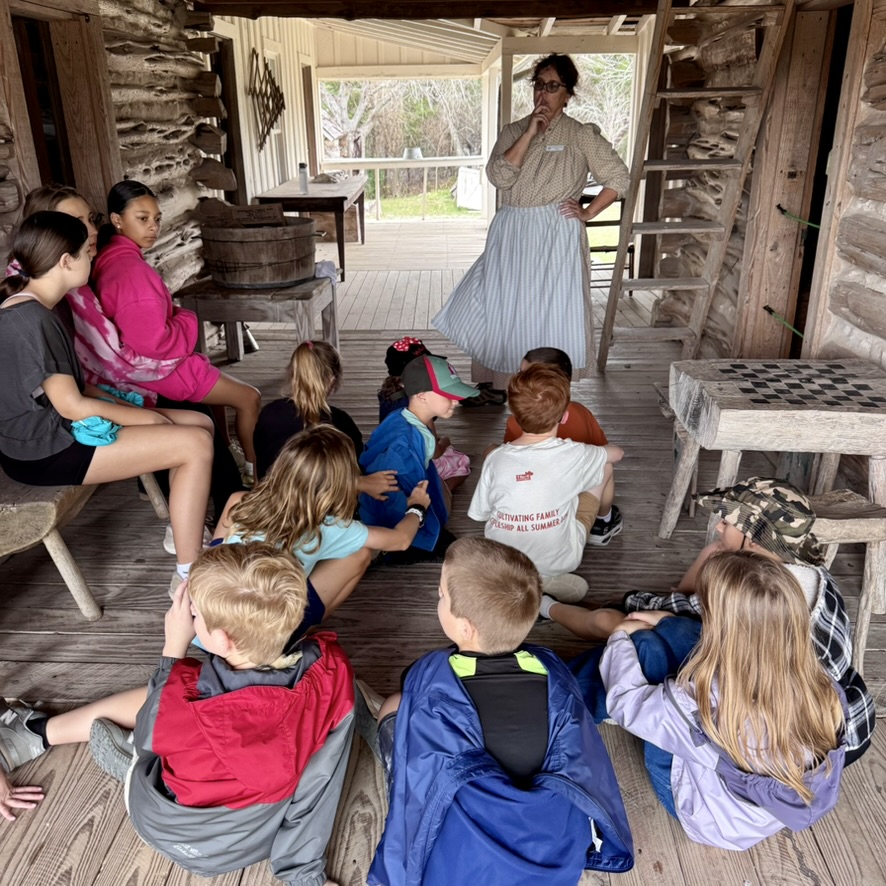
Our field trip group gathered on the rough-hewn porch of the 1850s homestead, kids sprawled across the stairs with moms huddled behind them to hear the presentation. Our guide, who looked as though she was visiting from the set of Little House on the Prairie, asked the children to guess how many people had lived in this one-bedroom cabin. Four? Six? Nobody came close to guessing the actual number: fourteen people—twelve kids, along with their parents—had made this tiny space their home. The guide pointed to the primitive loft that had housed the daughters, the back porch where the boys slept, the single wooden bed frame draped with a patchwork quilt.
The quarters of this pioneering family would have been cramped for a family a fraction of the size, but as we learned more about their way of life, it became clear that every set of hands was needed to keep this homestead running. Under the shade of the porch, we were shown the washboard where the women scrubbed clothing with water hauled from a nearby creek. We stepped down into the coolness of an adjacent cellar that once held food harvested from the 2,000-acre farm. Holding our noses, we peeked into the shed where the livestock were butchered.
The barn that was home to donkeys and chickens felt familiar to these Texas-raised kids, but the “modern” cookstove (an extravagance when added in the 1880s) was unlike any of the appliances in their own kitchens. Other parts of the farm were also foreign to us, like the sewing rooms where women of the family pieced together every stitch of clothing that they owned, and the primitive outhouses set away from the home. From the rustic kitchens to the hand-sawed cedar fencing surrounding the barn, each component of this homestead offered a glimpse at the tremendous work involved in the day-to-day life of a pioneer family.
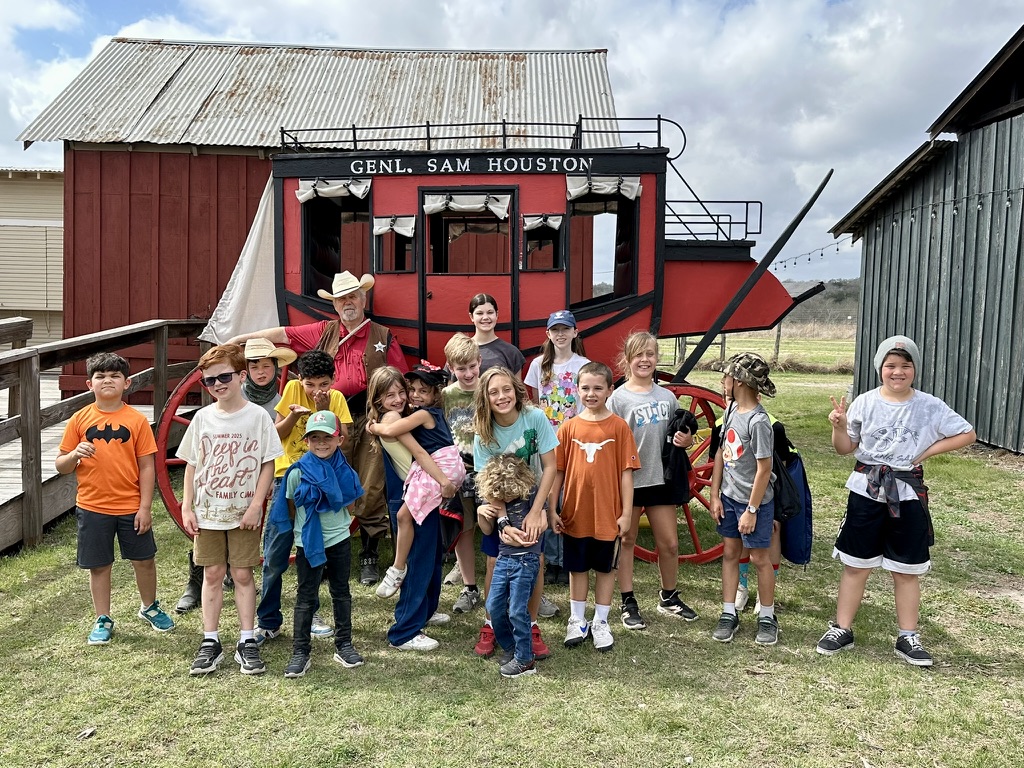
Later in our tour we walked through a stagecoach stop where a pigeonhole mailbox was tucked into a corner. I marveled aloud about the pioneers who would have made the daily trek to this stop in hopes of receiving a letter bringing news from family across the country.
“No, that’s not right,” the volunteer in period dressed corrected me. “They wouldn’t have come each day, the mail was only delivered once per week at the most.”
Once per week! These pioneers would not have had contact with anyone from “the outside world”—no news, no visitors, no letters—more than once each week! And here I am in the modern world, getting frustrated when a text message goes unanswered for longer than a minute or my internet browser takes more than a second or two to load a website.
Our day exploring Pioneer Farm left me with a deep appreciation for the comfortable, privileged life I am experiencing in 21st century America. I have a machine that washes clothes that I purchased from a store—a store that I didn’t even have to visit, because the items were delivered directly to my doorstep twelve hours after I hit “Purchase” from the Amazon app on my phone. My home is overflowing with what Laura Ingalls Wilder would call “boughten” furniture, toys, and decor. I have a refrigerator filled with vegetables I did not grow and meat I did not slaughter and milk I did not obtain from my own cow; rather, that food that was packed into the trunk of my van by a grocery store employee whose job it is to do the hard manual labor of pulling food from store shelves on my behalf. I get to shower and pee and wash my dishes from within the comfort of my own home with no concern for gathering water or disposing of waste.
Unlike the Texan pioneers of 150 years ago, who waited a week to ride or walk into town to gather letters from distant relatives, I can text message or Facetime my cross-country family at any time. I get news updates on events happening across the globe mere seconds after they have taken place. I never want for entertainment, thanks to the hundreds of books on my shelves and dozens of games in my playroom closet and the infinite number of movies and podcasts I can stream from my phone at any time. Pain is easily fixed with the pop of a pill from my medicine cabinet or a trip to the doctor; temperature discomfort is never a concern thanks to the air conditioning and heating that I can control from my mobile device. I don’t have to worry about my children getting attacked by wild animals while working the fields because I can monitor their every move from the security cameras in our yard.
The life of a pioneering family in the mid-1800s was difficult; I won’t sugarcoat that. But as we toured rustic cabins and meandered across fields and played games in an old wooden dance hall, I could not help but consider the things these people had that we don’t. What has been lost as technologies have advanced and our lives have gotten easier? A healthy work ethic for one. An understanding of the labor that goes into making clothing, keeping food on a table, tending a home. Patience and stillness born from a slower pace of life, an ability to survive without a constant stream of distractions and entertainment, a tolerance for discomfort and physical pain and the dirt and grime of everyday life on a farm. We have traded a physically demanding existence for lives marked by ease and convenience, but also anxiety and overwhelming excess and bloodthirsty materialism.
During our brief time at the farm, away from many of the distractions of modern life (never mind the phone in my hand that I used to snap pictures!), it felt easier to connect with the REAL world, the things I could feel and taste and see. I was more attuned to the conversations and interactions taking place around me. Even in a crowd of people, I sensed that this old-fashioned way of life would be an easier time and place to truly sense the presence of God.
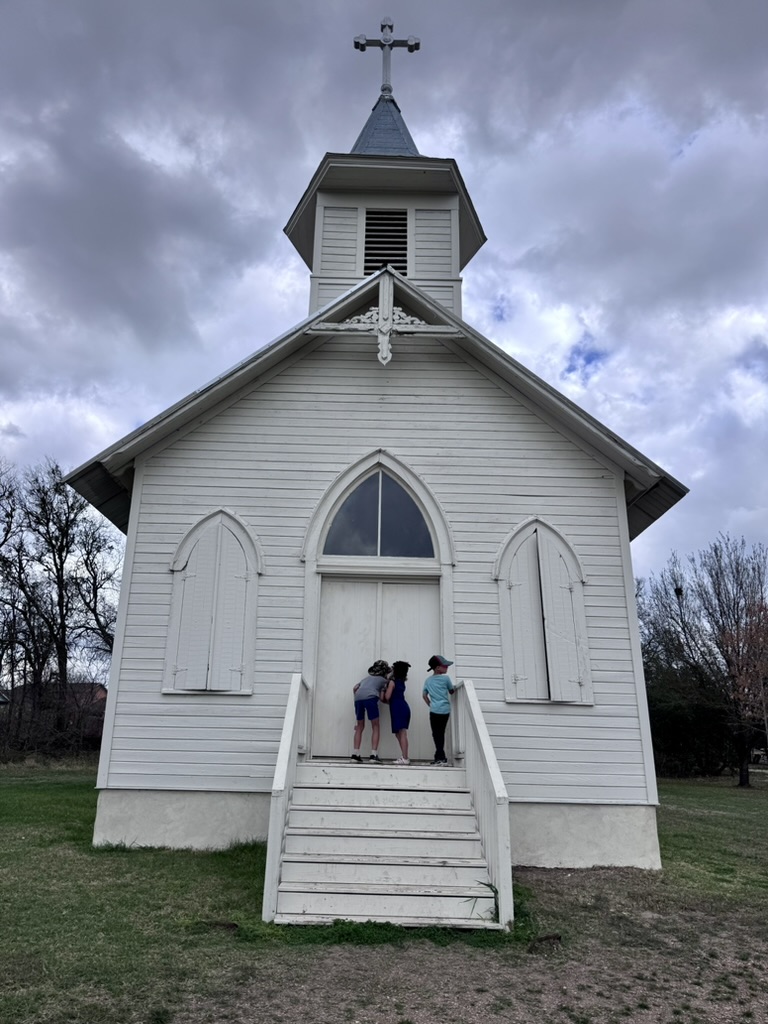
The Lord is not limited by our surroundings; He was no more present with the 19th-century Texan pioneers than He is with us 21st-century city-dwellers. But the fast-paced, distraction-heavy, material-obsessed culture of today is certainly not conducive to recognizing, celebrating, and spending time in the presence of our Creator. Our total reliance on the Lord’s provision has been replaced with the ability to order a meal or visit a medical specialist or ask AI to answer our questions. We are still in desperate need of God, but we have forgotten that need in our ability to temporarily fend for ourselves. I do not think that the difficulties of the past rendered previous generations inherently superior or holier than us today. But we would be foolish to think that there haven’t been casualties of modern advances, and a recognition of our need for God—a need that is just as real today as ever before—ranks high on that list of what has been lost.
There is so much value to being genuine students of history, noting where we have come from and how we have gotten here, acknowledging the benefits and also the cost of this trajectory. I would never want to view the past through rose-colored glasses or pine for a time period that God, in His infinite wisdom, did not designate for me; but I do want to live open-eyed to the realities of my own time, celebrating the benefits of my God-ordained place in history and recognizing its inherent stumbling blocks to leading a life marked by God’s goodness, beauty, and truth.