There were some interesting themes to my reading this month: three books by British authors; two stories of family members who have gone missing; a couple of family dramas; two novels with veterinarians at their center; a few protagonists consumed by a desire for children. And then there was my nonfiction: three books without many overlapping themes, but all of which were worth the read. Without further intro, let’s get to the reviews.
NONFICTION
Resisting Therapy Culture: The Dangers of Pop Psychology and How the Church Can Respond, Matthew Loftus—Therapy can be amazing, as I know personally thanks to years sitting across from therapists who have helped me work through various hangups and challenges. But when therapeutic language and ideas begin to dominate a culture, things can get dicy: concepts get misapplied or abused as perfectly normal experiences are medicalized; genuine medical diagnoses lose their significance; individuals gauge activities based solely on how they will affect their mental health; and the lines between health and disfunction grow blurry. In recent years, the secular issue of over-pathologizing has seeped its way into the church, leading to misplaced expectations of Christians who demand that church leadership caters to their (mis)diagnoses and meets their myriad psychological needs.
In this book, Matthew Loftus (a practicing family doctor, medical missionary, and Christian writer) exposes the confusion and disorder of therapy culture that leads us away from God and genuine healing. After explaining the problems of therapy culture and the history of its intersection with church and faith, Loftus explores specific areas such as learning to distinguish between mental health and sin patterns; the science of attachment parenting and inherited behavior; the nature of trauma (and how that word has lost nearly all meaning due to over-application); the complexities of addiction; and how to find true healing and purpose in the midst of severe mental health struggles.
Loftus honors the God-given gifts of modern psychology and psychiatry while also pointing out where they fall short and how they can be misunderstood and misapplied. He offers insights into the interplay between therapy and church, showing where they can work in conjunction with one another and when they need to be in separate lanes, and he helps church leaders to focus on what they do best while leaving some things to the psychiatric experts.
I appreciate everything about Loftus’s message that redirects well-intentioned faith leaders to teach the Gospel, setting aside trendy but ultimately unhelpful psychobabble. I was glad that he didn’t diminish mental health issues or the merits of quality therapy (he admits to being in treatment for chronic depression), while also recognizing how these labels have been abused. His writing style is warm but direct, and he offers a good balance of science and scripture.
I would not recommend the audio format and am certain I would have enjoyed this more if not for the audiobook narrator’s news anchor delivery. But in any other format, this is a timely and helpful read for church leadership or anyone who has wondered how faith and psychology can work together and when they are best kept separate. This is a great (Christian) companion to Abigail Shrier’s Bad Therapy, another must-read.
My Rating: 4 Stars // Book Format: Audiobook
Hidden History of Walt Disney World, by Foxx Nolte—I’ve never been to Walt Disney World, but I grew up going to Disneyland almost every week, and I’ve done enough “research” about the differences between the two parks to make me FEEL as though it’s my home away from home. It’s no surprise, then, that I loved this behind-the-scenes look at a place I am certain I’d love.
Told in a folksy, conversational tone, this fun book doesn’t aim to offer a comprehensive history of the park. Instead, the author offers snapshots of the park’s history—from origin story to modern details—to provide a broad picture of how the park got started and how it’s grown into what it is today. We learn about Disney’s vision and the Florida politics he navigated to see his ideas realized; look at which dreams were realized and which failed; and see how the practices and details of the park have evolved with time while the magic has remained. Nolte does an excellent job of bringing the Florida geography into the narrative, reminding us of WHICH Disney park we are exploring while also preserving the Disney details that would be of interest to any Disney enthusiast (including those of us who have never stepped foot in The Magic Kingdom).
While I enjoyed the book’s vignette style, I would have happily listened to a more expansive history, but this definitely piqued my interest in learning even more about the Disney parks and company.
My Rating: 4 Stars // Book Format: Audiobook
Big Time: A Simple Path to Time Abundance, by Laura Vanderkam—If you’re anything like me, you are far too familiar with the scarcity of time: mornings are rushed, evenings are a blur, kids are growing up far too fast, there’s never enough time to tackle those big projects or to take up a new hobby. . . But in Big Time, productivity expert Laura Vanderkam argues that time is NOT scarce, and she shows us booth WHY this is true and how we can maximize the time we DO have in order to embrace an abundance mentality around time.
Drawing on research from hundreds of individuals, as well as her own decade of tracking her time, Vanderkam shows us how to find hidden pockets of time within our day and how this discovered time can help us to feel more hopeful about the time we DO have.
This book feels different than most productivity books: while we do get some ideas for productivity (such as breaking large tasks into manageable chunks and keeping meticulous records of how we spend our time), this book is much more about our mindset around time. Vanderkam shows us that when we feel confident in how much time we have, we will optimize these extra hours which in turn helps us to feel better about our time and find greater satisfaction in the time we spend at work, in leisure activities, and in taking on endeavors that we never thought we would have the time to do.
Even though I’ve kept loose records of my time for all of my adult life, I’m still not great at managing my time and I struggle with satisfaction around time that I have, so Vanderkam’s words and ideas were definitely messages that I needed to hear. A few favorite takeaways were: 1) the idea of taking on a long-term project, and how succeeding in something big proves to ourselves that we DO have time for big and important things; 2) the definition of patience as “generosity of time;” and 3) leaving some margin in my schedule so that I can be more open to serendipity.
This is the type of book that would be good to revisit periodically. I’m so glad that I read this and will be carrying its principles into my future as I endeavor to embrace a more optimistic attitude and approach to my time.
My Rating: 4.5 Stars (Rounded to 4 Stars on Goodreads) // Book Format: Audiobook
FICTION
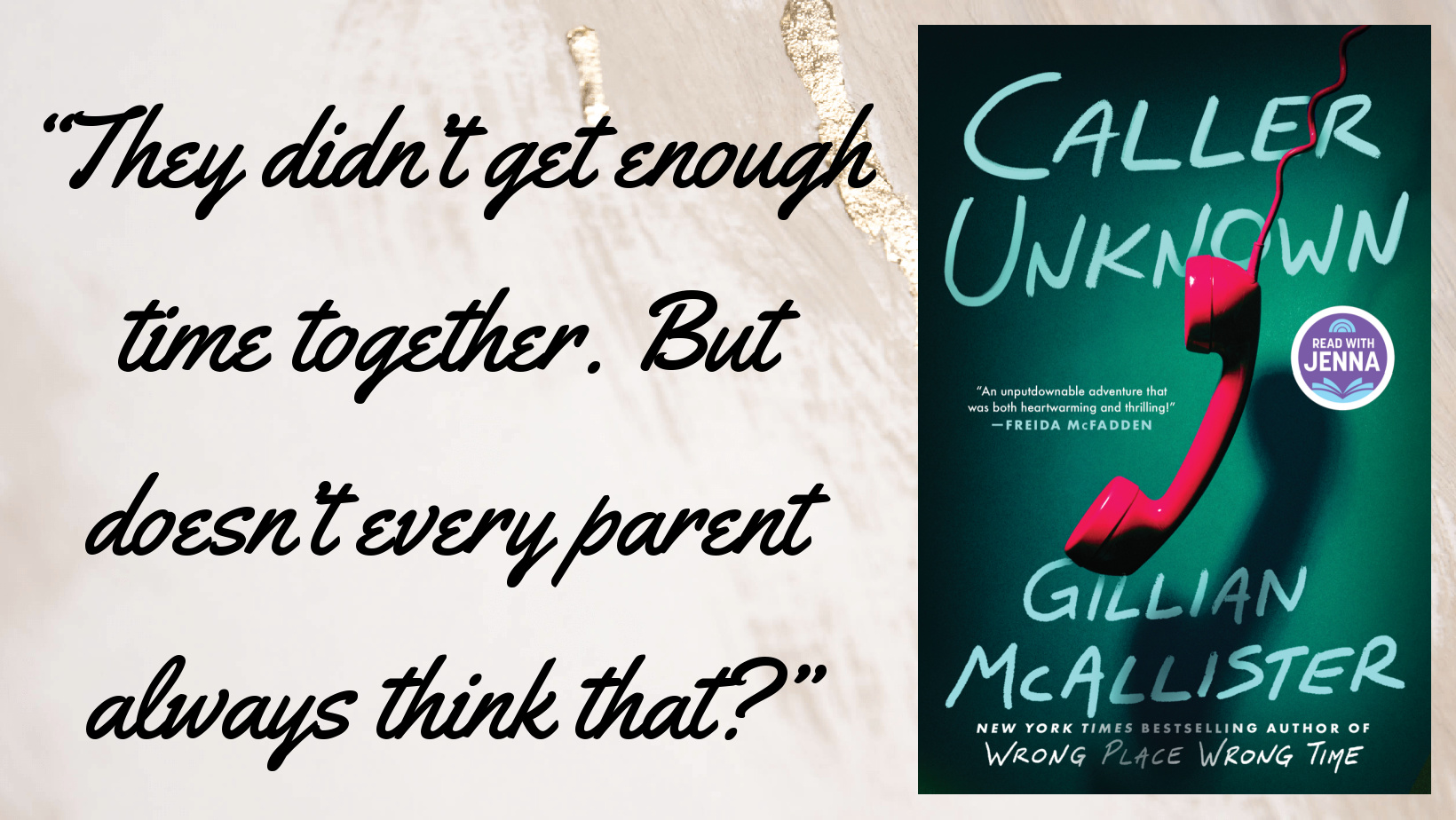
Caller Unknown, by Gillian McAllister—Renowned chef Simone is looking forward to spending some quality time with her daughter, Lucy, on a camping trip through the Texas desert before Lucy heads off to university. But when Simone wakes up after their first night in a Texas rental cabin, she discovers that Lucy has been kidnapped. In Lucy’s place is a cell phone with a message instructing Simone on what she needs to do if she ever hopes to see her daughter again. Driven by her desperate love for Lucy, Simone complies, leading to a series of events that she never could have imagined.
I have read two of this author’s previous books, and both landed spots on my end-of-year favorites lists, so I was surprised and seriously saddened to be disappointed by this one. While I did appreciate (and resonate) with the intense mother/daughter love story and depiction of a mother grappling with emotions around seeing her daughter grow up, the emotional aspects couldn’t carry the flattened characters or thin plot. Reading this, it felt like the author had a great idea for a book but then forgot to actually see that idea to fruition. The tension relies on gimmicky chapter cliffhangers, predictable tropes, and characters making terrible decisions and acting entirely unrealistically. And the clever twists come too late in the story, wrapping up tidily just as soon as they are revealed. I like the end but it was small payout for a drawn-out lead up; a thriller really shouldn’t drag like this.
Two other hangups with the book: the first was the regular referencing to the “recent” pandemic and lockdowns, even though this book was released just this year (though I wonder if it might have been published earlier in the UK?). I was also annoyed that the author has CLEARLY never visited Texas (the book’s setting); if she had, she would know that we Texans do not greet one another with “howdy” and that August nights in the Texas desert never reach the chilly temps she describes.
My Rating: 3 Stars // Book Format: Kindle
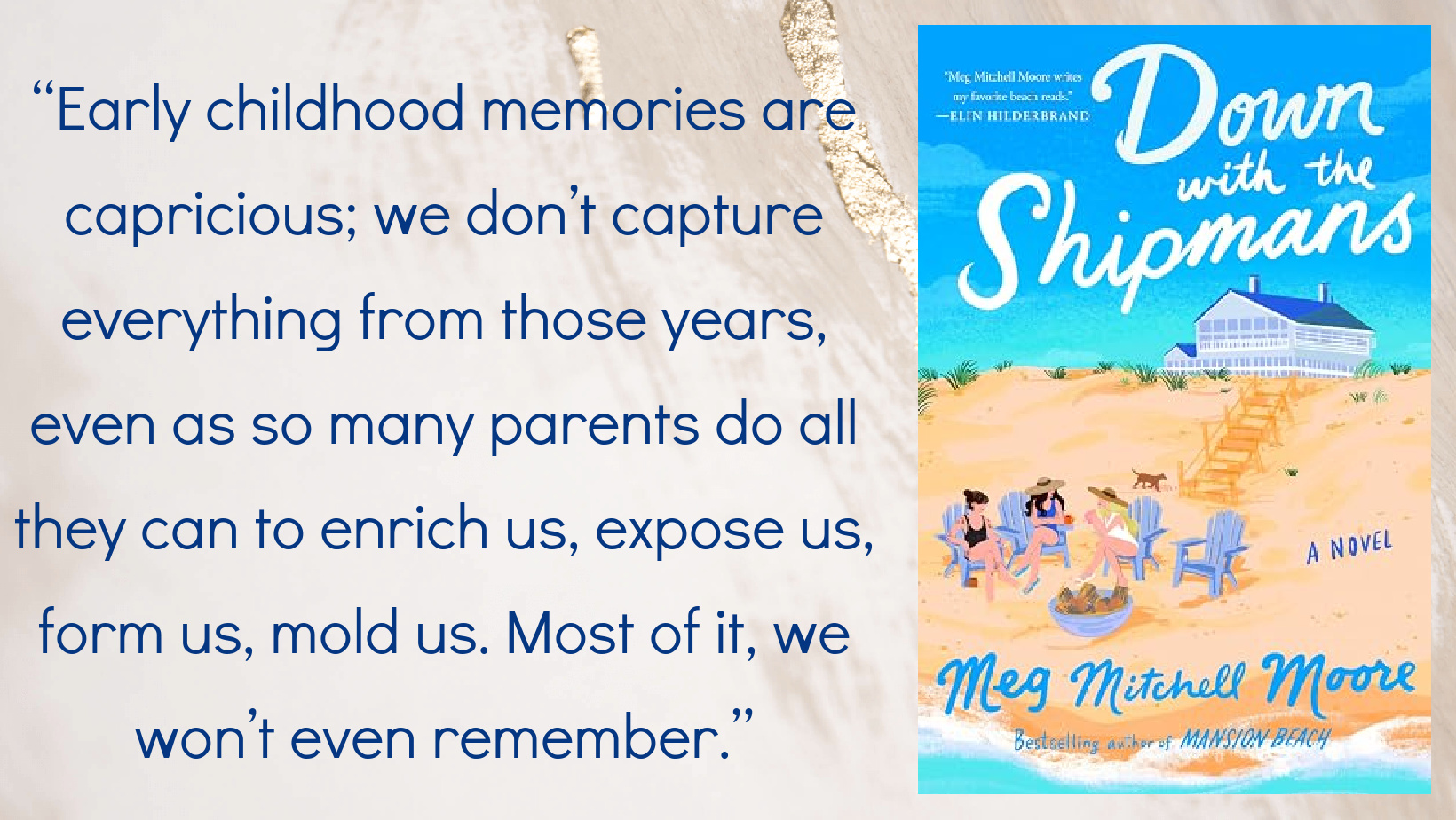
Down with the Shipmans, by Meg Mitchell Moore—The three Shipman daughters have wonderful memories of childhood summers at their home on the New Hampshire coast. Though they haven’t returned since losing their mother to cancer two years ago, they agree to their father’s request for a spontaneous family reunion the week after July 4th. It isn’t a great time for any of them: middle child Natalie, a tradwife influencer, is facing a publicity crisis following a negative writeup of life on the dairy farm; Mae, the baby, is unexpectedly homeless and jobless save a temporary gig training the rescue dog that is along for the trip; and oldest daughter Jordan is a crisis management expert who is now managing a work crisis of her own.
When the girls unite at the beach, their immediate concerns are set aside when their father presents them with yet another bombshell: he plans to sell their beloved home, and he needs their help in preparing it for sale. As the family begins packing up the house, they must confront old wounds and new resentments as they grapple with grief over the loss—not just of their home, but also their mom, and the comfortable family life they once shared.
This one definitely wasn’t a favorite for me. While I love a beach setting and family reunion trope, and like that this was about a family that actually seemed to like each other (unlike many family dramas), this one felt a little TOO familiar (read: unoriginal). The writing lacked spark, and I wanted more from the story that had a lot of dramatic buildup that sort of just fizzled. It didn’t help that I found the characters mostly annoying. The one exception was Natalie, the tradwife character; could it really be a coincidence that she shares a name with the Yesteryear protagonist? Whether or not this was intentional, THIS Natalie was what I wanted THAT Natalie to be (sincere, smart, kind-hearted, etc), and the book explores the problematic aspects to the tradwife influencer phenomenon while also recognizing the merits and validity of that lifestyle choice.
In addition to the tradwife discussions, Down with the Shipmans also touches on themes of grief, moving on (and the ways that this can look different for members of the same family), workplace harassment, birth order, sibling dynamics, and generational differences. While I liked the idea of these themes, the underlying progressive/feminist ideology made it difficult for me to fully embrace these discussions or the points the author seemed to be making.
I can see how this might be the perfect beach read for some readers, especially those who enjoy a comforting background for exploring harder family issues, and readers who want the family drama without TOO much drama, dysfunction, or animosity. Personally, I just wasn’t feeling totally down with these Shipmans.
My Rating: 3.5 Stars (Rounded to 3 Stars on Goodreads) // Book Format: Kindle
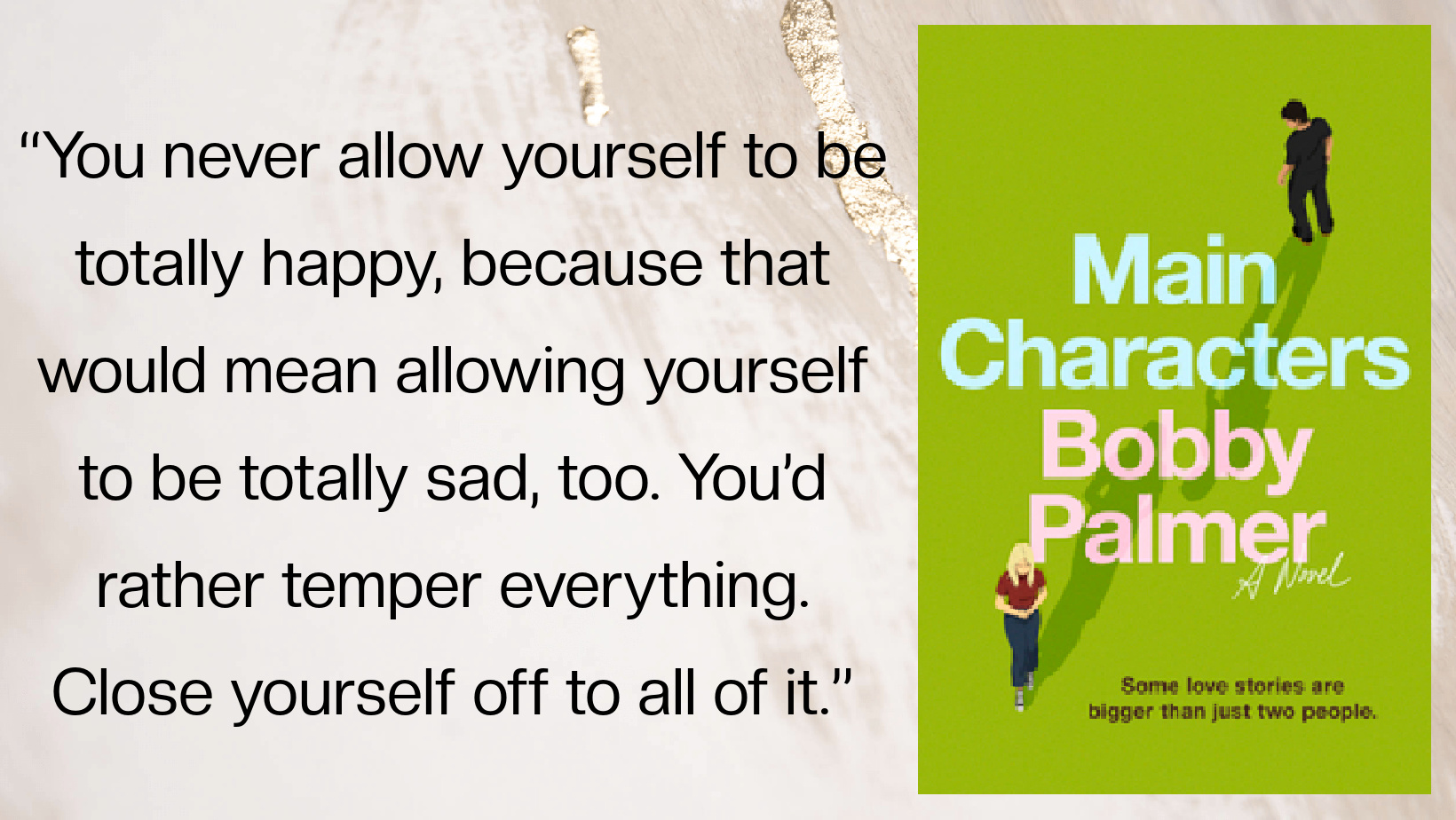
Main Characters, by Bobby Palmer—Clara is a young artist and aspiring director who knows she’s destined for greatness and is excited for the chances she is certain are headed her way. Seb, an up-and-coming actor and reluctant model, is her opposite: listless, where Clara is full of ambition; taciturn while Clara never runs out of words; eager for family and stability, while Clara relishes her freedom. But when the two cross paths in a London Square, it’s the beginning of a decades-long lover affair. Their coupling is rocky from the beginning and faces years of hardship and heartbreak as their magnetism draws them together and repels them again and again; despite the chaos of their relationship, their love is undeniable to all around them, even if they struggle to follow love’s usual trajectory.
The romance at the center of Main Characters is a fairly standard one, with many of the usual tropes; what takes this book to the next level is the unique narrative structure, with the entire novel told from the perspectives of those surrounding Claire and Seb, and not just their loved ones and friends (though we do hear from some of them), but from those even more removed from their story—real estate agents accompanying them on house hunts, friends of coworkers who meet the couple at parties, fellow passengers on buses and planes, and strangers on the street who catch snippets of their conversations or observe nuances in their interactions that would likely go unnoticed by the protagonists themselves. The title of each of the dozens of chapters tells us whose perspective we are getting (“the best friend’s mother,” “her sister,” “the deliveryman”, etc.), and each chapter gives only observation with very little insight into the observer him- or herself, with the exceptions of a few who are particularly close to the story. It’s actually these closer characters (especially Seb and Clara’s best friends, Nimesh and Esther) whose stories I enjoyed the most; in fact, I’d love to read a whole novel of THEIR romance.
It took me some time to adjust to the novel’s unique structure, as it’s usually the personal nature of romances that draws me into these stories. Here, we are kept at a distance. Ultimately, though, it was the kaleidoscopic structure that I liked the most: I’m fascinated by the concept of what our lives and our stories might look like to the outside world, especially when pieced together from the observations of a menagerie of onlookers, as we get to read here. I was impressed by Palmer’s ability to capture Clara and Seb through this narrative collage, and though I found Clara and Seb to be highly unlikeable characters, I could appreciate the insights that their relationship provides into the nature of love and ambition, friendship and grief, loyalty and integrity, and especially the interplay between life and art. I love how the structure adds a cinematic quality to the novel, which is especially fitting given Seb ad Clara’s careers in moviemaking.
Heads up for some difficult subject matter, including some pretty hard topics (including the deaths of people and animals); this is a very sad novel, and though the tough parts are handled delicately, they play a prominent role in the story.
My Rating: 4 Stars (5 stars for artistic value, 3 stars for enjoyability) // Book Format: Kindle
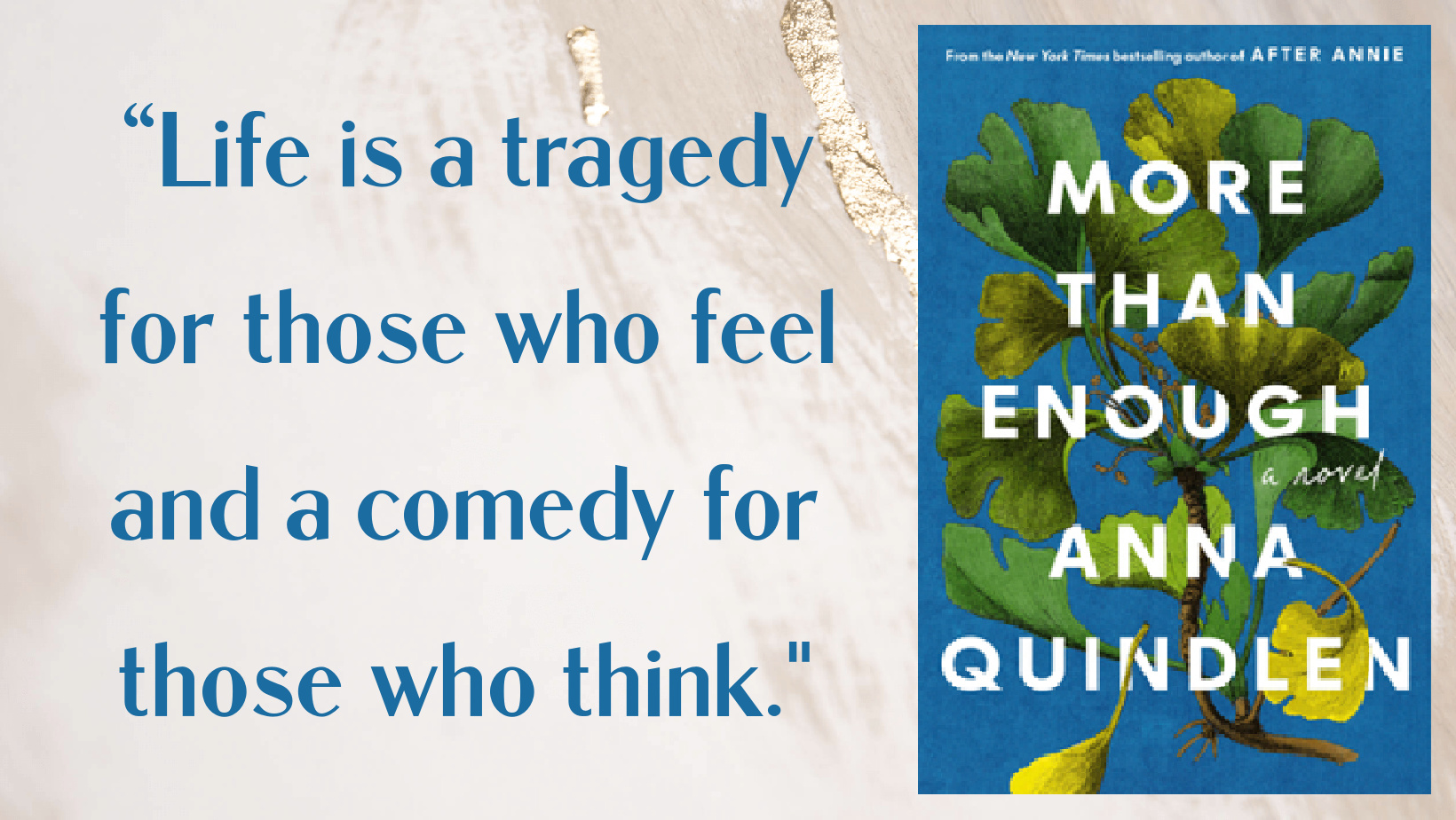
More Than Enough, by Anna Quindlen—Polly Goodman is a high school English teacher who loves her work, her life with her veterinarian husband, her close-knit group of friends, her amazing in-laws, and even her family of origin (though her relationship with her mother has always been strained, and things aren’t the same with her father since the onset of his dementia). Her life is full, but not quite as full as she’d like it to be, and after years of fertility treatments, it looks as though the one thing she’d like most of all—to become a mother—isn’t to be.
To take Polly’s mind off of her current struggles, Polly’s book club gives her an ancestry kit as a joke. But when Polly takes the test and is matched with a stranger—someone who almost certainly CAN’T be related to Polly—it sets off a string of events that Polly never saw coming.
I loved this book, and I’m not entirely sure why: it’s very sad, filled with the hardest of subjects (infertility, Cancer, dementia, a fraught mother/daughter relationship, infidelity). There’s a book club whose one rule is that they NEVER read the book (this bothered me more than it should have). And the writing style takes some adjustment, slipping in and out of remembrances and flashbacks—though I did like the way this mimics how our minds actually work, our memories and reflections living alongside and interacting with our daily lives.
Mostly, I think it was the warm tone that captured me, as well as the lovable cast of characters who are not perfect but are doing their very best to show up well for each other. The book very much reminded me of Whistler in this way. (There were a number of other similarities too: protagonists who are middle-aged teachers living in New York and married to very stand-up men; complicated family dynamics; layers of literary meaning.) By the end of the book I truly felt that I knew these characters and I was sad to say goodbye to them; I have continued to think about them, wondering what they might be up to, nearly forgetting that I knew them only on the page.
The story here is not especially original, yet Quindlen’s emotionally resonant writing and the way that she infuses hope and beauty into life’s difficult moments will stick with me. This was the first novel I’ve read from Anna Quindlen but I am certain it won’t be the last.
My Rating: 4.5 Stars (Rounded to 4 Stars on Goodreads) // Book Format: Kindle
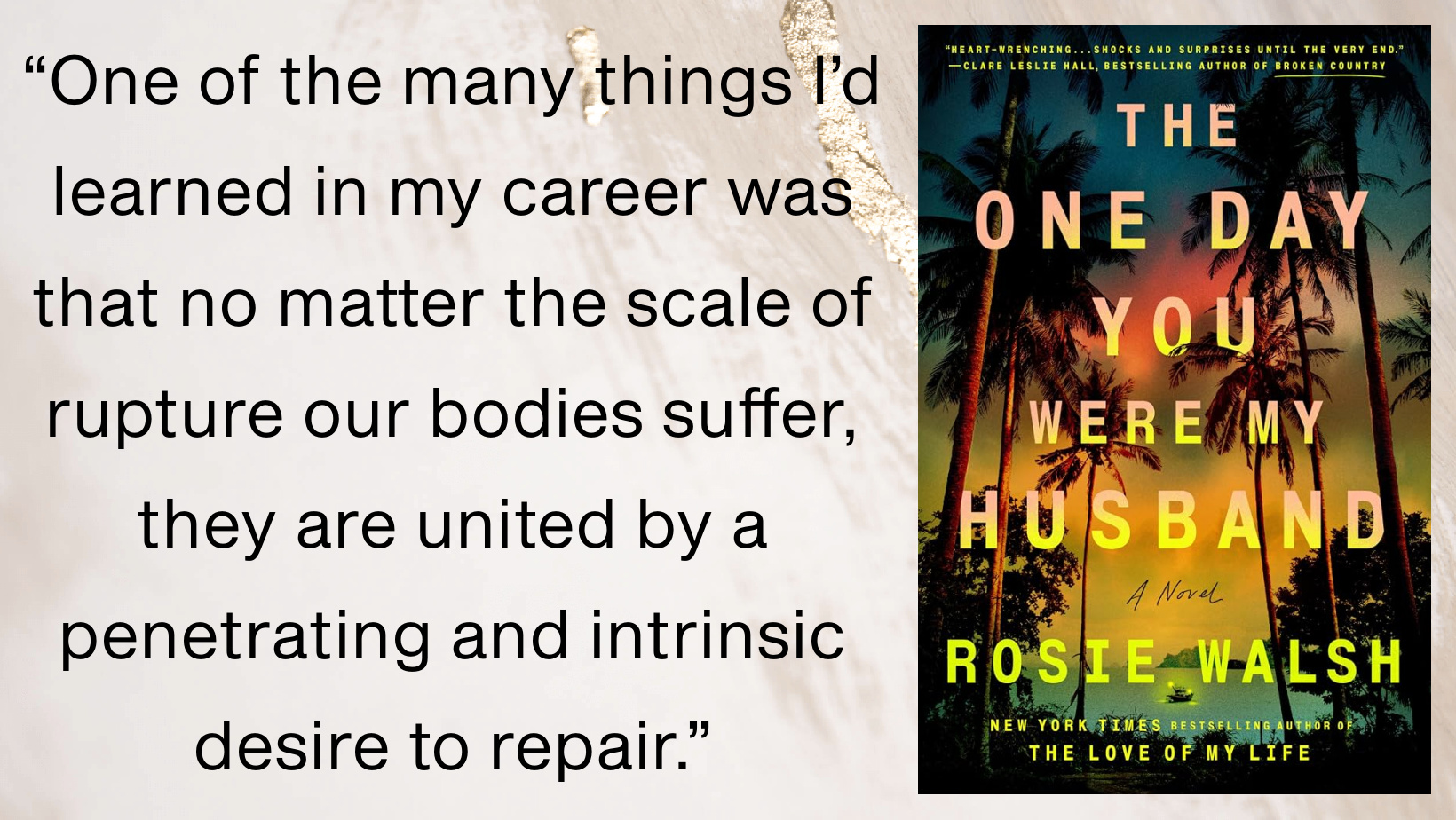
The One Day You Were My Husband, by Rosie Walsh—Thirteen years ago, Carrie Cole was a young surgical intern whose life was turned upside down when a dashing Swedish man stumbled into her London hospital and swept her off her feet. Three months into their whirlwind romance, Carrie and Johann married on a beach in Thailand. But that night, a group of armed men swarmed the beach and took Johan away, forever ending the couple’s happily ever after.
In the present day, Carrie has grieved the death of her short-lived marriage to a man she never truly knew. Now she’s living in the English countryside with her husband, Robin, and their six-year-old twins. Carrie set aside her career as a surgeon following the premature birth of her twins, but she is contemplating a return to surgery while also running a holiday cottage rental business on the side. One night, Carrie stumbles across an online post revealing that Johan is no longer languishing in a Thailand prison as she’d assumed, but alive and well and living in Stockholm, where Carrie will soon be attending a conference. Carrie knows she has an opportunity to resume contact and find answers to her past, but is she willing to jeopardize the beautiful life she has built?
I was intrigued by this premise and enjoyed certain elements of this story, such as the 6-year-old boy/girl twins and the interesting details about the life of a surgeon. The initial 70% moved slowly and I didn’t know where the story was headed; once the mystery elements picked up, I couldn’t stop reading and raced to the end. While I appreciated the twist, I hated the love triangle aspects to the story (something that always bothers me) and there were parts about the conclusion that were pretty icky to read and felt both too convenient and emotionally manipulative. I also took issue with the way that motherhood was portrayed as a hindrance to the more-important goal of a successful career, and the discussions of marriage and the ways we care for one another were complicated (which is fine) but also very misguided.
It was interesting to read this right after reading Gillian McAllister’s Caller Unknown, which dealt with similar issues (drug trafficking, spousal rifts, ambitious women, motherhood, conflicts arising for international travelers) but came at them from entirely different angles.
My Rating: 3.5 Stars (Rounded to 3 stars on Goodreads) // Book Format: Kindle
MIDDLE GRADE
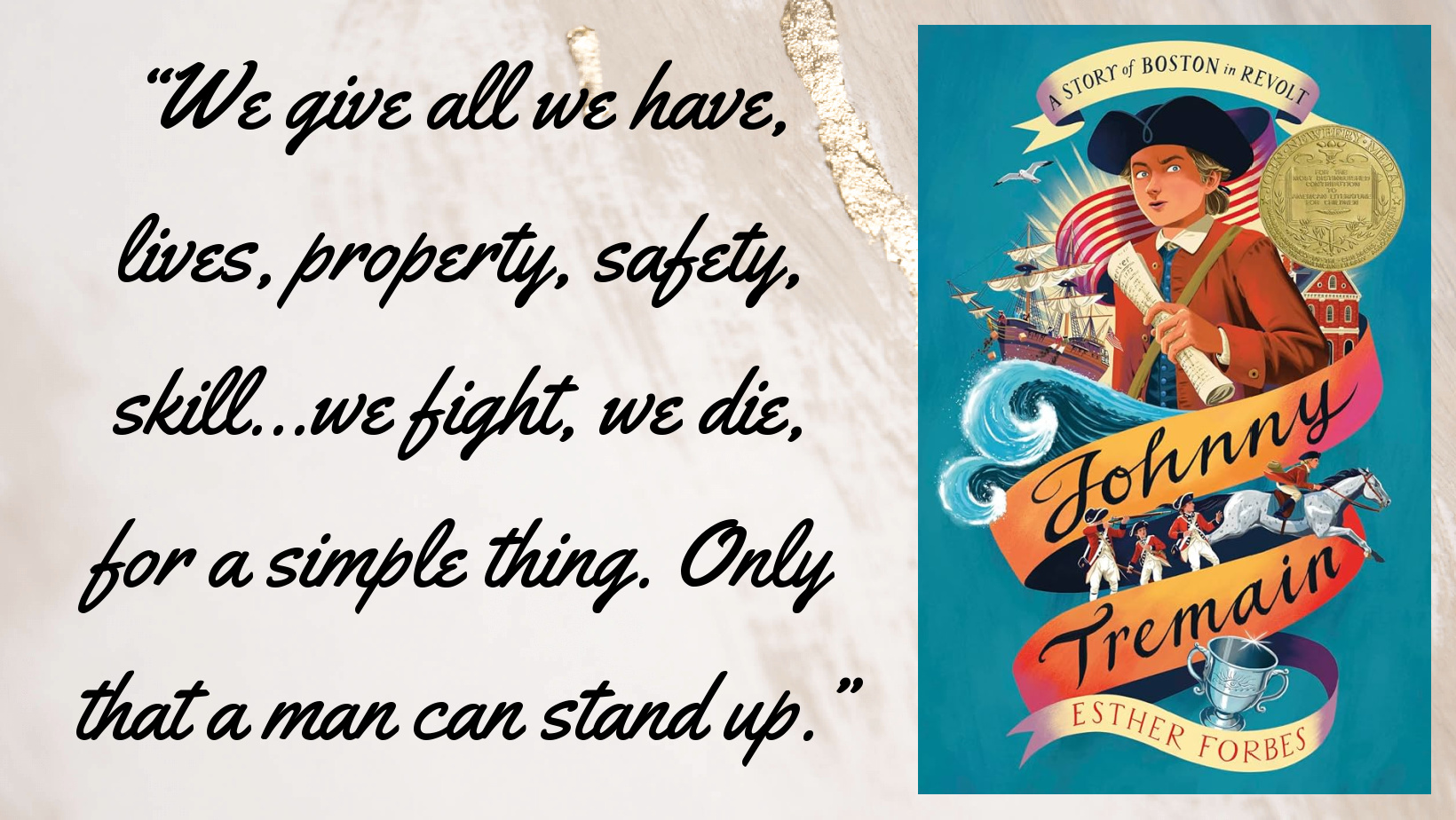
Johnny Tremain, by Esther Forbes—[Review written by Charleston, with some added thoughts from the rest of our family.]
Johnny Tremain is a silversmith’s apprentice living in Boston, Massachusetts, in 1773. Does that year sound familiar? It should! It’s the year of the Boston Tea Party, and Johnny was able to join in after tragically burning his hand in a silversmithing accident. Little did the selfish and prideful boy know that in just one year, his entire life would change as he would grow from arrogant 14-year-old who cares only for himself to a 15-year-old eager to change the world. Along his journey he experiences war, mystery, and sadness through an adventurous mission to assist the sons of liberty in their fight for freedom.
Kali did not like how long it took to finish this book, and she thought the ending was very sad. But she DID like how Johnny started out thinking only of himself but learned to think about other people and to be kind. Sully liked how Johnny turned nice in the end, starting out as selfish and then making a good friend named Rab who helped him become brave and strong. I (Charleston) thought the book seemed tedious because of how long it took to read, and the story was hard to keep up with because we only read a few pages at a time. I think it would be a good book for anyone who wants to know what it was really like during the Revolutionary War and the events around the Boston Tea Party.
Mom appreciated the historical setting that fit right in with our American history studies this year, and she liked the admirable character development we see in Johnny, but she didn’t think the book worked well as a read-aloud: it was too long, with too many characters and too much complicated context to make for a pleasant family reading experience. She would recommend it as an independent read for a late Middle School or High School reader.
Mom’s Rating: 3.5 Stars (Rounded to 3 Stars on Goodreads) // Charleston’s Rating: // Sullivan’s Rating: // Kalinda’s Rating: 3.5 Stars
Have you read any of these titles? What did you think? Any books to recommend for me this month? I clearly haven’t had the best luck picking books on my own, so your recommendations are welcome!