It’s Quick Lit day! And I have a shorter roundup for you this month, with a couple titles I actively loathed and a few more I really liked. As always, I’m sharing my totally unfiltered thoughts to help YOU choose your next read.
FICTION
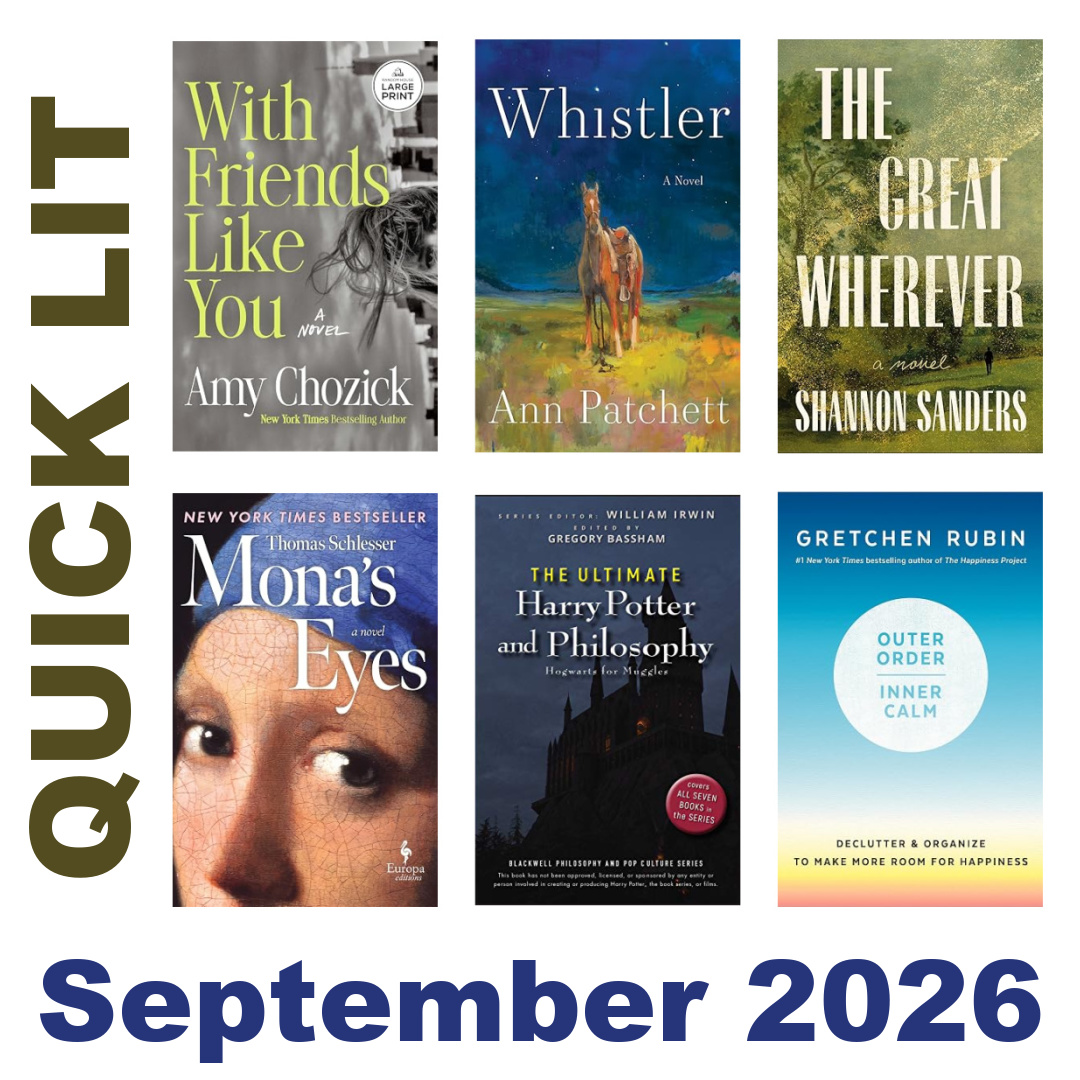
With Friends Like You, byAmy Chozick— Emily is a postpartum Manhattan mother, suffering from the physical and mental toll of a traumatic birth while struggling to find her footing as a new mom. She adores he son, Holden, but the experience of becoming a mother has left her feeling untethered, and in her postpartum angst, Emily becomes fixated on finding Daisy, her college roommate and the only person who ever truly understood her. Knowing that Daisy had traded college courses for life as a sex worker, Emily spends her newborn’s sleepless nights pouring over porn magazines seeking glimpses of Daisy, and she alternates infant music lessons with trips to strip clubs and anywhere else she thinks her friend may be. Emily learns that Daisy has become an escort for global millionaires, and when her search eventually reunites the former friends, Daisy introduces Emily and the other Manhattan moms to a new world that none of them could have ever imagined.
This book reminded me a LOT of Yesteryear, with its unlikeable and unreliable narrator, a mother protagonist making questionable life choices, and its exploration of female power, performative motherhood, and mental health. And my opinion of this book mirrored my thoughts of Yesteryear—I hated it.
I will say that the opening chapters intrigued me with their discussion of Manhattan mom life and too-accurate depictions of the madness that is online Mommy forums, impossible-to-follow parental advice, over-the-top baby gear, and the pressures surrounding the early baby years. As someone who is not too far off from the postpartum months myself, these passages had me alternately nodding and cringing, and I could relate to many of Emily’s new-mom challenges and volatile emotions. I was also sucked in by the mystery surrounding the elusive Daisy. But that is where my enjoyment and appreciation for the book ended.
As the story unfolds, it becomes more and more crass, wth language and graphic sexual content that I found utterly disgusting. I was disappointed by the depressing portrayal of childbirth and motherhood (showcasing a worst-case-scenario as though this were the norm), and I hated the one-sided portrayal of toxic mommy relationships/culture that neglected to acknowledge the good that can come from this life stage. The feminist overtones and constant jabs at the patriarchy also grated on me.
I figured out the book’s big twist fairly early on, and had hopes that this would wrap up neatly; in this, too, I was disappointed with an ending that felt forced and convoluted and simply didn’t work. This was all so much darker and grittier than it needed to be, with obscene language and behavior and an unhinged story trajectory that kept it from reaching its potential as a thought-provoking discussion of early motherhood and postpartum health. I got through this one quickly, not because I was loving the reading experience, but because I needed to know what would happen and (more so) because I wanted to be done with this unsavory world as quickly as possible.
My Rating: 2 Stars // Book Format: Kindle
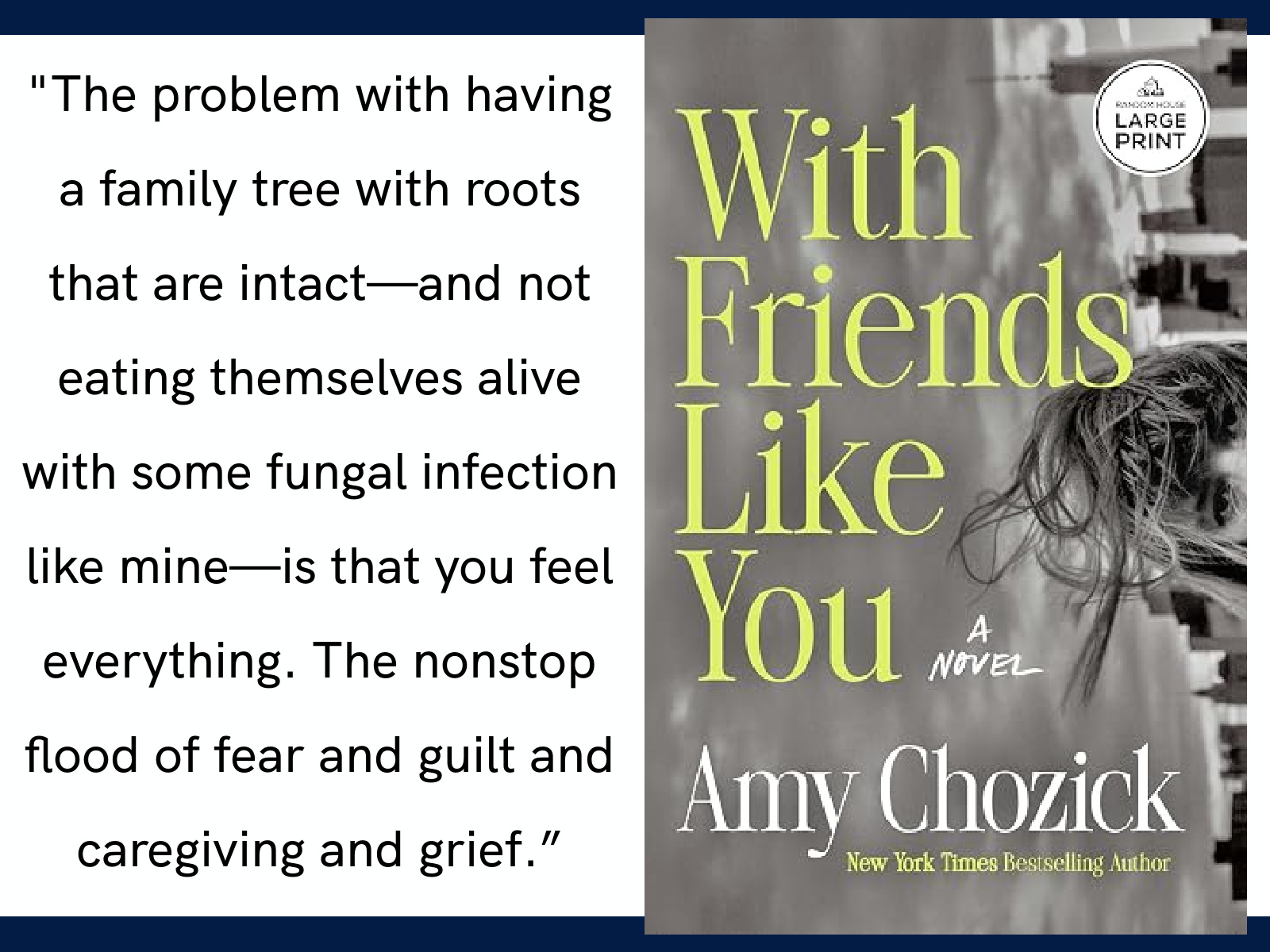
Whistler, by Ann Patchett— Daphne Fuller hasn’t seen her former stepfather, Eddie Triplett, in more than forty years, not since her mother divorced Eddie following a car accident that nearly cost both Eddie and Daphne their lives when Daphne was nine. Stepfather and daughter have a surprise reunion at the Metropolitan Museum of Art, and the two pick up their relationship where it left off. Though their long-ago relationship had been a brief one, it profoundly impacted them both; together again, Daphne and Eddie revisit their time together, including the accident that changed everything. And as the pieces of their past come together, this newly reunited family must confront misperceptions, untold secrets, and the gaping holes in the narratives that went on to shape so much of who they have become.
This is a quiet story, and one filled with all the difficult things: heartbreak, regret, sickness, tragedy, strained family dynamics. And still, somehow, it overflows with beauty and hope as we witness the power of unexpected friendship and enduring love. Even though the subject matter is difficult and the central incident (told through flashbacks) is traumatic, the reading experience is largely a cozy one thanks to frequent bouts of nostalgic storytelling and a cast of lovable (though realistically flawed) characters who act with refreshing kindness and civility. There are no big twists, no gimmicks, no salacious anecdotes, but Patchett’s quietly brilliant prose keeps the story moving at a gentle clip while pausing at just the right moments so that we might join in the humanity that is huddled together on the page.
Don’t be misled by the title or the cover: this is not a horse book, although there IS a horse in this story, and that element of the novel—and its metaphorical connection to the story’s themes—was probably my favorite part of the book.
This didn’t have quite the same magic of Tom Lake (my favorite Patchett novel), but it’s a genuinely lovely and thought-provoking story that I was so happy to sink into.
My Rating: 4.5 Stars (Rounded to 4 Stars on Goodreads) // Book Format: Kindle
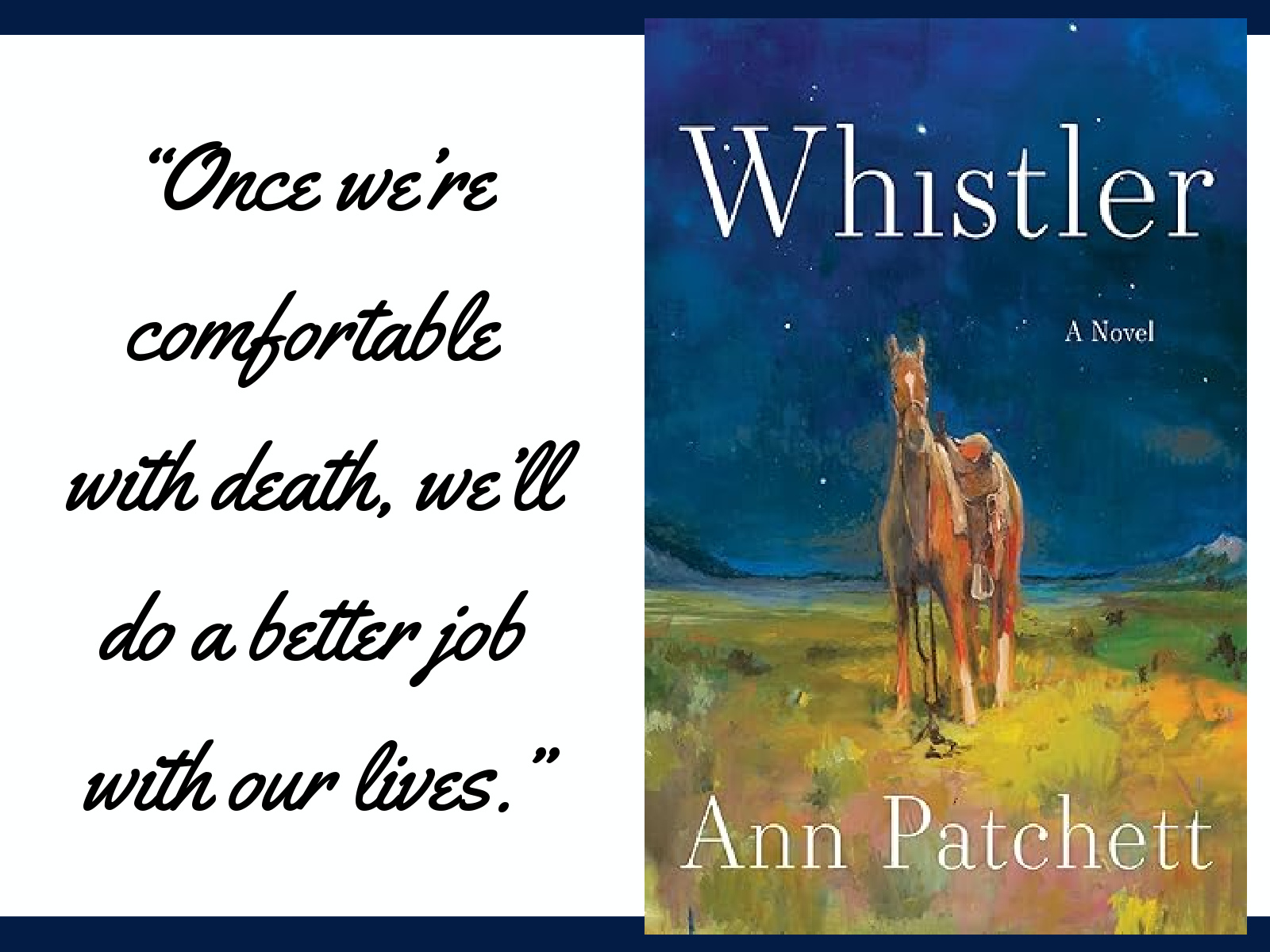
The Great Whenever, by Shannon Sanders— Aubrey Lamb is thirty-two and struggling to make ends meet as a gig worker in Washington, DC. She’s hopeful that her life is about to take a turn for the better with a proposal from her boyfriend of many years. . . but what she thought was going to be a proposal dinner turns into a breakup. Grieving the end of her relationship, Aubrey agrees to travel to Tennessee to view the family farm she recently inherited from her father.
Watching Aubrey’s arrival are the ghosts of four ancestors who have haunted the property for generations. Through their observations we see Aubrey reconnect with family she’s never known and learn of the farm’s storied history, beginning with its Depression-era purchase by her great grandfather Thomas (who was one of the area’s first black landowners). The burdensome inheritance has held the Lambs together through sibling rifts and family tragedy and scandal, but now the future of the farm lies in the hands of Aubrey and three cousins. With a potential sale on the horizon, the ghosts fear the loss of their home and will do all they can to keep this family and this property in one piece.
From page one, I was captured by the novel’s witty, colloquial voice, image-heavy prose, and sprawling narrative approach, with stories sprouting out from one another like threads of a conversation or branches of a family tree. Even though I had a hard time tracking the MANY characters and complicated relationships, I was intrigued by the mysterious ghosts telling our story and interested in the details of the expansive family saga. By the midway point, though, it was clear that the story was taking its sweet time to be told and I was ready for some resolution. That snarky voicyness kept me reading, but just barely, and I was disappointed when the main storylines eventually landed before ever fully taking off. The lack of substantive plot, combined with unnecessary vulgarity and a heavy abortion theme threaded throughout the generations of story, kept this from being what I had initially hoped might be a 4- or 5-star read.
My Rating: 3.5 Stars (Rounded to 3 Stars on Goodreads) // Book Format: Kindle
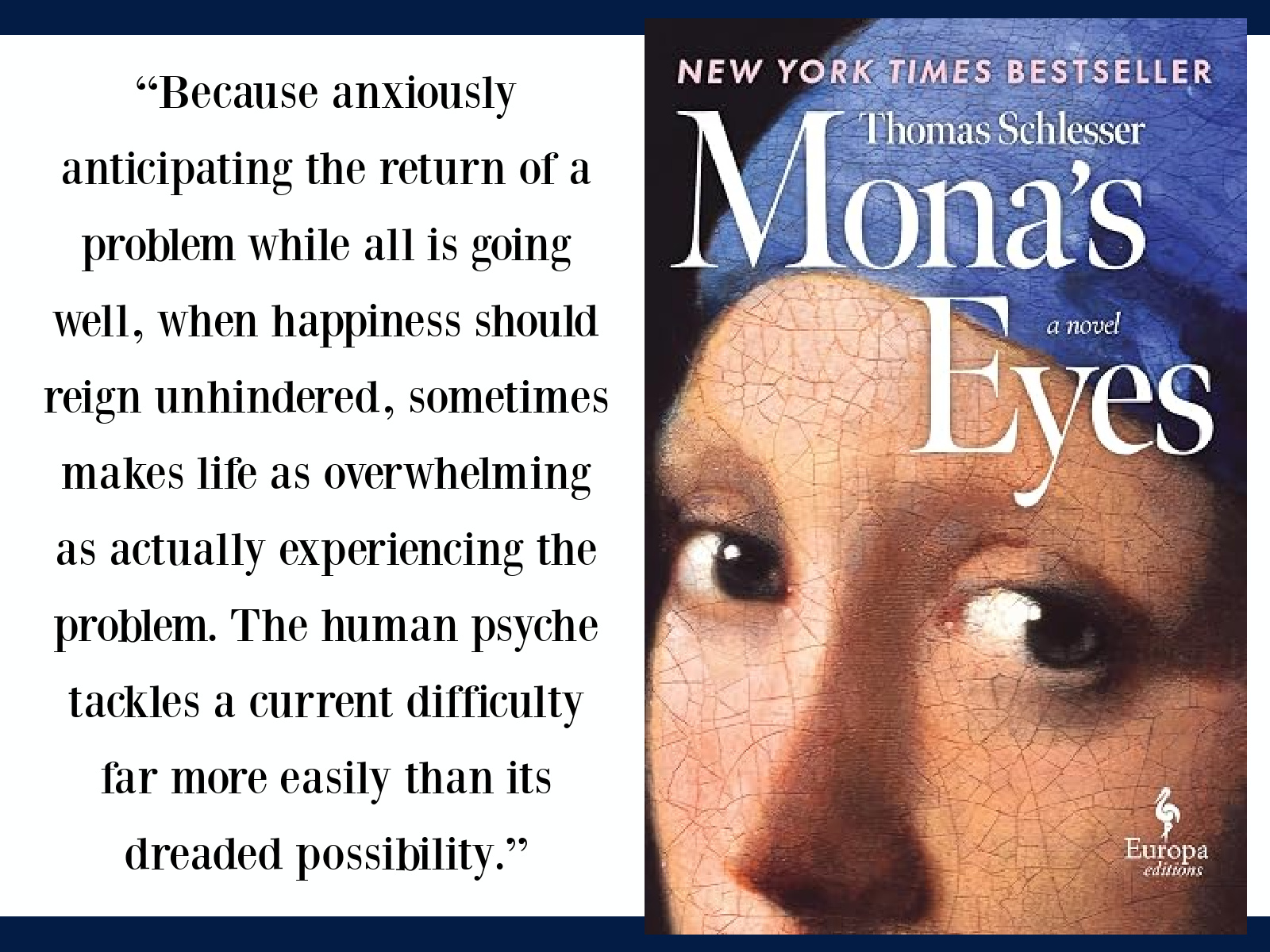
Mona’s Eyes, by Thomas Schlesser— Mona is just ten years old when she experiences her first bout of spontaneous blindness. Her sight returns, but doctors are unsure of the cause or whether the blindness could return permanently. Mona’s grandfather Henry, an avid art enthusiast, volunteers to take charge of Mona’s psychiatric appointments, but instead of chauffeuring her to the psychiatrist as promised, he uses their time together each Wednesday to visit Paris’s museums. Over fifty-two weeks, they explore fifty-two pieces of renowned artwork with the hopes that, should she become permanently blind, Mona “would at least have the benefit of a kind of reservoir, deep in her brain, from which to draw some visual splendors.”
Henry and Mona’s museum visits provide them with time to explore the history and significance of each masterpiece, and to study the lives of the fifty-two master artists. Through their time together, Mona receives more than academic introduction to art: as she learns to study and embrace each piece, she also grows in her understanding of heartbreak and joy, beauty and goodness, fear and rest, and the value of a life well lived.
Over the summer I had the opportunity to meet a group of my parents’ friends who happen to all be in a book club together. When I asked the women about their bookclub highlights, they unanimously cited Mona’s Eyes as their favorite bookclub selection, so I headed into this one with sky-high expectations. Apparently I have VERY different taste from these ladies, because this book really did not work for me.
I’ll start off with some positives, because this wasn’t an entirely wasted reading experience: Thomas Schlesser is an art historian, and he writes wonderfully about each piece of art with vivid descriptions and poignant insights into each piece. I LOVE the subject of art history, so I was interested in learning more about some significant pieces and their creators, and I liked the philosophical takeaways and art-inspired conversations between Mona and Henry. I also thought the grandfather/grandaughter dynamic was quite sweet.
Unfortunately, the book’s selling points could not carry the thin plot, or make up for the unrealistic dialogue (clearly the author has never had a conversation with a 10-year-old). I was more than a little bothered by Henry’s choice to lie to Mona’s parents about getting her psychiatric care, and I hated the progressive ideas woven throughout the story, especially relating to the topics of abortion and feminism and euthanasia.
On a more subjective note, I did not at all care for the art pieces that are discussed (which I viewed online as I listened to the audiobook, though they can apparently be seen in the print and Kindle versions of the book). Henry’s stated desire was to expose Mona to beautiful works, yet the artwork they examine is overwhelmingly unattractive and inappropriate for a 10-year-old’s artistic education; with so many truly beautiful masterpieces (including alternate pieces from artists in this book), I’m baffled by this selection.
The book’s conclusion is unrealistic and overly saccharine, and I was left wondering why Schlesser felt the need to deliver a novel when he clearly wanted to write a book of art history. That said, the art history parts really are quite great and I can see how this might make a fun book club selection, with the many opportunities to discuss various pieces of art and their real-life connections.
My Rating: 2.5 Stars (Rounded to 2 stars on Goodreads) // Book Format: Audiobook
NONFICTION
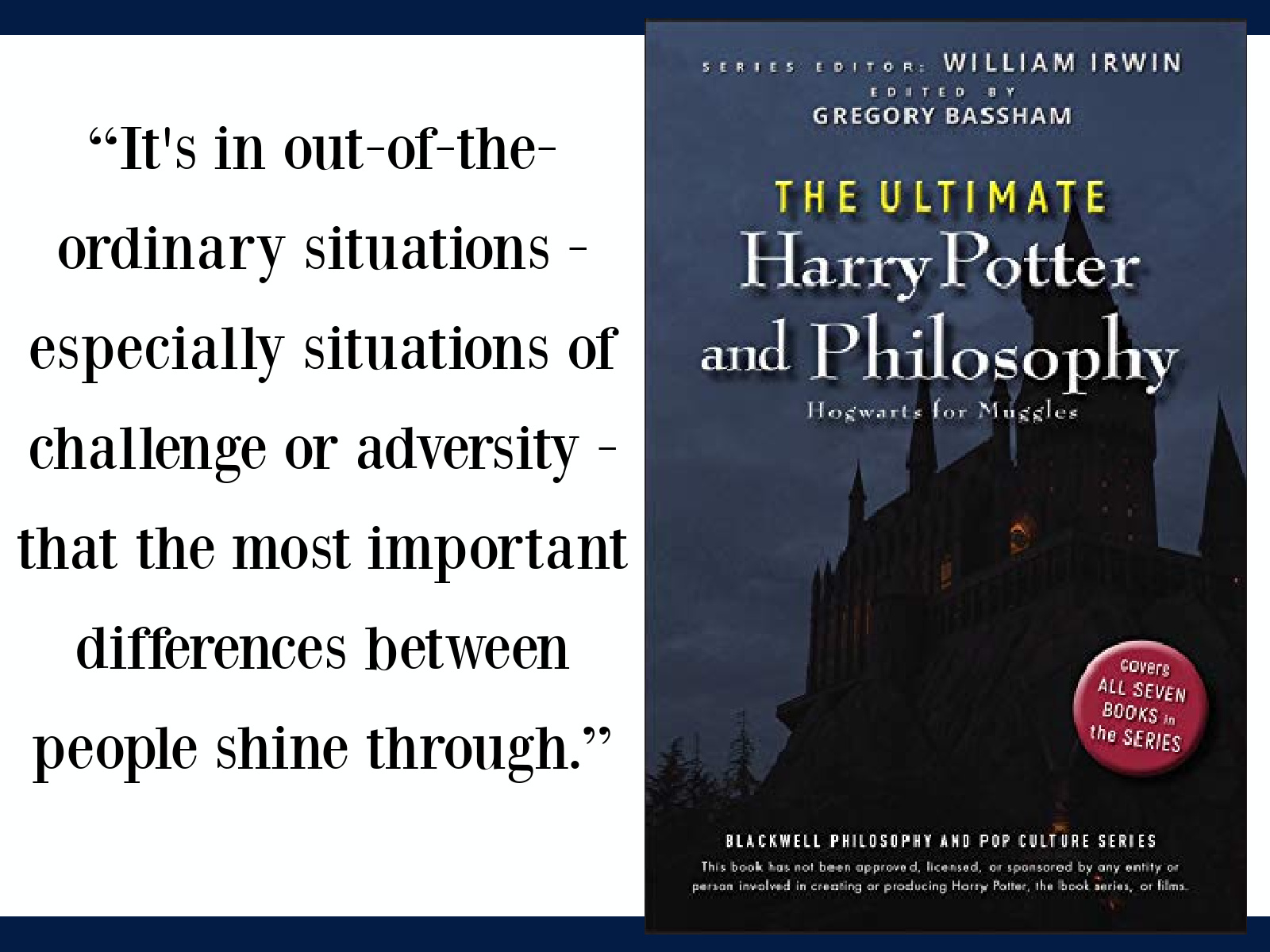
The Ultimate Harry Potter and Philosophy: Hogwarts for Muggles, by William Irwin and Gregory Bassham— Is there anything more fun then getting super nerdy about a topic you love? I say no, which was why I was practically giddy to discover this deep-dive into the philosophy of Harry Potter. Composed of essays from several Harry Potter fans, most of whom happen to be professional philosophers in their nine-to-five lives, the book uses the Harry Potter canon as a launching point for exploring the ideas of great thinkers. Some of the essays examine philosophical ideas underlying the series, while others use themes from the book as a way of discussing various philosophies and perspectives.
Through this book, we explore some of life’s deepest questions: What is love? Is there an afterlife, and what does it look like? What is a soul, and how does the soul relate to the body? What is the function of education, or of government? And we look at some of the most pressing questions posed by the series itself, such as the series’ relationship to feminism; patriotism and libertarianism within the world of Harry Potter; whether or not Dumbledore is gay (and who even gets to have a say?); the nature of transformation; the ways that choices and abilities shape character; and the Christian allegories present throughout the series. The essays are thoughtfully presented and rely on a deep knowledge of the source material (this is not for those uninitiated in the world of Harry Potter!). I agreed with many of the writers’ conclusions, disagreed with others, and had completely opposing thoughts to some (particularly those that conflicted with my own Biblical worldview). But every essay gave me so much to think about, and a new way of understanding and appreciating this series that I adore.
This book would make such a fun philosophy course curriculum!
My Rating: 4 Stars // Book Format: Audiobook
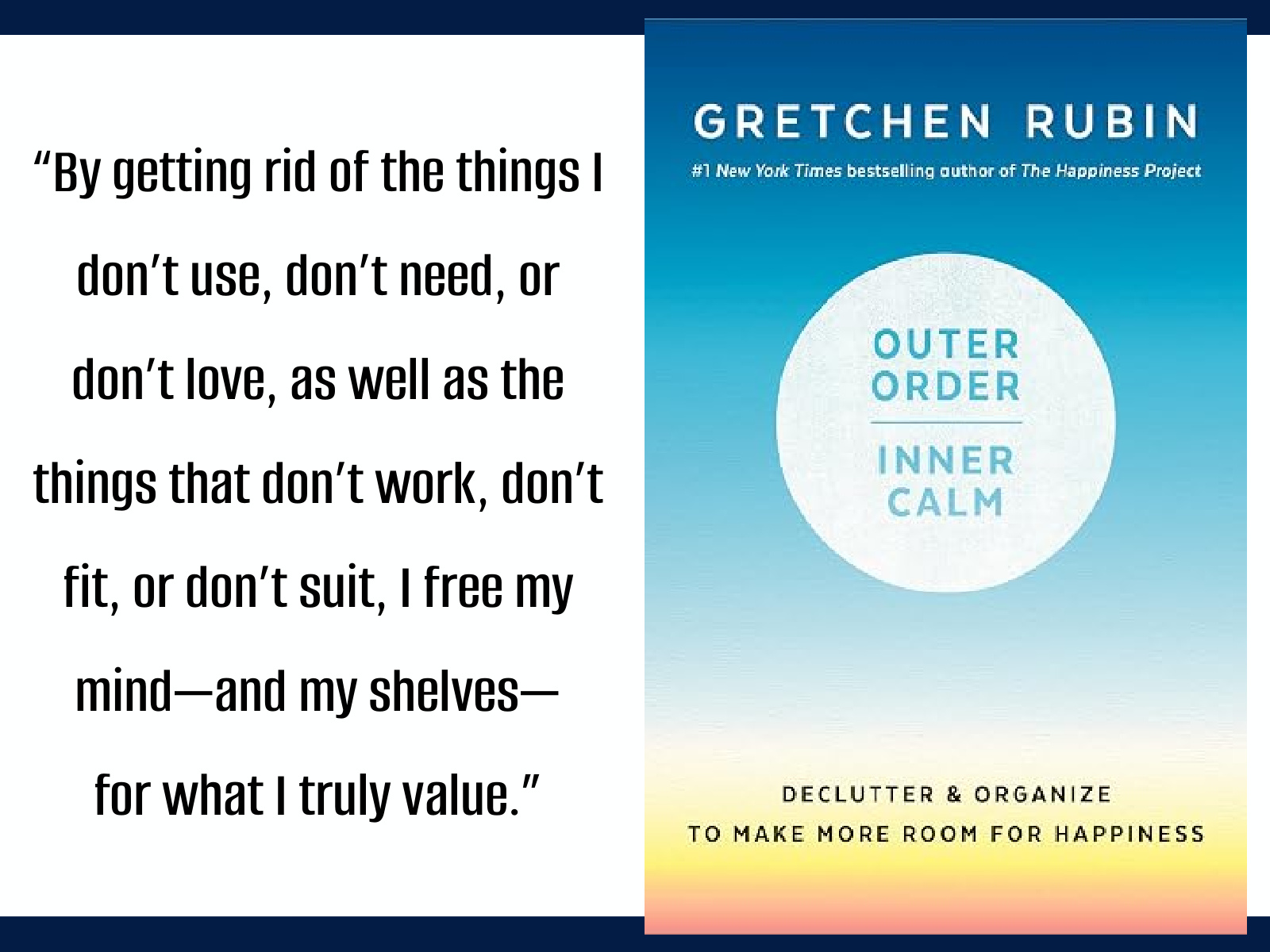
Outer Order, Inner Calm: Declutter and Organize to Make More Room for Happiness, by Gretchen Rubin— I’ve always been someone who is deeply affected by my surroundings, and I don’t think I’m alone. We have probably all had an experience of stepping into a well-ordered, decluttered space and breathing a sigh of relief, or finding it easier to tackle a work project when our desk is cleared. In Outer Order, Inner Calm, happiness guru Gretchen Rubin writes, “in the context of a happy life, a messy desk or a crowded coat closet is a trivial problem—yet getting control of the stuff of life often makes it easier to feel more in control of our lives generally.”
Gretchen identifies nine promises of creating outer order (from “outer order saves time, money and patience” to “outer order sharpens my sense of purposefulness”) then outlines five stages for establishing outer order: 1) make choices about which possessions to pass on and which to keep; 2) organize, repair, and attend to neglected areas; 3) know ourselves so that we can declutter and organize according to our personal needs and preferences; 4) cultivate helpful habits for maintain order; 5) add beauty to make surroundings more inviting and comfortable.
Unlike some of Gretchen Rubin’s other books that are story-driven and wide ranging, this one is specific and succinct, reading more like a compilation of lists than a true book. I appreciated the format that got right to the ideas without a lot of extra noise—a sort of decluttered how-to guide of decluttering. There are lots of great suggestions, some that will be familiar to anyone who has attempted to get more organized, but also some totally fresh ideas. I especially loved the probing questions that invite readers to explore own own reasons for holding onto things, our specific preferences (such as clutter tolerance levels), and the way that our possessions do or don’t reflect our identity.
I read this on Kindle, but with the cute illustrations and easy-to-read format, I think it would work best in print—that is, if you have space to add a book without creating too much unwanted clutter.
My Rating: 4 Stars // Book Format: Kindle
It’s your turn: have you read any of these titles? What did you think? What is the best (or worst) thing you’ve read lately?
Whistler is the only one I’ve read, and from your descriptions, the other novels aren’t anything I want to even touch!! I LOVED Whistler!! I have read all of hers, and I now put Whistler at #1! I put Bel Canto at #2, even though it’s been more than 10 years since I read it, but I remember it was mind-blowing. After that I rank Commonwealth next (another one close to autobiography, which apparently I like), and then Tom Lake and The Dutch House. Whistler was just so NICE, while still having a little tension as we got the slow reveal about the accident and what actually happened to her mother’s marriage. I thought it was a fascinating premise and execution.
I agree that “just so NICE” is a perfect way to describe Whistler. I liked Tom Lake more than Whistler, but enjoyed Whistler more than The Dutch House or Commonwealth. I really need to read Bel Canto!
You are smart to stay away from the other novels, not worth your time.