We’ve all heard the adage, “you can tell a lot about a person by looking at the company they keep.” As Jesus’ followers and disciples, we want to look and act like Jesus. . . which means that we need to spend plenty of time keeping company with Him. But what does that mean, and what does it look like in our day-to-day lives? Many of us turn to strict spiritual routines and religious disciplines, checking all the boxes in a well-intentioned quest to resemble Him. But in Keeping Company with Jesus, Christian writer and teacher Christine Hoy shows that Jesus invites us to much more than religious obligation. He wants a genuine relationship born of restful time spent in communion with Him.

Using the vine-and-branch imagery of John 15, in which Jesus invites us to abide in Him, Christine Hoy gently leads our relationship to Jesus beyond the usual disciplines, modeling what it looks like to develop a connection with Jesus that is as natural as taking a breath—a branch receiving nourishment from the vine, producing fruit that comes unbidden without striving or fanfare.
The book begins with an invitation to abide, understanding Jesus’ heart for companionship and not just compliance. Then we walk through some gentle practices for abiding—listening to God in prayer, lingering in His Word, establishing communities of belonging. We next take a look at some of the obstacles of abiding, such as a divided heart and seasons of busyness or spiritual darkness. Finally, we look at the fruit that comes from abiding as we are transformed from the inside out in ways that spill into every facet of our lives, mirroring Jesus and drawing others to Him.
There are MANY books out there that explore what it looks like to walk faithfully with Jesus. I’ve read them and loved them and implemented their ideas. This book, though similar on its surface, is different. Christine Hoy doesn’t disparage those practices, not at all; this book isn’t about deconstruction or abstract spiritualism, and Hoy remains deeply rooted in Scripture throughout her writing. But she also goes beyond religiosity, showing us how to adopt a spiritual rhythm that stems from a place of affection rather than obligation.
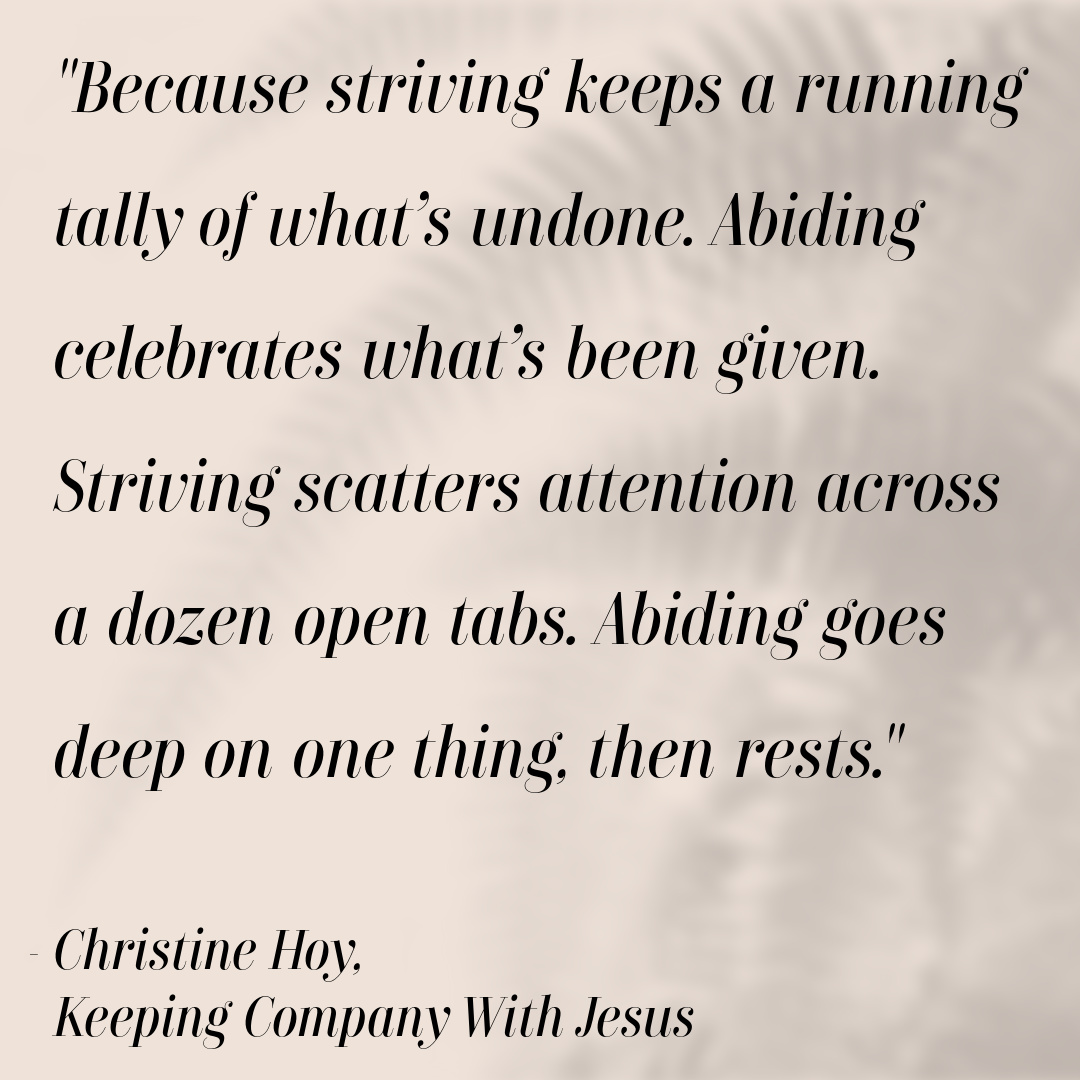
Hoy’s writing exudes the peace and joy of a woman who has spent years walking with Jesus and has moved from diligent student to faithful friend. She shares honestly about her own spiritual hurdles and offers stories of other women who are learning to abide in Jesus, growing captivated by Him and allowing Him to transform their hearts. Each chapter ends with thoughtful reflection questions to help us assess our current practices and ideas determine how to move forward.
I see the irony in the fact that this book about setting aside checklists and spiritual projects came to me as part of my own book-a-season practice in this year of learning to become more Present. I do feel inspired by this book to spend less time striving and more time resting as I cultivate my relationship with Jesus. But I also want to come away from the book with more than a vague idea of how to move forward, so I took copious notes and would love to share my favorite takeaways here, organized by section.

The Invitation to Abide
– Abiding isn’t primarily a feeling. “It’s an orientation toward His Word, toward His truth, toward the ongoing conversation of Scripture and prayer. We are formed by what we dwell in. When we dwell in His words, His words dwell in us, and gradually, almost imperceptibly, we begin to want what He wants, to love what He loves, to see what He sees.”
– Abiding begins with Jesus. “We don’t abide our way into God’s favor. We don’t perform to earn His attention. The relationship begins with His initiative, His choice, His love moving toward us before we had any idea what was happening.”
– Often, we spend time visiting with God when He has asked us to STAY. “The Greek word Jesus used when He said ‘abide in me’ is menó (John 15:4 ESV). At its simplest, most literal level, it means exactly that: to stay. To remain. To make your home and not wander from it. Not to visit, but to dwell. . . Menó comes to mean not just physical presence but endurance, remaining connected even when circumstances make it difficult. Clinging to the relationship not because it’s easy but because it’s life.”
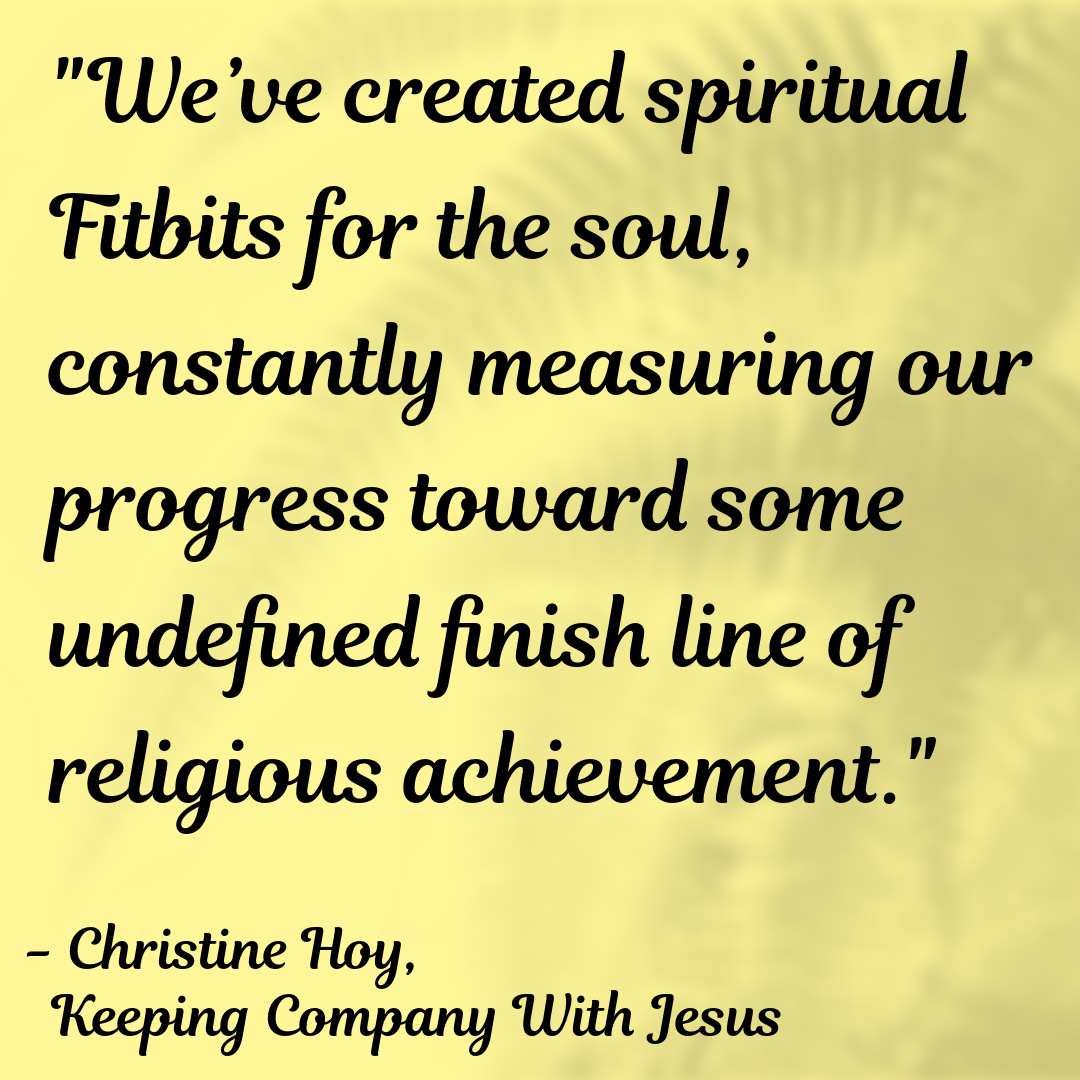
Practices for Abiding
– “Control is seductive because it works up to a point. But it cannot sustain us. Or replace the life that only flows from remaining connected to the vine. Here is what I have come to understand about the illusion of control. It is not really about competence. It is about fear.”
– Abiding is a posture, not an effortful practice. “The branch doesn’t strain to receive from the vine. It simply remains. And it remains because there is no better place to be.”
– The church envisioned by Jesus was not a program to attend, but a people to belong to. “The early church didn’t have what we have. No buildings, no staff, no programming budget. What they had was each other, a shared table, and the presence of the risen Christ moving among them. And that was enough to turn the ancient world upside down. Not because of what they produced. Because of how they loved each other.”
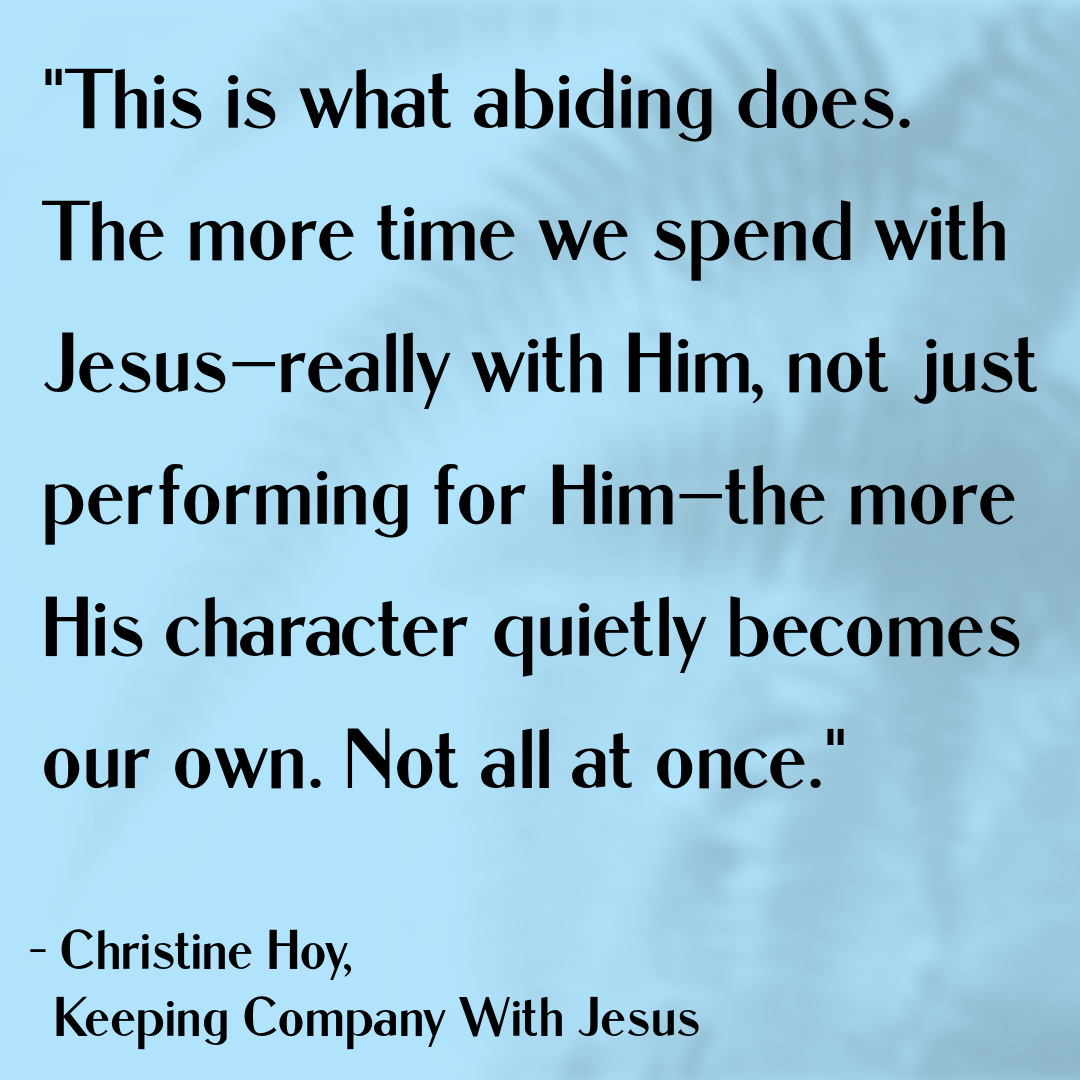
Obstacles to Abiding
– Many of us have an unhealthy obsession with productivity. “Like Martha, we’re serving Jesus as we share inspirational posts and comment encouraging words on our friends’ prayer request posts. We are consuming Christian content, but we’re missing Jesus Himself. We’re so busy being good Christians online that we forget to actually be with Christ.”
– Following Jesus is not something we can multitask. “Perhaps the most insidious effect of our digital age is the normalization of constant partial attention. . . We tell ourselves we’re multitasking, but what we’re really doing is multi-distracting. We’re present nowhere fully, including with Jesus.”
– “When fear of missing out controls us, we’re essentially saying that God’s current provision in this moment, this conversation, this quiet morning, isn’t sufficient. We’re operating from an assumption of scarcity where God promises abundance instead. . . But the abundance He describes isn’t found in accumulating more experiences. It’s found in going deeper into the one we’re already in.”
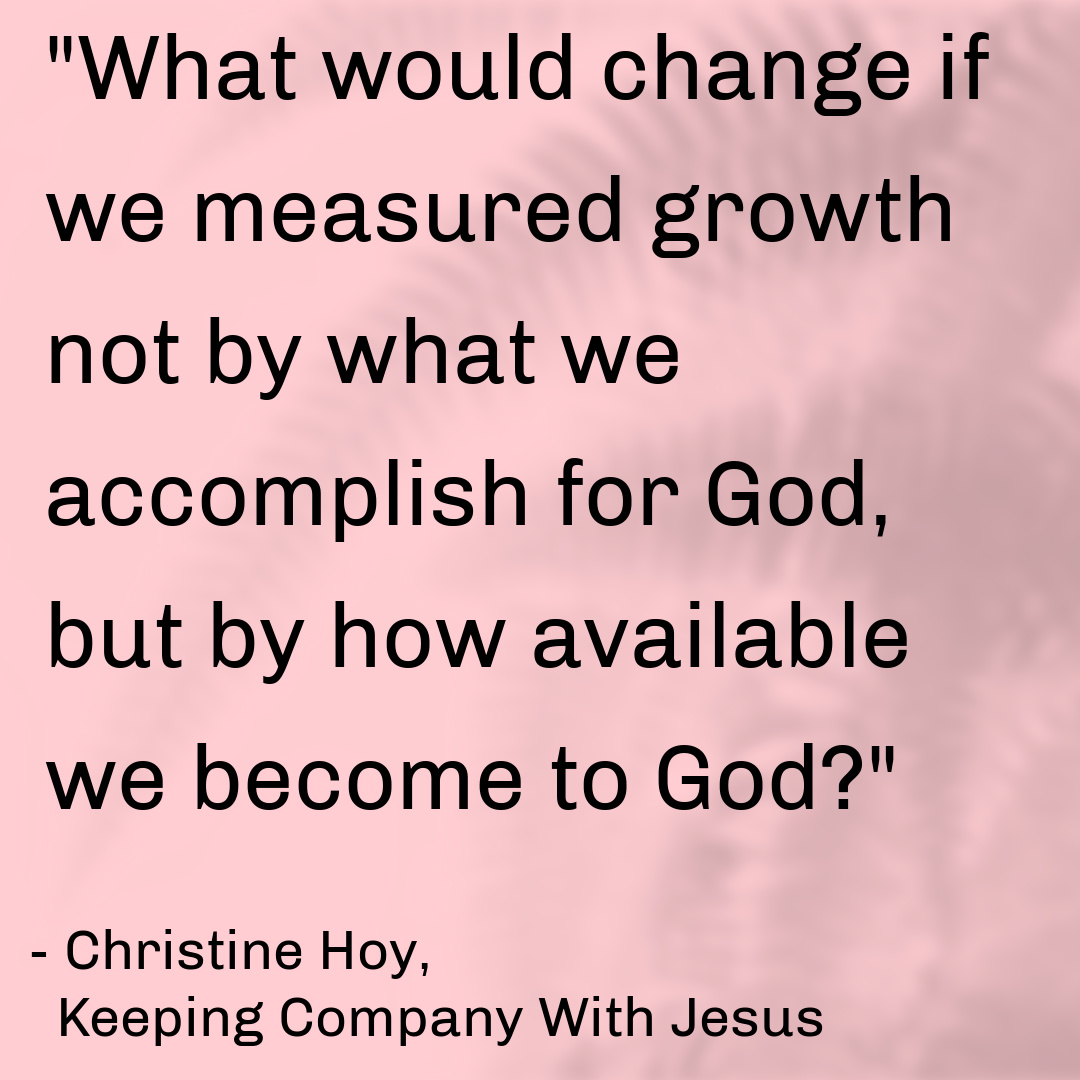
– Doubt and disillusionment can both bring us closer to Jesus if we let them. “The fog of doubt requires patience rather than panic. Like a driver in morning mist, the wise response is to slow down, not speed up. This isn’t the season for dramatic spiritual decisions or walking away from the journey entirely. It’s a season for gentle persistence. It’s continuing to move forward while acknowledging limited visibility. In the fog, community becomes especially vital. . . Disillusionment can actually become a pathway to deeper, more authentic faith, but only if we resist the temptation to either deny the painful reality or abandon faith entirely. This darkness invites us to rebuild on more solid foundations, to distinguish between God Himself and our sometimes-faulty expectations of how He works in the world.”
– Something I have experienced personally: “The darkness of depression is not a sign of spiritual failure but a call for deeper, more comprehensive care. In this season, abiding with Jesus may look more like clinging than thriving, more like surviving than flourishing, and that is perfectly acceptable to the One who promises never to break a bruised reed.”
– Community is pivotal for healthy abiding: “No branch was designed to persevere alone. The vine and branches image that runs through this entire book is not only about individual connection to Christ, but also about the branches in relation to one another. We grow from the same Source. We are meant to be interdependent so we can strengthen each other in ways we cannot do on our own.”
The Fruit of Abiding
– Transformation is a process, not something that happens instantaneously. “This is the strange and beautiful mystery at the heart of this chapter. Transformation rarely announces itself. It doesn’t arrive as a breakthrough moment or a dramatic before-and-after. It slips in, somewhere in the space between who we were and who we’re becoming, and we often don’t notice it.”
– “God’s plan doesn’t bypass our humanity. It includes it.”
– Four markers of genuine Kingdom fruit: 1) Fruit reflects character, not behavior, which means that it requires no effort as it stems naturally from who we are; 2) Fruit endures through seasons; 3) Fruit brings glory to God, not self; and 4) Fruit multiplies organically. << This may be one of my favorite takeaways; we spend a lot of time discussing fruit in Christian circles, but this is helpful for knowing what that actually looks like and how to distinguish real fruit from artificial. >>
– Abiding is not a passive sport: “It means we redirect our effort. Instead of pushing and striving to produce fruit through willpower, we invest in the connection itself through prayer, Scripture, and the quiet moments of returning to Jesus throughout the day. We tend the root rather than yanking at the branches. And then we trust that a faithful God will bring the harvest in His own time, in His own way, often in places we’re not even watching.”
– Sharing Jesus with others doesn’t require a lot of effort: “You don’t need a script. You need a life genuinely connected to Jesus and the willingness to talk about it honestly when someone asks. They will ask. They always do.”

Through Keeping Company with Jesus, I was reminded that abiding is not a discipline to be mastered, but a relationship to be nurtured and tended and celebrated. And it means becoming more present to the One who has never stopped being present with me.
Thank you for sharing this; it is soul refreshing! May we truly abide with our Lord and Saviour.