I did a lot of reading this month, all of it at least partially successful, with a couple of books that didn’t fully meet expectations but others that totally blew me away. Since this monthly reading round-up is especially long, I’m sharing this Quick Lit in lieu of a typical Monday post (rather than as my usual bonus Thursday post) because with this many words, I didn’t think you needed to hear from me twice in one week.
And on that note, let’s get to the reviews!
NONFICTION
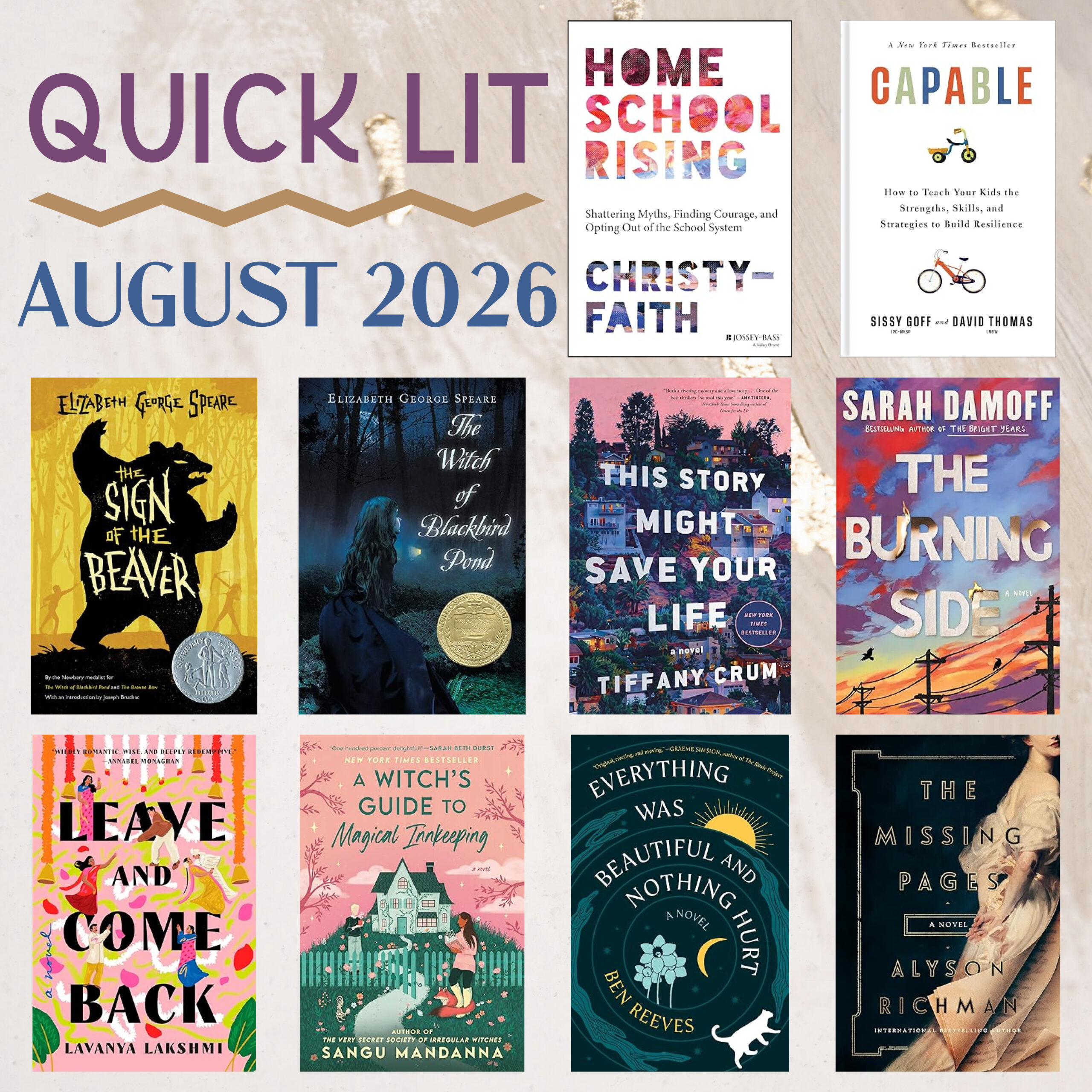
Homeschool Rising: Shattering Myths, Finding Courage, and Opting Out of the School System, by Christy-Faith—Homeschooling is no longer the obscure, ostracized cousin of the education world: in recent years, homeschooling has grown far more mainstream, becoming widely recognized as a reasonable alternative to public or private education. But there are still those who are skeptical, and many have valid reservations, worried that homeschooled children are not provided the academic, social, or emotional support given to traditionally schooled students. In Homeschool Rising, Christy-Faith—a former professional educator who now homeschools her own four kids—provides a guide to those who are interested in homeschooling but still have many questions and concerns.
In the first half of this conversational guide, Christy explores the many reasons families are choosing to homeschool, explaining her conviction that homeschooling is not just a valid alternative, but a superior educational choice. She looks at the history of education and the negative changes that traditional schools have undergone in the last century, and she shows how homeschooling offers many advantages over other schooling methods, fostering critical thinkers with a thirst for knowledge and values that align with their parents’.
The book’s second half is dedicated to dispelling many myths of homeschooling and addressing common questions and concerns around issues like socialization, time requirements, personality conflicts, career/college prospects for homeschoolers, and whether or not homeschooled kids will miss out on core experiences such as prom, gradation, and sports (spoiler: they won’t!). In the book’s concluding chapters, Christy leads parents through exercises in shedding our own inherited beliefs around school and learning. Finally, she offers some helpful questions that can kickstart a new homeschooling venture, then sends parents off with some encouragement for the journey.
I enjoy Christy-Faith’s homeschooling podcast, which was why I was interested in reading her book despite already being a committed homeschooler who needs zero convincing around the benefits of homeschooling. Even though I am not the book’s target demographic of “homeschool curious,” I still found this to be an informative and encouraging read. I especially enjoyed learning about the history of education, and I found it helpful to hear the specific statistics on how homeschoolers stack up against their traditionally educated peers.
I particularly appreciated Christy’s section on socialization, as this is the primary hesitancy I hear from those who are interested in homeschooling but not quite ready to commit. Christy is honest about the fact that, while the stereotype of the socially awkward homeschooler is overdone, there is some truth to the fact that homeschoolers can be a little different. Christy addresses ways that homeschooling parents can provide socializing opportunities for our kids, but she also helps us see these social differences as a feature and not a bug of homeschooling—an environment that often results in kids who are not preoccupied by desires to fit in with a crowd, who understand how to experience genuine belonging, and who are capable of interacting with adults and forming friendships with other-aged children. I loved her script-flipping here, with reminders of the downsides to the traditional school version of “socialization” and the value of parent/child connection over peer-to-peer relationships.
The overall tone of this guide is encouraging towards homeschoolers, offering straightforward but compassionate pushback to the various critiques and criticisms of homeschool naysayers. While I personally have a more nuanced view of homeschooling that recognizes home education is NOT for everyone, I can appreciate her more forceful approach that is highly persuasive and, honestly, easy to cheer on as a homeschooling devotee myself. This is a great book for someone starting off (or thinking about starting off) on their homeschooling journey, especially individuals who are expecting to face pushback from family and friends and in need of validation for their decisions. Seven years in, I still found encouragement and morale boosting that I will hold onto on the tough days.
My Rating: 4 Stars // Book Format: Audiobook (I would not recommend this format: while the audiobook narrator is fine, I would have preferred for the author to read it herself since I’m already familiar with her voice through the podcast.)
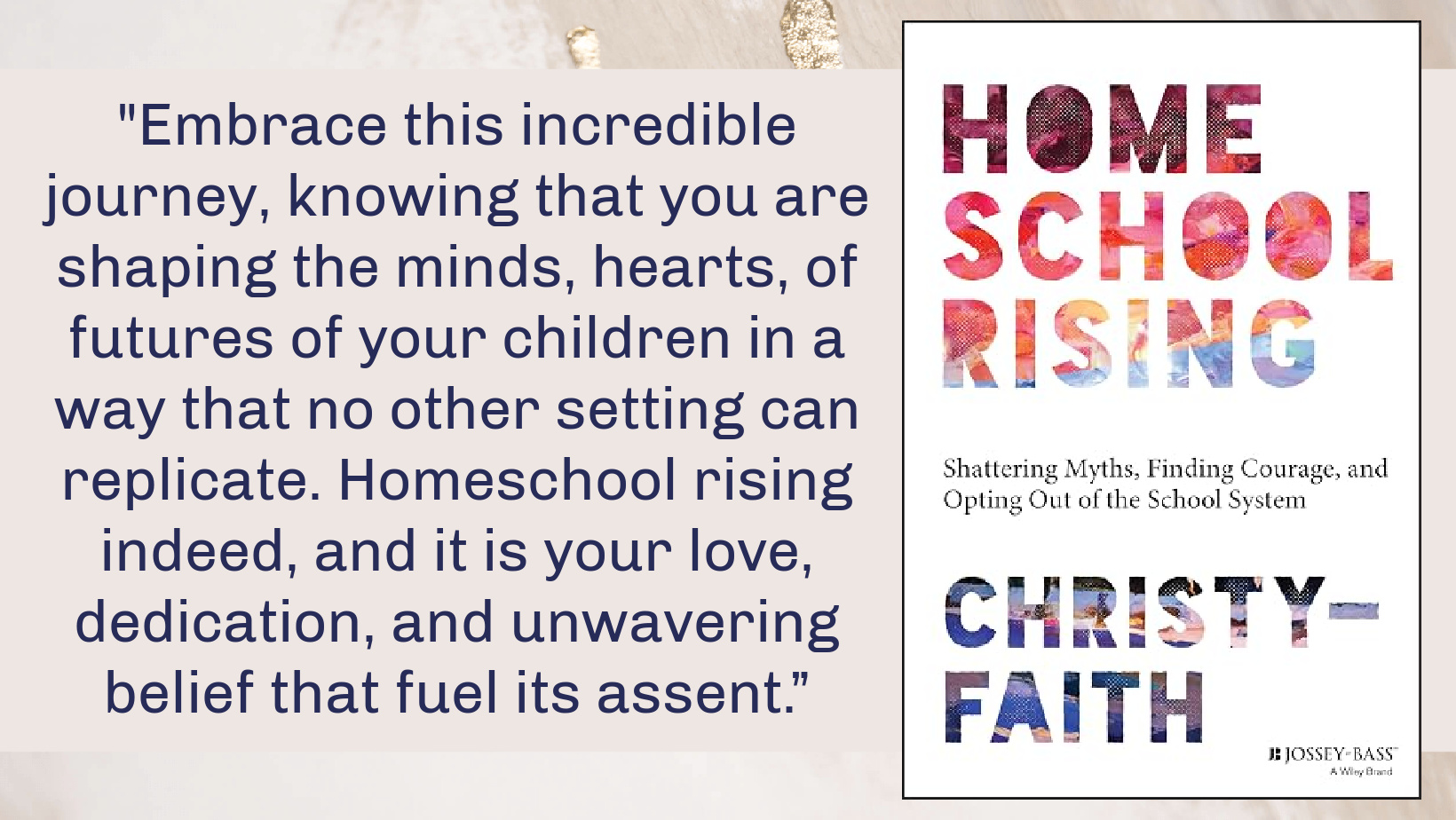
Capable: How to Teach Your Kids the Strengths, Skills, and Strategies to Build Resilience, by Sissy Goff and David Thompson—I’m certain that every generation of kids (and their parents) has their own set of challenges, but the children of today seem to be facing some particularly tough issues, with youth reporting skyrocketing levels of anxiety, depression, and extreme emotional distress. Many of today’s kids don’t feel capable to face the challenges that life will inevitably present them. And as parents, we need to be equipping our kids to be confident and resilient, able to regain their footing when life knocks them down.
In Capable, therapists Sissy Goff and David Thomas draw from more than fifty years of combined counseling experience to offer their advice for raising resilient kids who genuinely capable, defined as having practiced coping (skills and strategies to navigate emotions) and learned competence (strengths and abilities for life’s circumstances) for life’s challenges (tasks or situations that test abilities). After explaining WHY modern kids are feeling particularly INcapable (helicopter parenting and social media pressures being key culprits), they identify many capability pitfalls for both kids and parents. They then deep-dive several capability strengths (competence, flexibility, perseverance, humility, and gratitude), skills (managing emotions, solving problems, dealing with disaster, teamwork, and moving outword), and strategies (reframing, goal setting, self-advocacy, scaling and sizing, and self-care). Each section is informed by Sissy and David’s experiences and loaded with relatable anecdotes, practical strategies, and Biblical guidance for helping kids grow into capable and confident men and women of God.
This book is gently written and compassionate in tone (expected from a book by two therapists), yet it does not dip into over-therapized language and is by no means “soft” on ineffective practices and unhealthy behaviors, beliefs, and familial patterns. Sissy and David are unafraid of calling out parental challenges, yet their writing comes across as empowering and actionable. I am absolutely guilty of some of the parenting practices that might KEEP my kids from achieving adult levels of capability, and I appreciated the call outs to do better myself so that I can help my kids spread their wings. This is a parenting book that could be helpful to almost every modern parent. The appendix, with an extra-long list of capability-building exercises, was especially useful.
My Rating: 4 Stars // Book Format: Audiobook (There is a TON of info here, so it is probably better consumed via print or e-book.)
MIDDLE GRADE READ-ALOUDS
Book reviews of these read-aloud novels were written mostly by Charleston, with contributions from the rest of us.
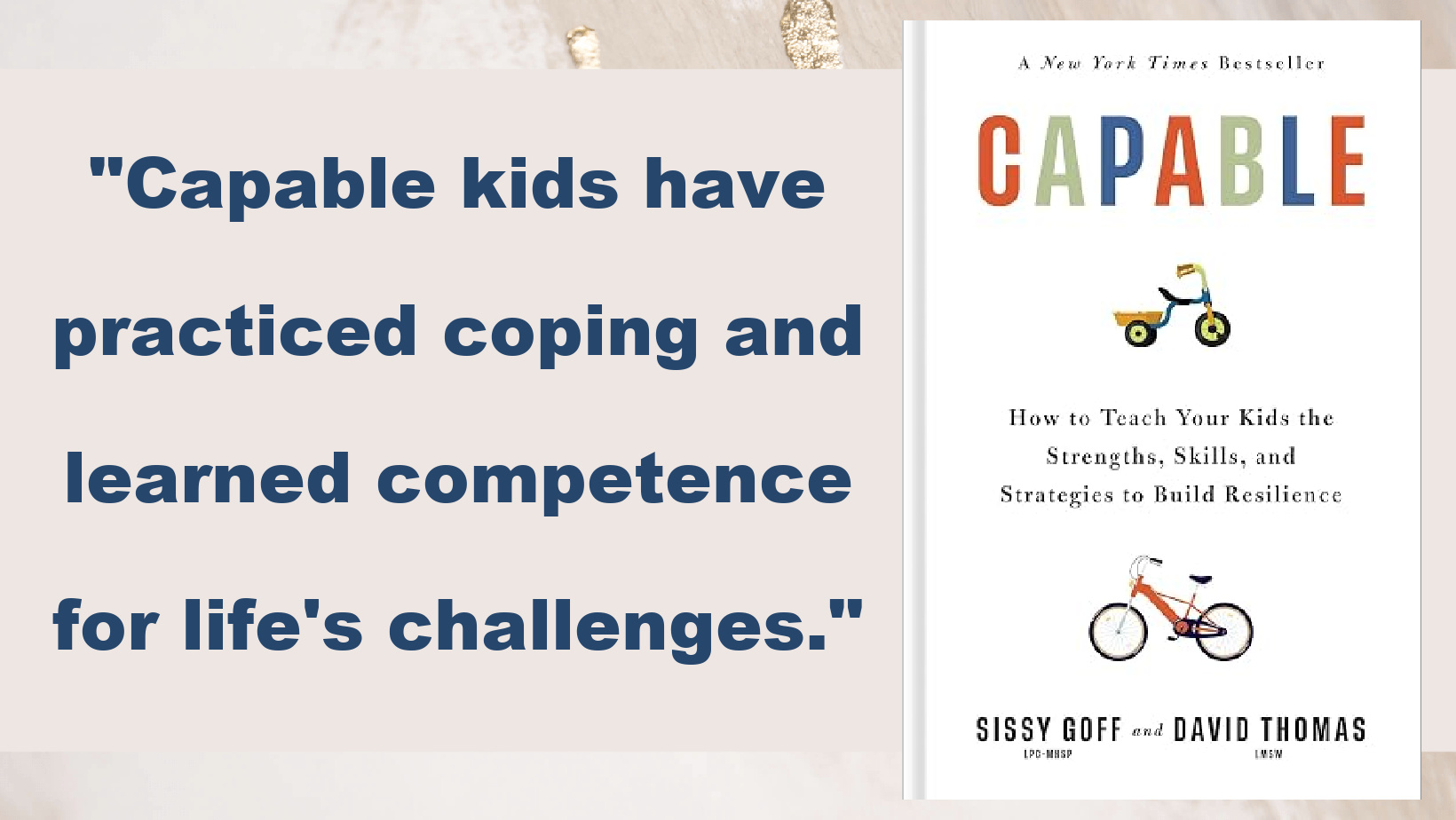
The Sign of the Beaver, by Elizabeth George Speare—Being alone in the woods for a couple of months probably doesn’t sound too scary to you, unless you happen to be just thirteen years old and you are alone in a wood that is populated by a tribe of unknown Indians. Also, some guy stole your gun. That’s the story of Matt, who has been left alone to care for his family’s log cabin while his dad returns to Quincy to retrieve Matt’s mom and siblings. What was intended to be a few weeks slowly turns into endless months as Matt’s worries increase with each passing day.
After a few weeks of living alone, Matt realizes that he is being watched, and the Indian Attean arrives just in time. Matt is told by Attean’s grandfather to teach Attean to read. The boys’ relationship begins with little communication and bad attitudes, but they soon learn to get along as they earn each other’s respect.
Our whole family really liked this book. I [Charleston] enjoyed learning about the Indian lifestyle and appreciated how the author used small details to bring the story to life. Mom enjoyed the unlikely friendship story and was inspired by the courage, resourcefulness, and resilience of our young hero.
Kali liked that Matt made new friends and that the Indians were kind to him, and she liked hearing about how Attean was going off to become a man because it made her think that when she gets bigger, her family might help her do something to celebrate becoming a woman. Sully liked how Matt thought he was alone in the forest but he really wasn’t, and that he made a new friend in Attean.
Charleston’s Rating: 4 Stars // Sullivan’s Rating: 4.5 Stars // Kalinda’s Rating: 4 Stars // Mom’s Rating: 4 Stars // Book Format: Print
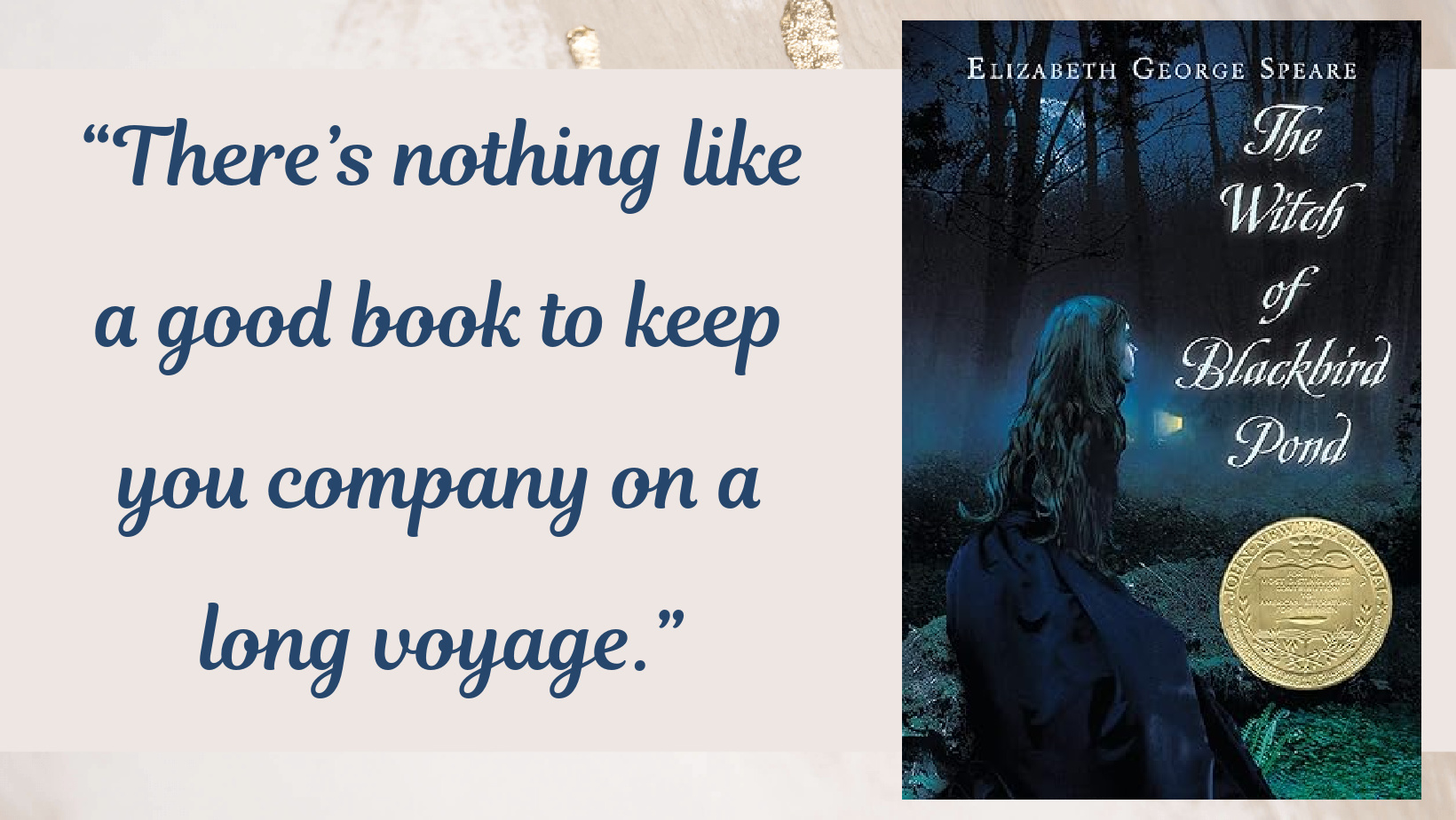
The Witch of Blackbird Pond, by Elizabeth George Speare—In The Witch of Blackbird Pond, there are two journeys to be taken: first, the journey from the island of Barbados to Saybrook, Connecticut; then, the journey teenage Kit takes—one of emotion, betrayal, love, and friendship with the witch of Blackbird Pond. Sixteen-year-old Kit Tyler is used to living a luxurious life on her grandfather’s plantation in Barbados, but when he dies, she is forced to leave the only home she’s ever known to live with her only surviving relatives in a Puritan community in Wethersfield, Connecticut. Life in Connecticut is nothing like the aristocratic one of Kit’s childhood: she must work hard and follow the tedious lifestyle of the Puritans, who are slow to warm to their newest resident. Kit’s only prospects for a better life are marriage to William, the wealthiest man in town who begins building a lovely new house for his prospective bride.
Kit’s circumstances improve when she discovers Hannah Tupper, a Quaker outcast living on the outskirts of Wethersfield near Blackbird Pond. Kit knows that Hannah is the opposite of a witch, as the community claims her to be, and frequent visits with her welcoming friend become the antidote to the pain Kit experiences at home. But when the friendship is discovered, Kit must protect her friends and save her family, even if it means ruining her own good name.
I [Charleston] enjoyed the book’s hopeful ending and the two main storylines that collide into one—Kit’s secretive friendship with Hannah, and the complicated love triangles between Kit’s cousins and the men of the town. Kali liked that Kit was creative and brave, and SHE enjoyed a few surprises that came at the end. Sully enjoyed hearing about Kit’s time on the ship to Connecticut. Mom appreciated the interesting glimpses at Puritan life and the creative weaving of fact and fiction seen through the appearance of many historical figures and events that are adjacent to the key story of Kit, a remarkable heroine.
Charleston’s Rating: 4 Stars // Kalinda’s Rating: 4.5 Stars // Sullivan’s Rating: 3.5 Stars // Mom’s Rating: 4 Stars // Book Format: Print
FICTION
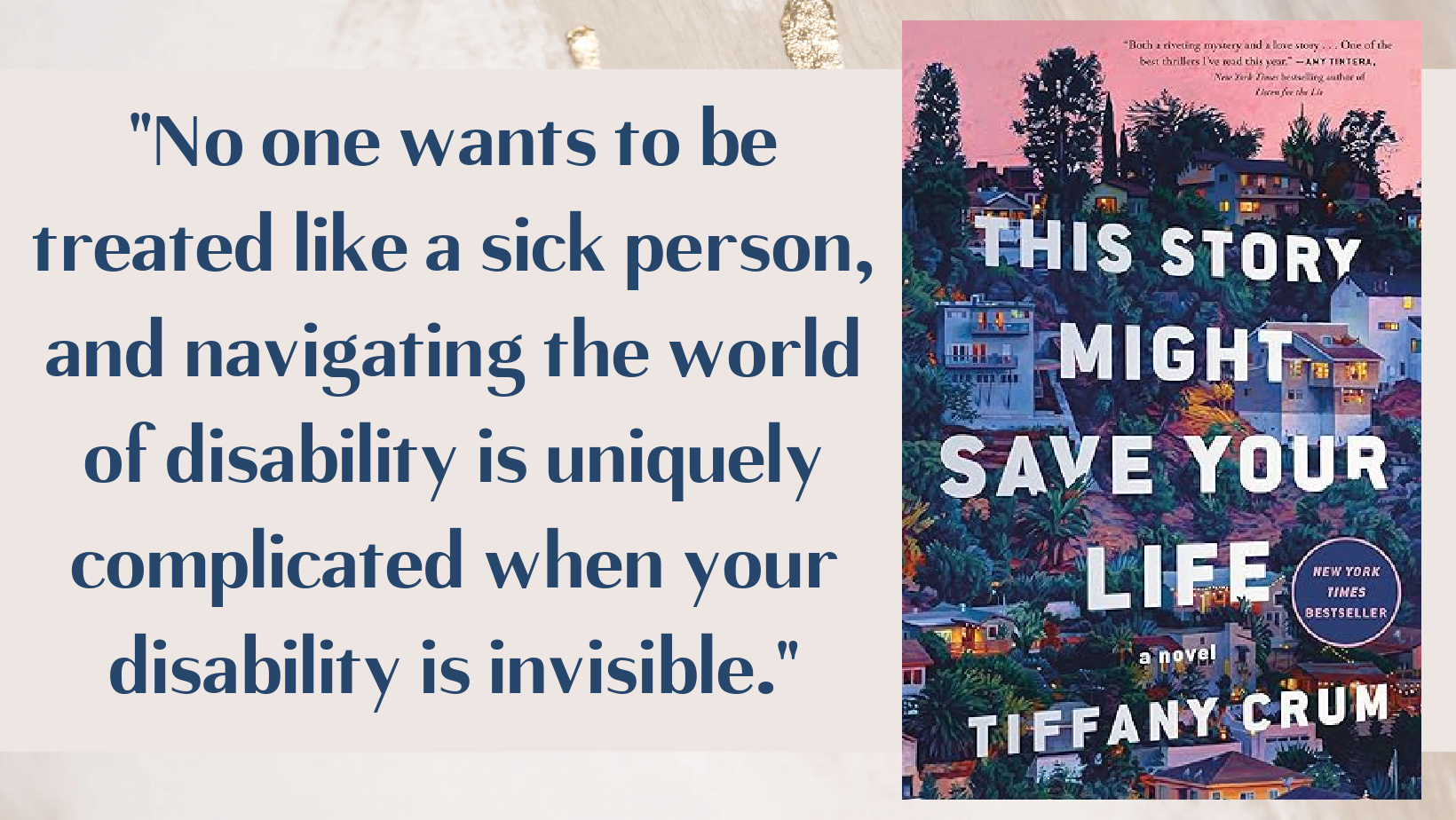
This Story Might Save Your Life, by Tiffany Crum—Benny and Joy are best friends whose friendship has survived everything life has thrown at them: Benny’s difficult past; Joy’s debilitating narcolepsy; marriages to different partners; their launch into stardom as the hosts of a popular comedy podcast that deep-dives unlikely survival stories; and, most recently, several unfortunate instances of poor publicity that are threatening to topple their media empire. Now, Benny and Joy are faced with their biggest survival story ever when Benny shows up to their podcasting studio to find Joy and her husband, Xander, are missing. Benny is desperate to find them, and stakes are raised when the police zero in on Benny as a suspect.
Benny’s race to solve the mystery alternates with chapters from Joy’s previously unseen memoir, which she left for Benny as a clue. As readers, we move through past and present timelines to piece together Joy and Benny’s origin story, uncover the layers of pain that led to Joy and Xander’s disappearance, and follow the clues to what REALLY happened that fateful night.
It’s possible that I’ve plowed through another book as quickly as I raced through this one, but if so, I don’t remember when; I DEVOURED this fast-paced, smartly constructed thriller that merges romance, mystery, friendship, and so much more. The story is a perfect puzzle with brilliantly-spaced clues and plot twists that rely on smart writing rather than convoluted tricks. In addition to protagonists I couldn’t help but love, I was drawn in by the Los Angeles, setting well-drawn side characters, interesting podcast elements (lots of Armchair Expert vibes going on here), and inclusion of Joy’s narcolepsy, which might have felt like a convenient “unreliable narrator” trope but actually serves the story well while feeling realistic and not at all gimmicky.
Two other major elements of the story are issues I can’t name because it would give away too much of the plot, but I’ll note that sensitive readers may want to check Storygraph’s trigger warnings before reading. I will say that these sensitive topics are handled with delicacy and felt real and not manipulative or gratuitous in any way.
For a while, it seemed like every thriller was being compared to Gone Girl, and few books ever really earned that comp; this book actually IS very Gone Girl-esque, with a little Tomorrow, and Tomorrow, and Tomorrow thrown in. Many reviewers are noting that the audio is excellent, and I can see how the podcast elements would work well in that format; however, I’m glad I read it on Kindle so that I could keep up with every clue and twist. Also, the inspiring Acknowledgments section is not to be missed.
It’s rare for me to give five stars to a book that is this commercial/non-literary, but I really couldn’t bring myself to give it any less.
My Rating: 5 Stars // Book Format: Kindle
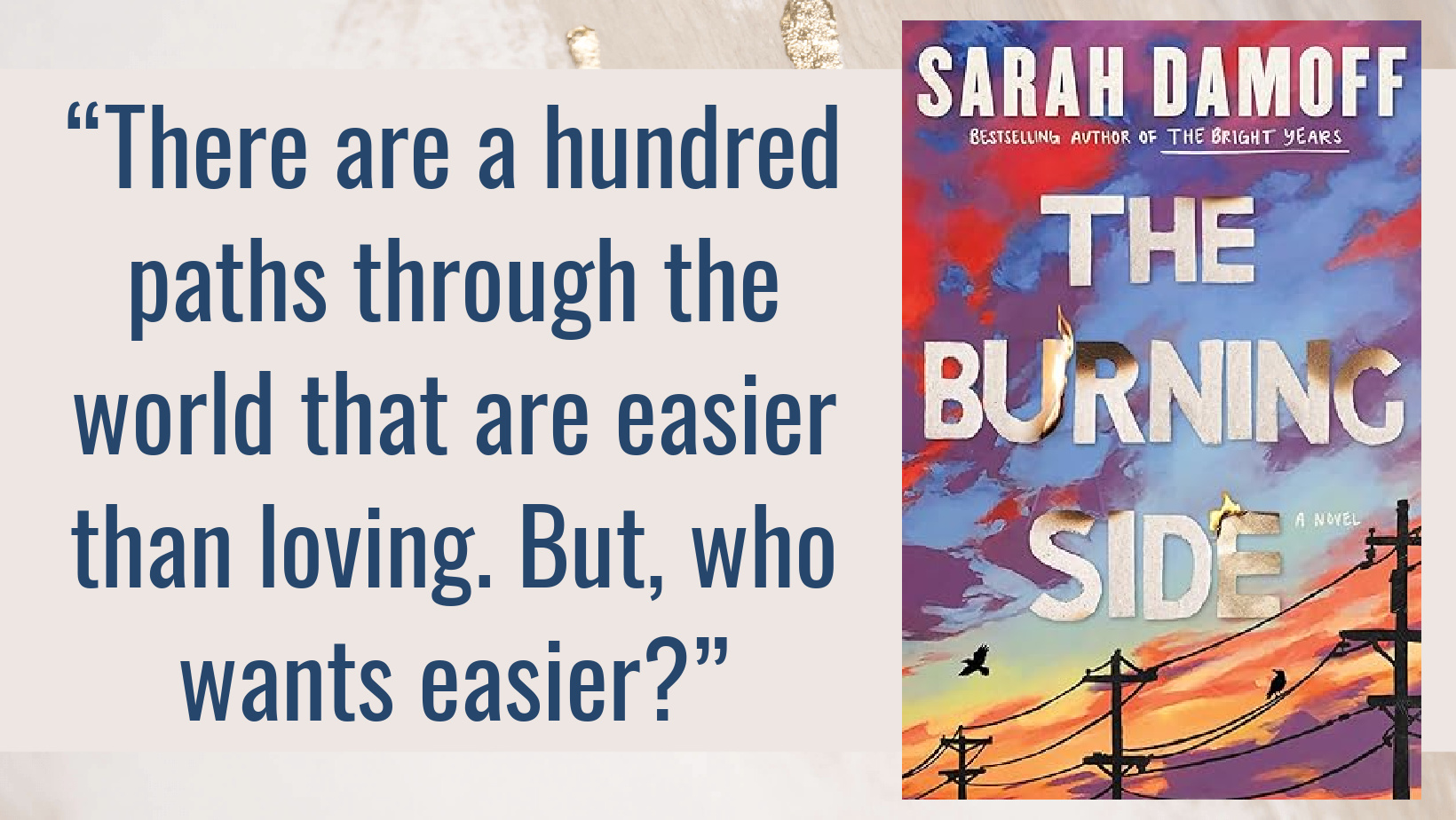
The Burning Side, by Sarah Damoff—Leo and April are several years and two kids into a marriage that is fraying at the seams. Then, on the night that Leo asks April for a divorce, their house burns to the ground. The young family retreats to April’s childhood home in Dallas, where April’s parents—Billy and Deb—are navigating a jarring crisis of their own: Billy was recently diagnosed with early onset Alzheimer’s, and the couple has yet to tell April or her siblings, Cameron and Josie.
The narrative unfolds in alternating perspectives, pinging back and forth in time through narrations from April, Leo, and Deb as they trace the family cracks and fractures that the fire has exposed. We witness their marriage origin stories, their devastations and triumphs, the various cultural and emotional hurdles they’ve been forced to overcome, and the ways that they have willfully and unknowingly loved and wounded and hid from one another. And as the couples sort through the rubble, determining what can be salvaged and what must stay behind, we witness the smoldering implications of decisions and actions that sparked flames of grief, guilt, heartbreak, and reconciliation. Memories are forged and forgotten and shift with time, and we watch with bated breath as tenuous connections hang by the threads of merciful forgiveness and second chances.
Sarah Damoff’s debut was one of the best books I read in 2025, and this sophomore novel topped the list of my most-anticipated books this year: even though I knew it would deal with two of the subjects that are hardest for me to read about (dementia and divorce), I trusted Damoff to carry the story with honesty and tenderness, and she more than exceeded my expectations. From the opening chapter, I knew it would be an easy five stars. Through prose that is sharp and insightful—with passages that demand to be savored, highlighted, and shared—Damoff has created a family to love and cheer on, even as they break our hearts again and again. The family dynamics are layered and nuanced and the content is devastating, with more than one passage that absolutely WRECKED me. But the unfathomable heartbreak is balanced with the most beautiful, life-affirming moments that celebrate marriage and parenthood and found-family in ways that feel realistic, redemptive, joy-filled, and hopeful. There are MANY issues addressed (class struggles, postpartum depression, homelessness, gender roles, infidelity, child abandonment, dyslexia, codependency, and of course dementia), yet somehow this feels like the opposite of an issues-driven book and just like real life and broken people who choose to keep loving in spite of it all.
There were a couple of sticking points in this one, most notably the brief summer timeline that felt a little too short to hold so much transition and emotional volatility, but my small critiques could not detract from my love for this gorgeous story of a family that set my heart ablaze. If I could, I’d give an extra star for the beautiful and meaning-packed cover.
My Rating: 5 Stars // Book Format: Kindle
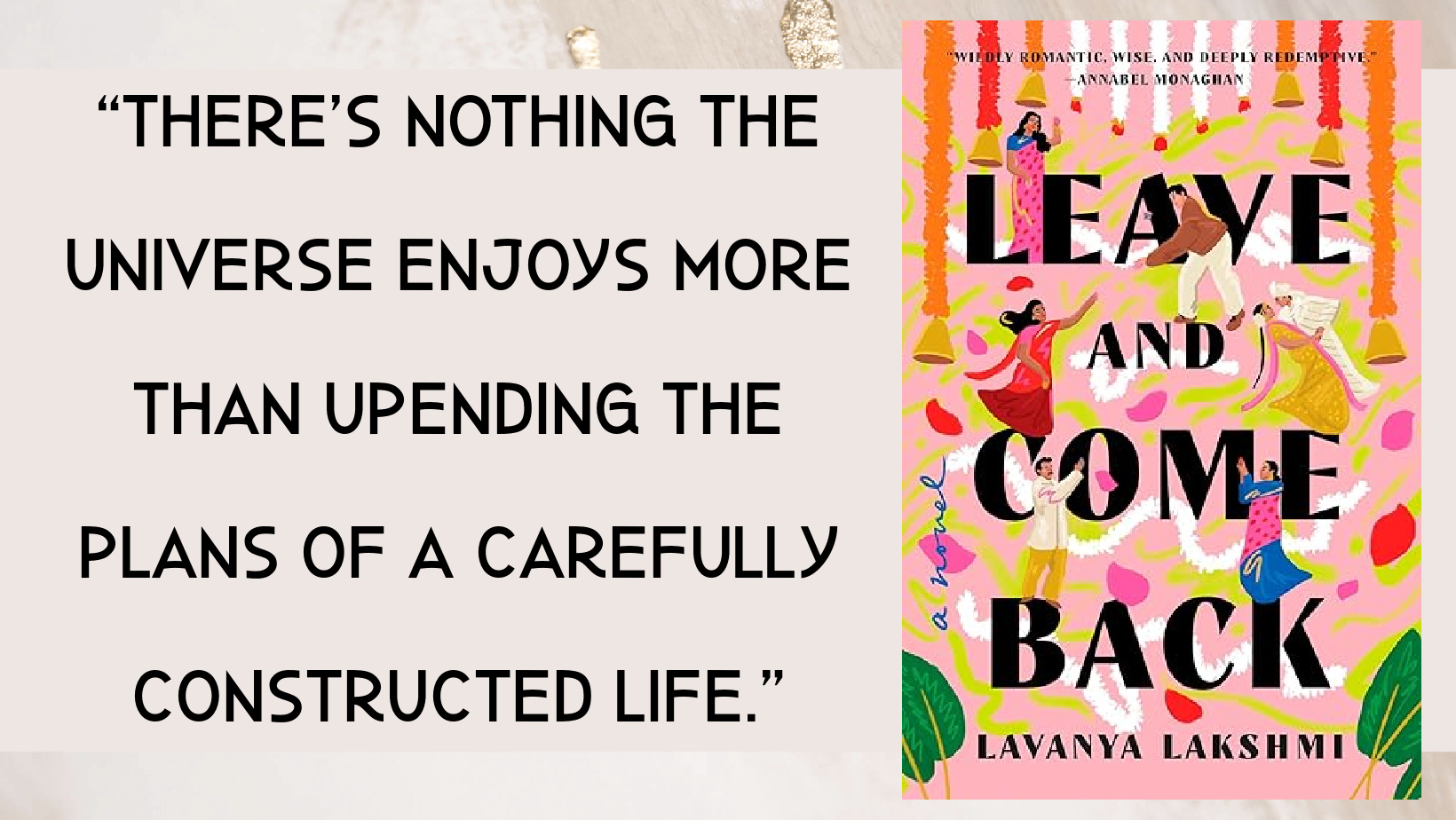
Leave and Come Back, by Lavanya Lakshmi—Simran Gopal hasn’t seen her family in years—not since she escaped the family home in New Jersey for a new life in Toronto, where she no longer lives under the thumb of her domineering aunt, Veena perima. In Toronto she can date whomever she chooses, pursue the career and education she wants, and grieve her parents (who died in India when Simram was just 15) in her own way. Simran misses the cousins who were always like sisters to her, but she has made peace with her decision. But then she receives an invitation to her cousin Geeta’s wedding and has little choice but to return to the home she’s avoided for too long.
Tensions are already running high when Leo Bridgers, Simram’s new boyfriend, accidentally crashes the wedding festivities. To avoid further ire from Veena perima, Simran and her cousins embark on a complicated mission to convince her aunt that Leo is a worthy match for Simran. As Leo spends time with the family, he wins the affections of everyone BUT Veena perima, and he falls more deeply in love with Simran as he sees her with her family in the culture she grew up in. For Simran, being back home stirs up complicated feelings as she attempts to understand how she can move on with her life without fully abandoning the family and culture that define her.
Leave and Come Back is a solid debut featuring lush prose, lots of heart, and just the right amount of grit. Even though I’m not very familiar with Bollywood films, I can see how this colorful, cinematic “rom-com-fam-dram” pays homage to that world, and I loved the sweeping love story, over-the-top shenanigans, and ridiculous-yet-lovable characters. We are given a front-row seat to the extravagant, multi-day production that is an Indian wedding; I loved learning about this facet of Indian culture, and experiencing the wedding through Leo’s American eyes was especially helpful for this outsider looking in. I was especially impressed with Lakshima’s ability to but envelop an American readership into a culture we might not understand without pandering to her audience. Lakshima naturally incorporates Tamil and Hindi phrases, customs, and foods into the story, offering just enough scaffolding to help us get the gist of what is going on without over-explaining or pausing the narrative. This is such a fine line to walk and Lakshima has mastered it brilliantly.
While I was swept away by the book’s opening pages, it lost me some in the middle: the story drags, with many convoluted plot twists and frustrating miscommunications, and the progressive themes (bemoaning the patriarchy and incessant critiques of white culture, plus the introduction of an LGBT storyline) are heavy-handed and preachy. I stuck around, though, and was rewarded with a lovely, redemptive conclusion. It’s rare for me to enjoy a romance when I dislike one of the protagonists, and I found Simran highly unlikable and difficult to really know (the side characters are much more well-drawn); thankfully, my love for the kind-hearted Leo made up for my disinterest in our leading lady.
This was an especially fun read having recently listened This American Woman, which was also a great window into Indian culture and especially the ins and outs of Indian family dynamics. And I would love to pursue this exploration further by watching a Bollywood film or two!
My Rating: 4 Stars // Book Format: Kindle
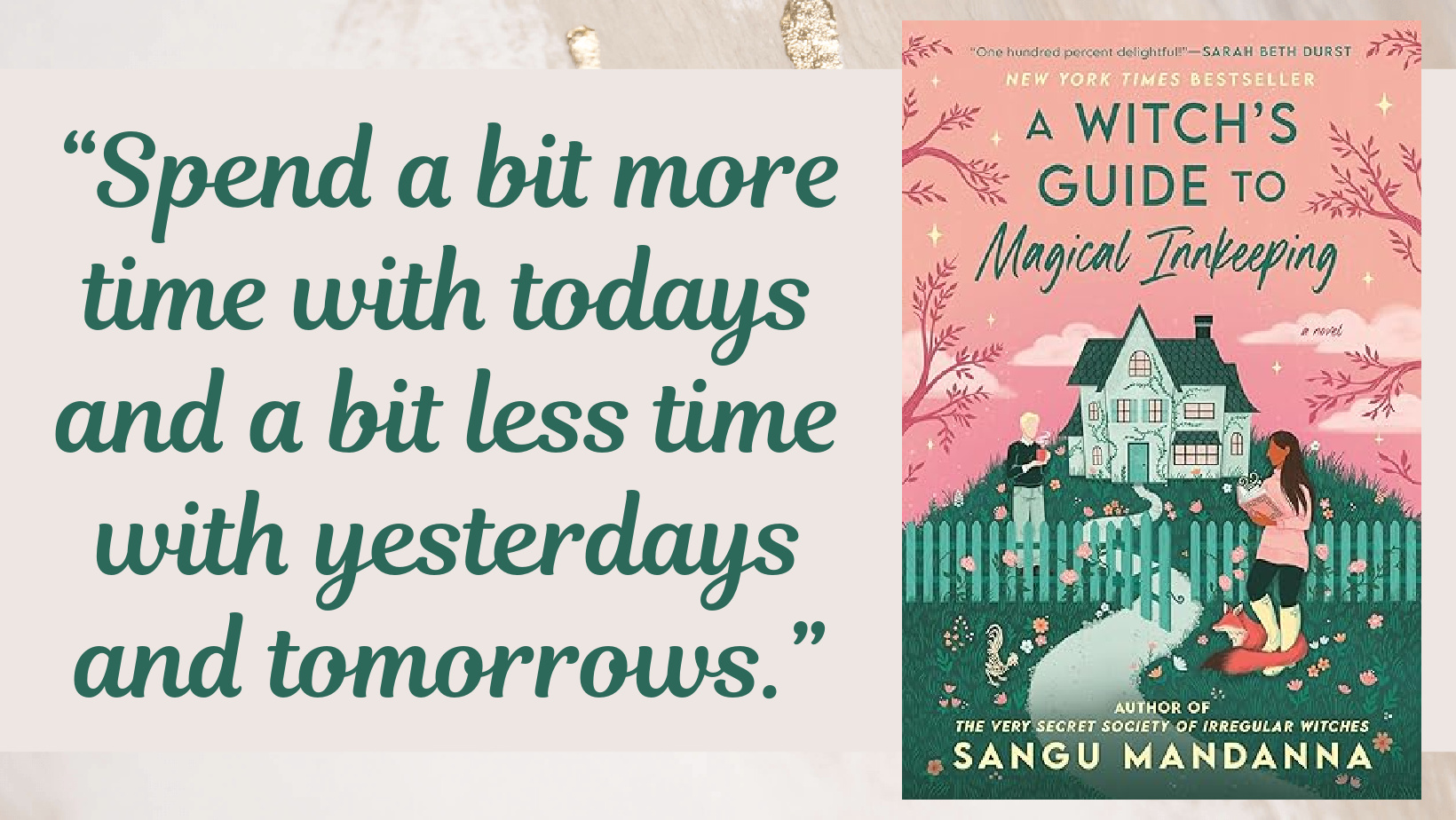
A Witch’s Guide to Magical Innkeeping, by Sangu Mandanna—As a teenager, Sera Swan was one of the most powerful witches in Britain. But when she harnessed her magic to bring her recently-dead great-aunt Jasmine back to life, her magical powers vanished along with her good standing with the magical Guild. Sera has spent the fifteen years since that day managing an enchanted countryside inn alongside her aunt and a talking fox that refuses to leave. Sera has lost all hope of having her magical powers returned until hope arrives at the inn in the unexpected form of Luke Larsen, a magical historian from Sera’s past who knows a spell that could bring Sera’s magic back. These two curmudgeonly souls are joined by the inn’s eccentric guests and family to resurrect Sera’s magic, rediscover their own ability to love, and find purpose and belonging in unexpected places.
I was drawn to this novel by its promises of overwhelming magical coziness, and it absolutely delivered on vibes. Sera’s inn is utterly charming, her housemates are quirky and fun, and the found family elements and hopeful redemptive themes are the cream and sugar to this magical cup of bookish tea. But vibes can’t quite compensate for the lack of substance at this tea party; the story is predictable and the romance is abrupt and anticlimactic. And while I can appreciate the author’s desire to make this story feel welcoming and inclusive, the story gets weighed down by the forced inclusion of every possible “other” (individuals of every nationality, sexual identity, physical and psychological disability, etc.—it’s A LOT).
I’m not usually a huge fantasy reader, but this one brings just the right amount of magic and world-building for me, and the novel’s comforting mood and gentle enchantment made for a nice listening experience. However, I am not sure if I would have pushed through the mushy middle and bloated DEI cast list if I were reading in another format.
My Rating: 3.5 Stars (Rounded to 3 Stars on Goodreads) // Book Format: Audiobook
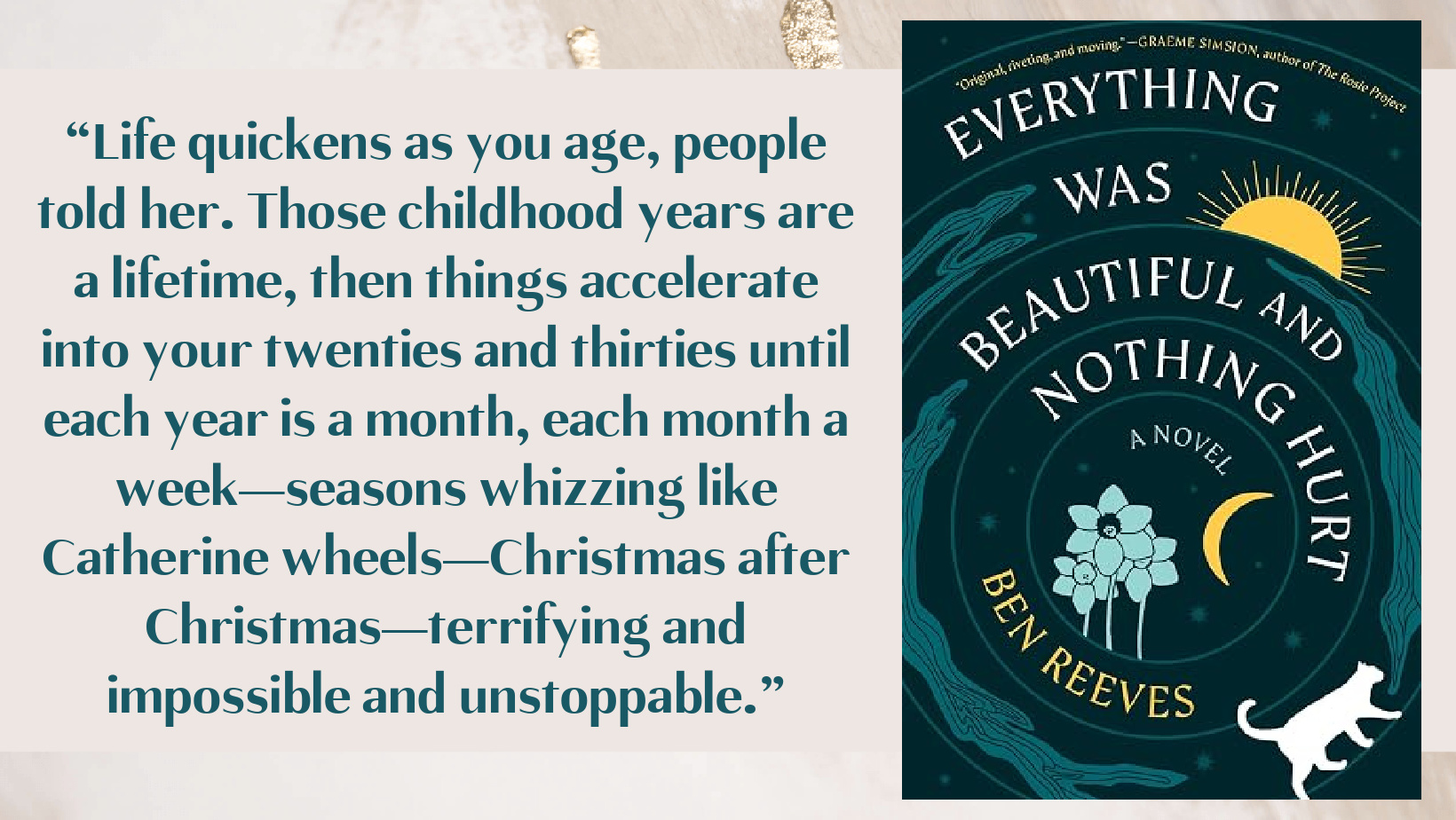
Everything Was Beautiful and Nothing Hurt, by Ben Reeves—Travis leads a lonely life, occupying a small apartment with nobody but his cat for company. He’s always struggled to establish genuine connections, a side effect of his job as Death in the modern world. Travis dutifully fulfills his role of offering companionship and comfort to individuals in their last minutes of life; knowing that he is unable to change the fate of those he is shepherding through their final moments, he offers little judgment or commentary. He is surrounded by the noise that is the awareness of the saddest and darkest parts of humanity, but remains removed from it all. That changes when he begins to form a friendship with Dalia, a single mother of two who lives across the hall. Where Travis is stoic and colorless, Dalia and her girls are vibrant and full of life, and in getting to know them, he begins to understand something that all his time wandering the world had never offered him: a full understanding of and appreciation for life.
This experimental novel is deeply literary, interspersing Travis and Dalia’s stories with poetic descriptions of ordinary happenings in nature and communities that are occurring simultaneously to the primary storyline. Each chapter also contains several featured “death stories” in which we get glimpses into the final moments of individuals of all ages and walks of life. Though this is a book about death, it is ultimately a novel that celebrates life while accepting its end. The writing exudes warmth and tenderness while refusing to shy away from the harshness and sadness that lurk in every corner.
There are some books that stay with you, and I am certain this will be one of them. One passage in particular—the depiction of an infant who passes away in his sleep—had such a strong effect on me that, days after reading, I’m still welling up with tears every time it comes to mind (which is often). As a Christian, I have an entirely different worldview from the fatalistic one presented here, but I still found beauty and comfort in some of these stories and in the story of that infant’s loss in particular.
In spite of the impactful messaging, I didn’t really enjoy this reading experience. I could appreciate the novel on an artistic level: the shifting tenses and jumping storylines effectively convey the universality of death, and the lack of explanation surrounding Travis—whose death-shepherding process is never clarified, and who is somehow everywhere at once while also establishing relationships with his neighbors—mirrors the ineffability of the circle of life. . . but these literary devices left me feeling removed from the story and confused by our main characters, who held no draw for me. I was particularly baffled by Travis’s fixation with Dalia, who didn’t stand out (to me, at least) in any way that would make Travis more drawn to her than the billions of other humans in his contact. And then there were the unsavory/gritty elements that seemed totally unnecessary, especially when the author had elsewhere proven adept at capturing life’s harshness tastefully and without gratuitous salaciousness.
Whenever I’m reading, I have an ongoing internal dialogue of how I might rate a book, and it’s usually not too difficult to settle on a final verdict. This one was tough: at some points, I could see myself giving this 5 stars (for its memorability and artistry), but in the very next chapter I’d drop my mental star rating down to 2 (for boring me to tears with bizarre nature descriptions, or making me sick to my stomach with some horrific tidbit, or—perhaps the worst of all—flipping tenses mid-sentence). Ultimately, I landed somewhere in between. I absolutely understand the high praise this book is receiving and agree that it probably deserves the accolades . . . it just wasn’t a complete hit for me.
My Rating: 3.5 Stars (Rounded to 4 Stars on Goodreads) // Book format: Kindle
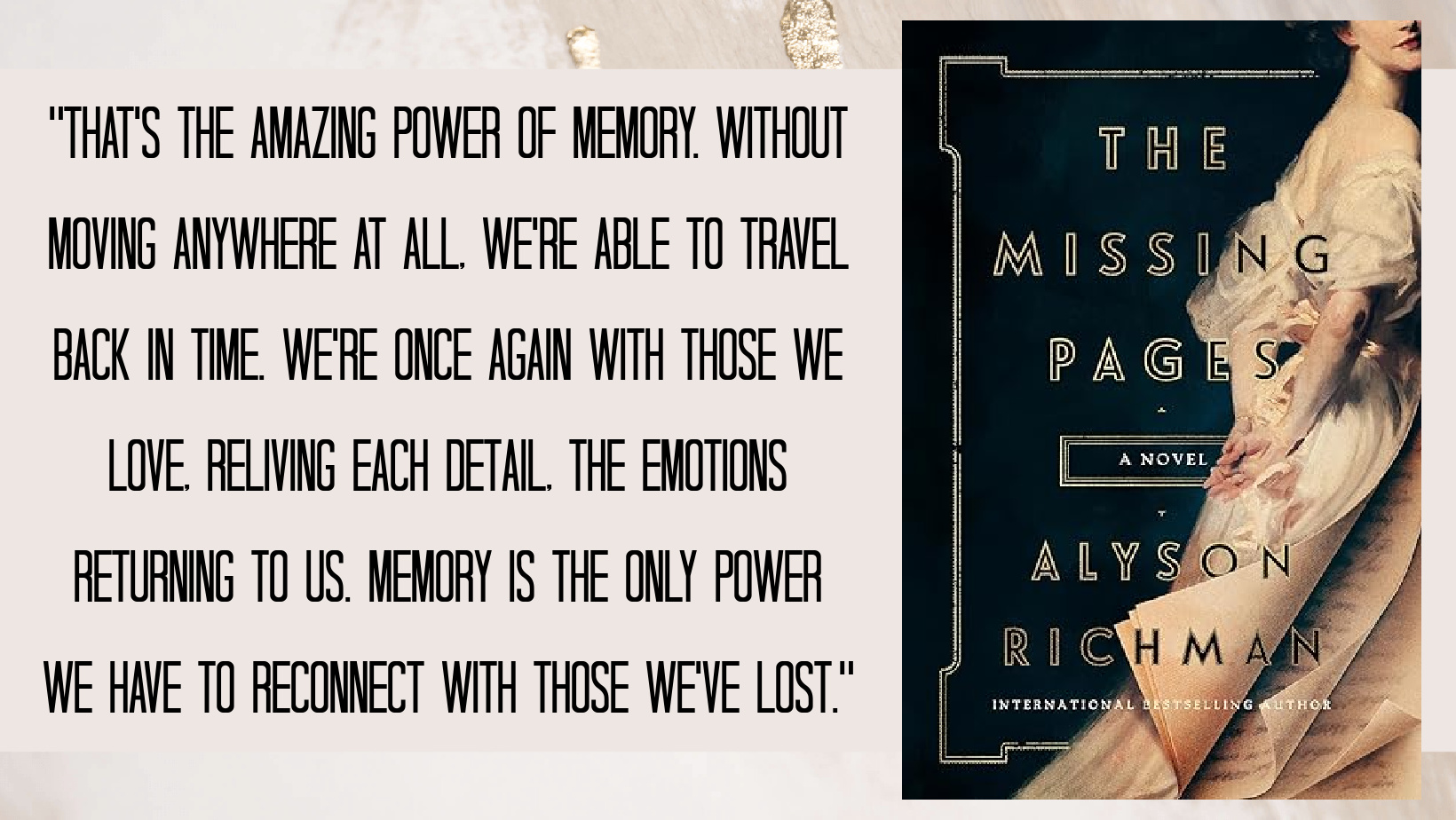
The Missing Pages, by Alyson Richman—In 1912, Harry Widener was an American socialite traveling aboard the Titanic after a trip to London to purchase a priceless volume for his collection. Harry’s final known words before the Titanic’s sinking were that he must return to his cabin to retrieve his latest treasure. But Harry and his book were never seen again.
Eighty years later, Harry’s ghost haunts the Harry Widener Memorial Library that his mother built to house Harry’s extensive book collection and ensure his legacy. When Violet Hutchins, a Harvard sophomore grieving a recent tragedy of her own, becomes a page at the library, mysterious things begin to happen, leading her to question whether Harry’s ghost might be trying to communicate with her from the grave. The haunting sends Violet on a path to investigate the possibility of a mysterious romance whose secret Harry took with him to the grave.
Like very woman who was in middle school when Jack and Kate professed their love for one another on a makeshift raft surrounded by icebergs, I have a long-held interest in the Titanic, so this book—with its historical setting, bibliophile protagonists, and promise of mystery—immediately drew my attention. And I have to give it to Alyson Richman: in the person and story of Harry Widener (a historical figure), she landed on an incredible story, and she absolutely had me convinced of the potential truth to the supposed mystery at the center of The Missing Pages with her blending of fictional and factual events that I found genuinely fascinating.
Sadly, I struggled to enjoy the book itself. The pacing is off, with little happening until well past the midway point, a conclusion that felt rushed and not very satisfying, and almost ZERO time spent on the Titanic itself (such a missed opportunity). The romance was only shallowly realized, and while I liked the idea of the 1990s sleuth investigating a historic mystery, I cared little for the modern character of Violet, whose story felt like an afterthought. I found myself doing a LOT of skimming because I wanted to see the stories come together, but the writing simply did not capture my attention.
My biggest hangup was with the supernatural elements. I generally am fine with a little supernatural in my reading, but here the ghost components and inclusion of seances, oija boards, and mediums read less like fantasy (which I tend to like) and more like attempts to legitimize occult practices (something I steer clear of).
This was a creative take on a historical figure and potential story that deserve to be explored, so I was disappointed that it didn’t fully pass the float test for me.
My Rating: 3.5 Stars (Rounded to 3 Stars on Goodreads) // Book Format: Kindle
Have you read any of these titles? What did you think? What books have you been loving (or loathing) this summer?
I haven’t read any of them (but The Burning Side is in my sights!), however, I have gotten a number of new releases (this year and last) lately, like Calamity Club, which I thought was great for the first half, but then the second half turned a corner, with an unlikely way to make money—it went on too long and it sort of lost me. I listened on audio and enjoyed it a lot (up to that point.) I also got The Gulf of Lions by Caitlin Shetterly (emotional, but not QUITE the thing), A Marriage at Sea (I feel like I was duped) and 2 backlist titles—The Stone Diaries by Carol Shields (’95 Pulitzer winner), which was very good, and A Lesson Before Dying by Ernest Gaines. That had a great potential and good writing, but ultimately fell short for me.
Sorry for the disappointments! I have had so many books like that lately too, I wonder what’s going on with that. I have decided not to read Calamity Club because I’ve heard from quite a few people that it isn’t worth the time investment.
Burning Side is my best read of the year! I’ve read it twice! So well written!
Also…there’s a movie adaptation of Sign of the Beaver that my students loved. Promises to Keep I think is the name.
I didn’t know about the movie! Thanks for the tip!
https://www.amazon.com/Sign-Beaver-Sheldon-Larry/dp/B0H45HVC8C
Amazon prime