My reading this month was fairly diverse, yet there were some surprising overlapping themes: three books touched on illiteracy, two had to do with influencer culture, two had mental illness at their center, many explored the complicated dynamic between parents and their children. These patterns fascinate me, and have me thinking a lot about how no reading experience exists in a vacuum, with each book bumping up against those around it and affecting our impressions, takeaways, and future book choices.
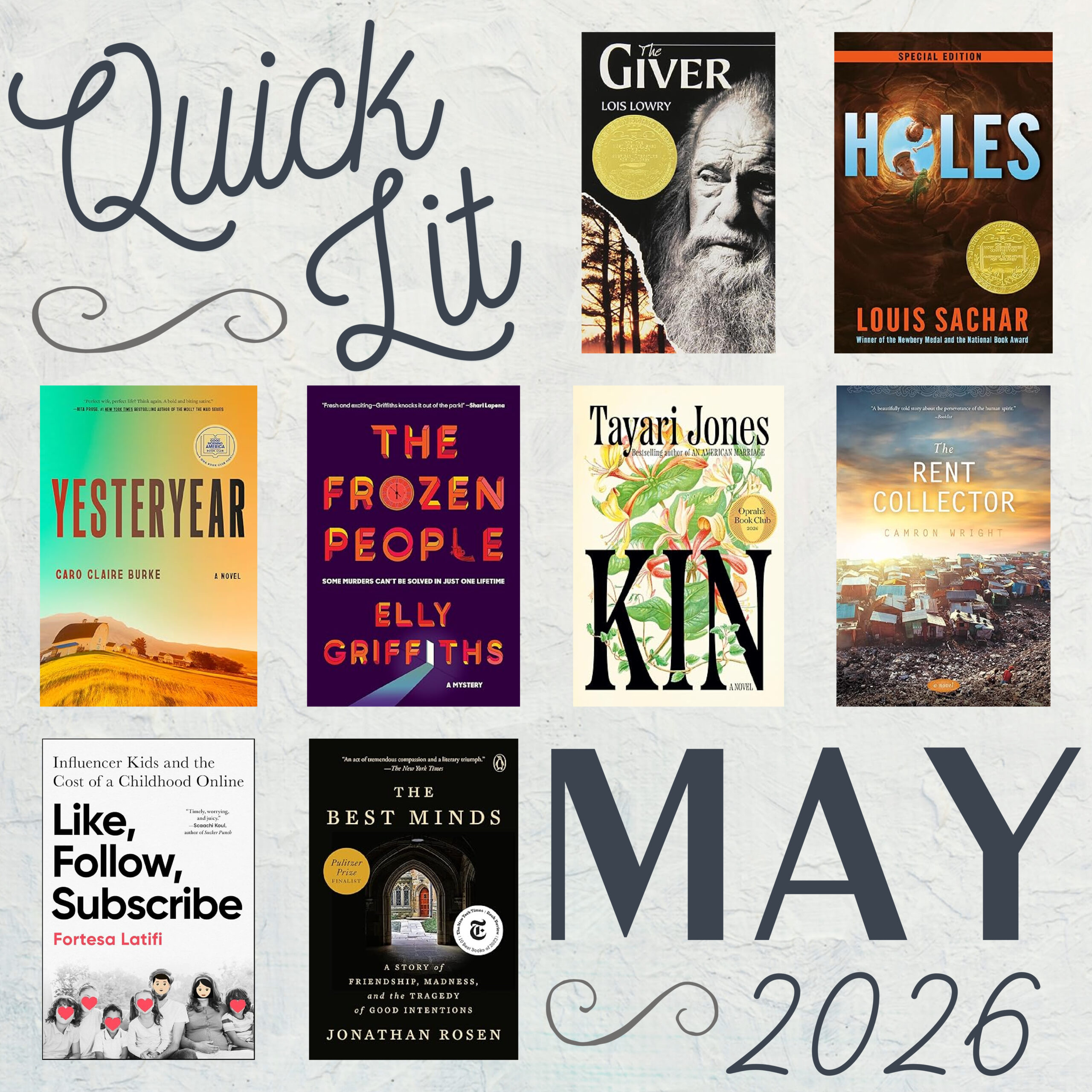
MIDDLE GRADE (READ-ALOUDS)
The Giver, by Lois Lowry—The Giver has a permanent place on my All Times Favorite list for the way that it transformed my understanding of the world, government, personal freedom, and community when I first read it as a young teen. It is the story of Jonas, a 12-year-old boy living in a seemingly idyllic community that has eliminated pain and discomfort through “sameness” and complete government control. When Jonas receives his career assignment as the next Receiver of Memory, he begins having one-on-one sessions with the community Giver who holds all memory of the past and transfers those memories onto Jonas. Under the Giver’s guidance, Jonas is introduced to a world nobody in his community has ever known: one of pain, heartache, and destruction but also beauty, uniqueness, family, and love. With this newly acquired awareness of how things might be different, how can Jonas continue living as if nothing has changed?
I have been eager to read this with my kids and knew that Charleston was at JUST the age when he would appreciate its messages and themes of choice, conformity, community structures, the sacrifices we can and should make for the sake of the greater good, and even questions around the true meaning of GOOD. These messages absolutely resonated with Charleston who caught on right away, commenting after a few chapters: “this is a book about how the only way for things to be perfect is if we have no choices or freedom. But that actually isn’t perfect at all.” He nailed it! He also noted the contrast between the book’s community leaders, who play God by removing all choice, and our own God, who has given us free will—even when that free will leads to pain. Love that he made those associations!
All three kids were engrossed by the story and we raced through the book to find out what would happen to Jonas, Giver, and the rest of the community. By the end we had all cried quite a bit. (Even though I’ve read this book multiple times, I had forgotten what an emotional read this is and could barely get through reading some parts.) While the kids all enjoyed it, Charleston hated the ending, letting me know that he prefers books with tidy, happy conclusions—which [spoiler] we do not get here. A few of the ideas were over the twins’ heads, but they still liked the story and were able to participate in some of our discussions of what it all meant. I am so glad that we got to experience this book together, and it will definitely be informing future conversations about our world and our place in it.
My Rating: 5 Stars // Charleston’s Rating: 4.8 Stars (though he was so distraught over the ending that he had a hard time discussing the book for a while—which is why we broke with our tradition of writing a read-aloud review together) // Sullivan’s Rating: 4 Stars // Kalinda’s Rating: 4 Stars // Book Format: Print
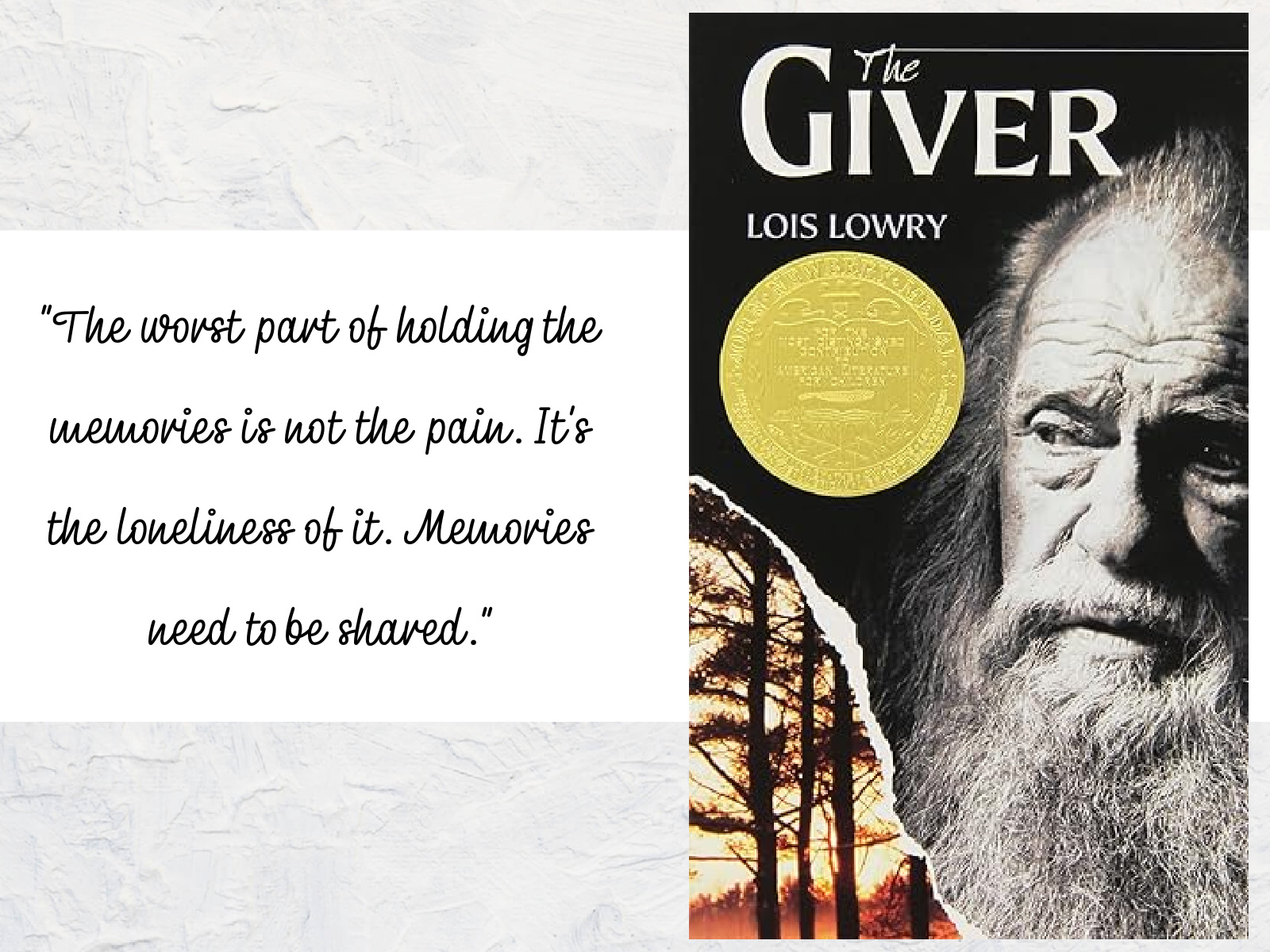
Holes, by Louis Sachar— [Review written by Charleston following our family read-aloud.]
Dig. Dig. Dig. Stanley Yelnats has been sent to Camp Green Lake because of the bad luck of his no-good-dirty-rotten-pig-stealing great-great-grandfather: Stanley once again was in the wrong spot at the wrong time—a time when a pair of sneakers was falling from the sky. Now Stanley has been blamed for stealing multimillion dollar sneakers from one of the world’s greatest baseball players.
At Camp Green Lake, Stanley is forced to dig one hole per day—five feet deep, five feet in diameter, with a five-foot shovel—along the bed of what used to be the largest lake in Texas. (Now the most non-existent lake in Texas.) Stanley will make friends and enemies every step of the way as he discovers that the reason he is digging holes is not JUST for building character. In fact, it’s not for building character at all.
Holes was my (Charleston’s) favorite book of this school year. I liked the fast-paced action and intriguing mystery as Stanley tries to dig up the past and change the future for himself and his closest friends. It was also fun to read two stories in one, with the author alternating chapters between the far-past and Stanley’s present. Kali enjoyed hearing about the character of Sam selling his fresh, hot onions. Sully liked how they had to dig holes and really enjoyed Stanley as a character. Mom thought the past/present storyline was well done but wished we had more character development for the other campers at Camp Green Lake. This was a great book to end out our year.
Charleston’s Rating: 5 Stars // Kalinda’s Rating: 3.5 Stars // Sullivan’s Rating: 4.5 Stars // Mom’s Rating: 4 Stars // Book Format: Print
FICTION
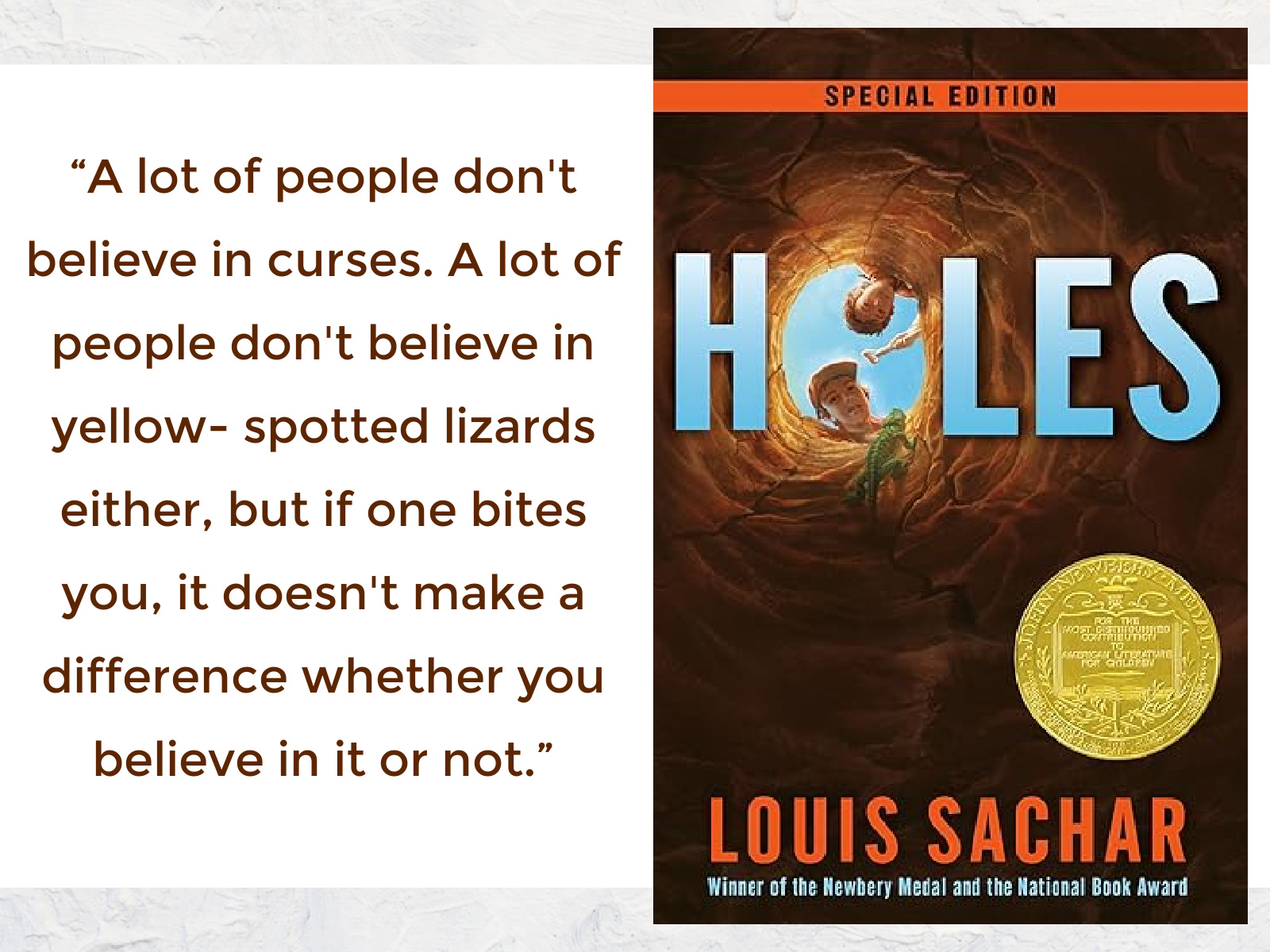
Yesteryear, by Caro Claire Burke—Natalie is living a life that dreams are made of: five (soon to be six) adorable children; a handsome (wealthy!) cowboy husband who manages their “sweet little farm;” beautiful prairie dresses and a picturesque rustic home, replete with the perfect lighting for documenting each fresh batch of sourdough and every perfectly decorated bar of homemade soap. Natalie’s life is SO perfect, in fact, that she is practically obligated to document every moment of it so that millions of followers (her fans, as well as the “angry women” who are just as desperate for her content) can salivate over every piece of it. Never mind the nannies and producers and undocumented ranchhands existing just outside the camera’s lens.
Sadly, due to a series of unfortunate circumstances, life as Natalie knows it is on the verge of collapse. . . and then, Natalie awakens one morning to find herself in the brutal reality of 1855. The home and husband are the same, but everything around her is hardened and far less camera-ready; and the children are so very different from her own. Natalie must piece together what is going on. Has she traveled through time? Or could this all be an elaborate hoax put together by her politician father-in-law to garner more page views? Our narration alternates between Natalie’s 1855 reality and her real-life past, uncovering the winding road that led an unlikable, sheltered college nobody to become a millionaire tradwife influencer and antifeminist iconoclast who is simultaneously one of the most beloved and most loathed women in America?
I’ll cut right to the chase with my thoughts here: I HATED this book. And maybe that was the point? It was immediately apparent that 1) the author actively despises her main character (conniving, hypocritical, narcissistic, judgmental, fraudulent) and her subject matter, and 2) she is inviting her readers to share her sentiments. Caro Claire Burke clearly has thoughts on the tradwife/influencer movement, and none of them are good. I found her commentary to be timely and thought-provoking, especially having just finished Like, Follow, Subscribe (reviewed below), which opened my eyes to the millions of dollars, hypocritical motives, and fraudulent activity within the influencer space. However, the themes in Yesteryear are obnoxiously on-the-nose, lacking even the slightest subtly or nuance, and I grew frustrated with the author’s conflation of tradwife cosplaying with traditional/Christian/conservative values (all of which are painted with a broad and very blackened brush).
Despite the overwrought themes, and in spite of the loathsome protagonist, I found myself swept up in this novel and eager to figure out what was going on. The Influencer Origin Story was interesting and believable and I couldn’t wait to see how it tied into Natalie’s sudden hop back in time. Unfortunately, the chapters set in the past were dull (though perhaps this was intentional?), and both storylines merged into a conclusion that—though satisfying in a way—goes totally off the rails, turning the conversation away from topics of Influencer Culture and feminism and towards something else entirely. I won’t get into the big reveal and associated themes, as that would be too much of a spoiler, but I found the “catch” to be unoriginal and also completely unhinged.
I suppose this book’s biggest flaw (though there are many) was that it just did not live up to its potential. What might have been a compelling mystery/time-travel mash-up with relevant cultural commentary and provocative themes is instead a mess of vitriol and cringy satire verging on horror. Though it was not a bit enjoyable, I have to give the author credit for writing a novel that kept me reading, with a chilling story that I won’t soon forget.
My Rating: 2 Stars // Book Format: Kindle
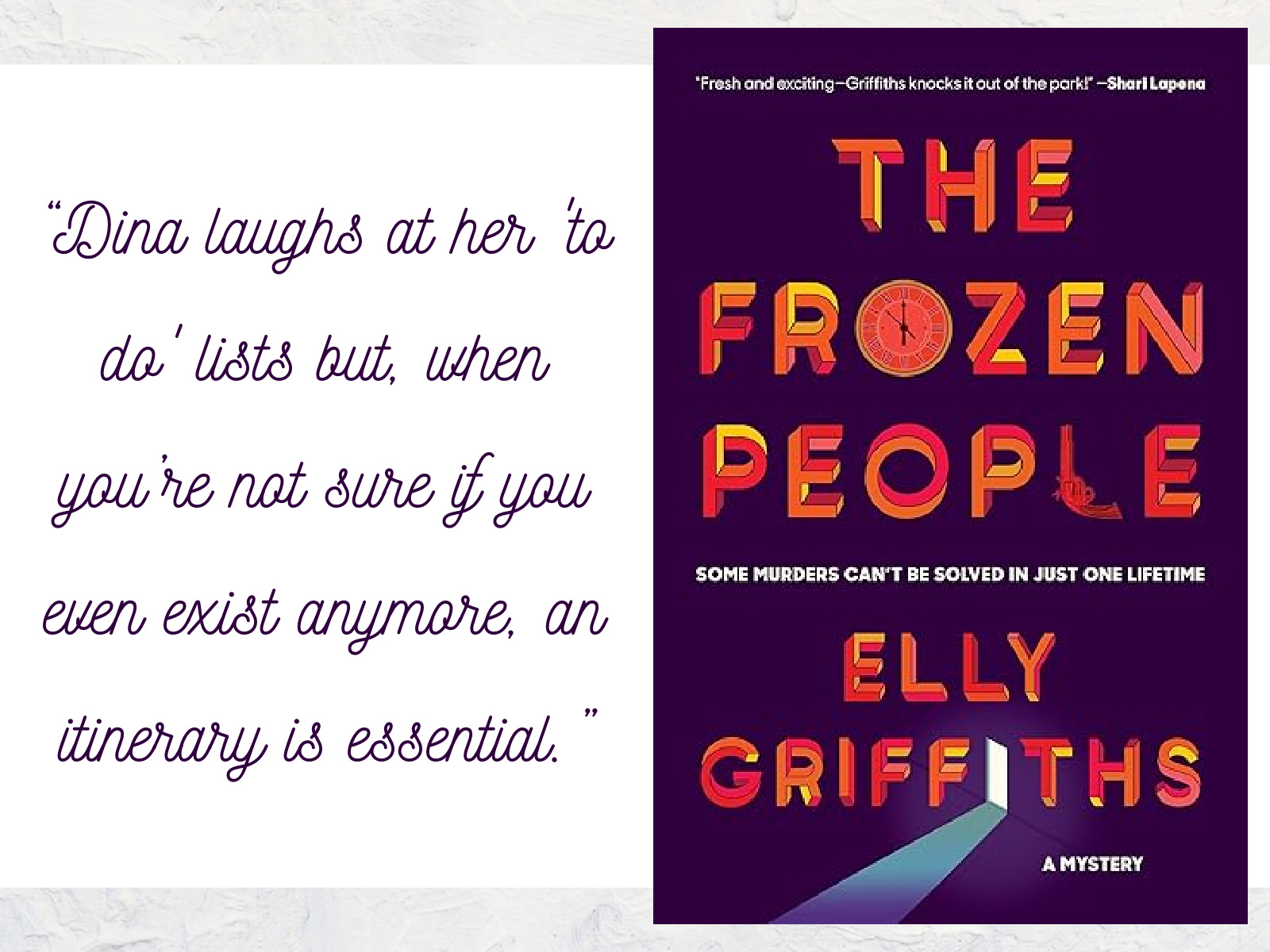
The Frozen People, by Elly Griffiths—Ali Dawson is not your ordinary police investigator, and it’s not just the flaming red hair, the colorful love life, or the feisty personality that sets her apart: Ali spends her work hours traveling through time to investigate cold cases whose evidence rests in the past. Most of her forays into history have involved brief stints to periods just decades earlier; this time, she is traveling back to 1850s London where she will be attempting to clear the name of Cain Templeton, a Victorian patron of the arts and ancestor to a sitting Tory minister, who also happens to be the employer of Ali’s son Finn.
Unfortunately something goes amiss, and Ali finds herself trapped in 1850 where murder and deception seem to abound. Meanwhile, in 2023, Ali’s son becomes entangled in a modern-day murder with apparent connections to the very past in which Ali has landed herself. We watch as Ali’s cold case team races to bring Ali back from the past so that she can help to exonerate her son.
I’m a total sucker for a time travel book, and the premise of this one is so believable that I can’t help but wonder if this type of time-traveling technology may one day be used in crime investigation! I enjoyed seeing the modern characters prepare for and experience the Victorian era, and though I felt more invested in the historical parts of the novel and wish we spent more of our story time there, I was impressed with Griffiths’ ability to weave both storylines together, leading to a climax that was a little rushed and convoluted but still quite exciting.
This is the first in a series, but the abrupt start of the book left me feeling like I was coming in mid-series; I would have liked a little more backstory and buildup as we are introduced to many characters all at once, something I found confusing. I also could have done without the repeated insertion of progressive ideology and political commentary. These elements were distractions but not dealbreakers, and I will happily read more from this series—especially since this installment ends on a huge cliffhanger. Ali is a fun protagonist and the concept is just too good to pass up!
One thing I’ll note is the uncanny similarity to Kelley Armstrong’s A Rip Through Time, which also features a contemporary detective who lands herself in a Victorian setting. I liked that book a great deal as well, but I’m glad I did not read these two novels back to back, as I almost certainly would have confused my stories and heroines.
My Rating: 4 Stars // Book Format: Kindle
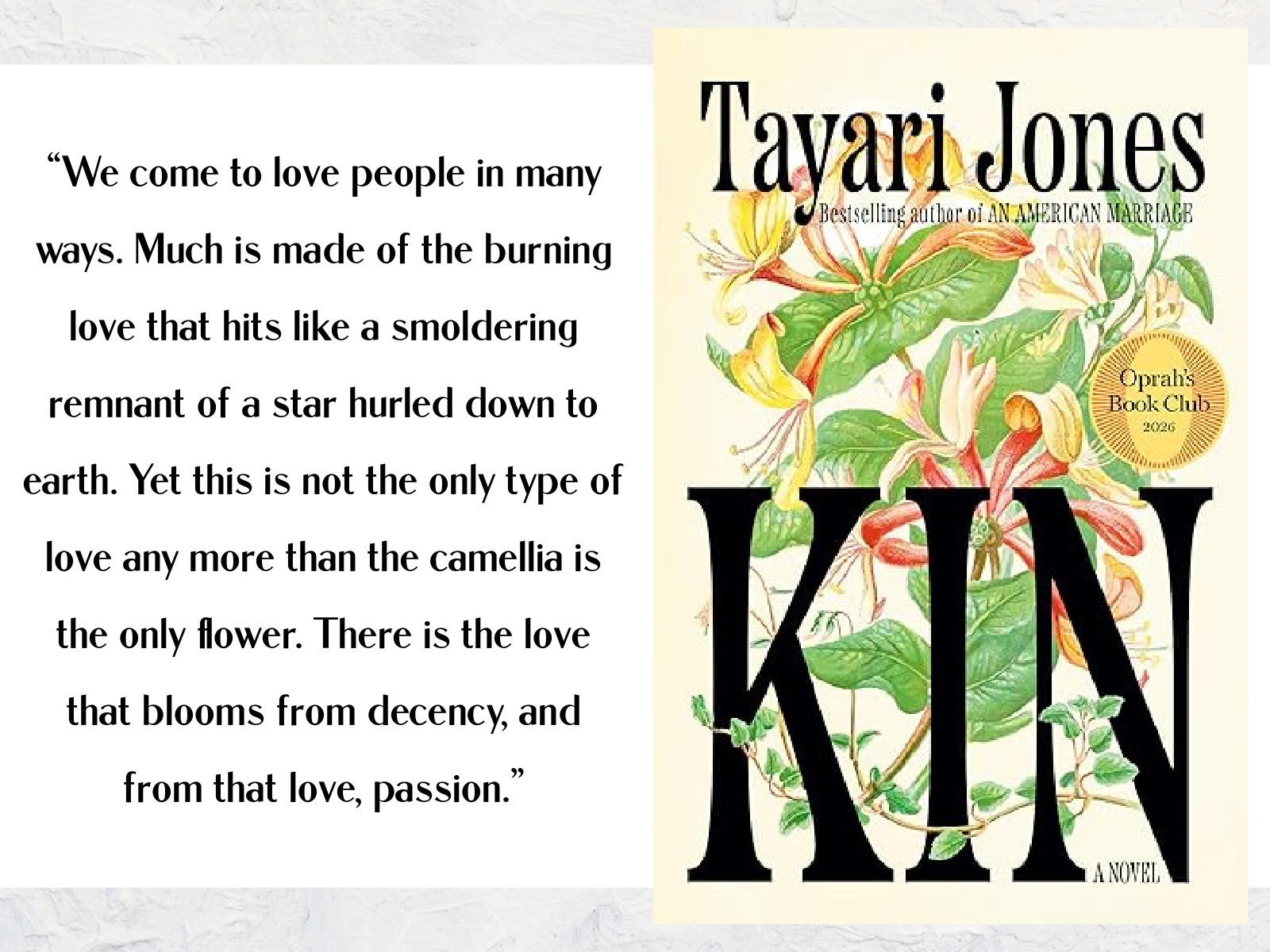
Kin, by Tayari Jones—Vernice (Niecey) and Annie are two motherless girls growing up in Honeysuckle, Louisiana, during the 1950s. The two girls are best friends and neighbors, both raised from infancy by relatives who would rather not have been saddled with more children. The girls have their motherlessness in common, but their origin stories are different: Niecey’s mother was killed by her father before turning the gun on himself, while Annie’s mother abandoned her. And while the girls share a sacred bond, they are as different as can be: Niecey is poised, conscientious, and revered for her intelligence and beauty; Annie is headstrong, outgoing, and driven by her emotions.
As their lives unfold, we see how the mother-shaped hole in each young woman becomes a compass, informing every life decision as Niecey and Annie attempt to piece together their fractured hearts. The girls separate after high school, with Niecey going on to attend Spelman College, where doors open to new worlds she never could have imagined while also leaving her with big decisions to make about the type of life she wants lead. Meanwhile, Annie runs away to Memphis, making her way through brothels and bars in search of the mother she never knew. We follow their journeys through the narration of each woman as well as their regular correspondence—a lifeline for Annie and Niecey, two broken young ladies who have much to question about life but who never doubted their cradle-friend bond and the love they share for each other.
This heartbreaking story is a poignant exploration of sisterhood, abandonment, found family, class disparity, generational trauma, feminism, and the black experience during the tail end of the Jim Crow era. That’s a lot of issues for one book (plus more that would be spoilers to mention), but here it works, held together by the unforgettable narrative voices of Niecey and Annie, two characters I came to love for their unique paths and, more significantly, their resonant storytelling. These two women are surrounded by a stellar supporting cast, including many strong (and often quirky) women but also some upstanding men—something I always appreciate seeing in books that are generally more female-focused. Snappy dialogue and an almost-oppressively vivid sense of place wrap around the story and characters to complete the package of a literary masterpiece.
This is an insightful and beautifully written novel that I believe is deserving of the great acclaim it’s receiving. However, while I loved the literary elements and always felt immersed in the reading experience while I was reading, I found the book easy to set aside, with the slower pace failing to grab my attention. I kept waiting for a dramatic twist and although we certainly encounter some surprises along the way (including the jaw-dropping ending that is artistically brilliant but emotionally devastating), it was not the page-turner I was needing at this point in my reading life. All that is to say that while this was a 4.5-star read for me right now, it might have been an easy 5 stars at other (less distracted) points in my reading life.
My Rating: 4.5 Stars (Rounded to 5 stars on Goodreads) // Book Format: Kindle
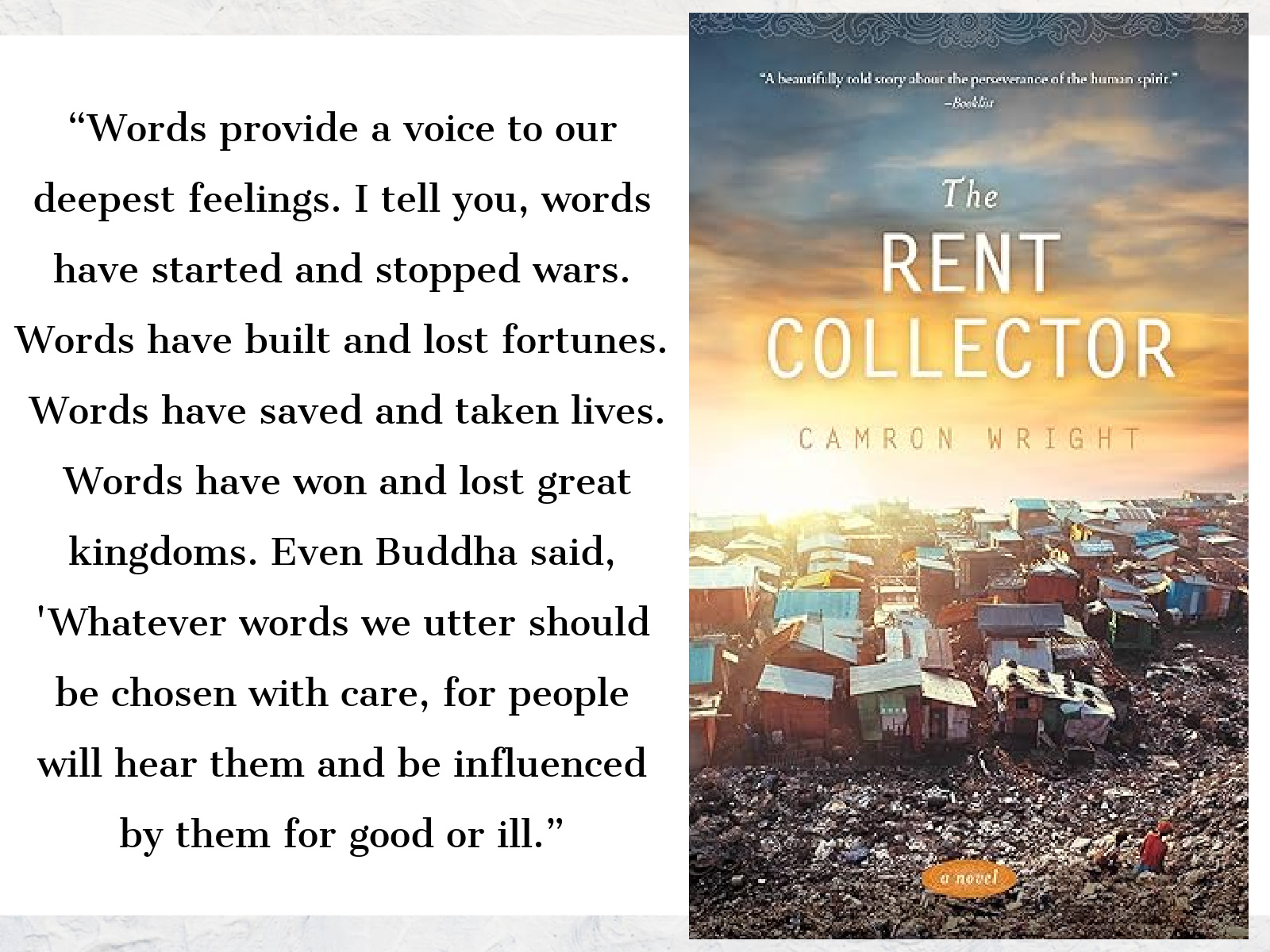
The Rent Collector, by Cameron Wright—Ki Lim and Sang Ly lead a life unfathomable to must of us: their home is in the largest waste dump in all of Cambodia, and they make their living collecting recyclables from the heaps of refuse around their home. Their son, Nisay, is chronically ill and in need of expensive medicines that are difficult to come by, forcing the couple to dip into the money they owe their curmudgeonly rent collector each month. For her part, the rent collector remains unsympathetic to the young family’s plight. But when Sang Ly discovers the older woman’s long-buried secret, it leads to a shift in the dynamic between the two women whose entire lives are about to change. Their story—which explores the transformative power of literacy, the value of connection and of literature and the bonds between the two, and the depths of a mother’s determined love—is one of heartbreak, redemption, resilience, and the glimmers of hope that shine in the darkest of places.
I read my share of “window” books that offer glimpses into lives far different from my own, but I am fairly certain this was my very first foray into fiction set in a dump. I found this setting somewhat shocking but was impressed with the author’s ability to tap into the humanity and universal emotions and experiences of characters whose lifestyle is nearly incompressible to me. Their story is inspiring and genuinely unforgettable.
My one critique is with the book’s narrative voice. The story is told from the first-person perspective of Sang Ly, and her lighthearted, westernized narration felt inauthentic to the story’s Cambodian setting and weightier themes. The uplifting messages also seemed misaligned with the devastating setting and sub-storylines. Still, a distinctive and worthwhile read. I’m grateful to my parents for recommending this one.
My Rating: 4 Stars // Book Format: Audiobook (followed along on Kindle; if you choose to listen to the audiobook, see if you can get your hands on the physical book or e-book; the photographic scrapbook included in the book’s Afterword adds a lot to the story, bringing to life a setting that was difficult for me to visualize on my own.)
NONFICTION
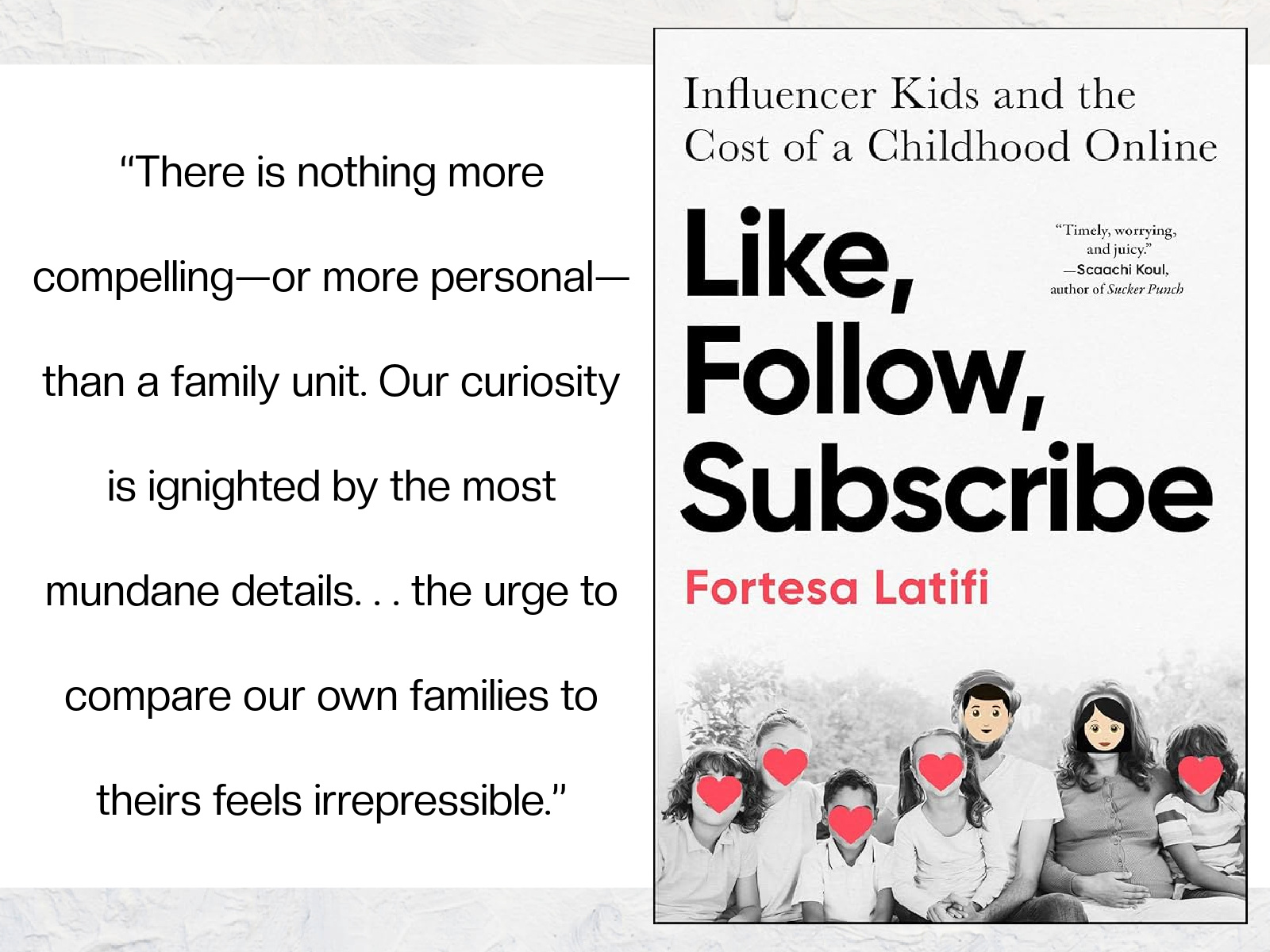
Like, Follow, Subscribe: Influencer Kids and the Cost of a Childhood Online, by Fortesa Latifi—With the rapidly rising proliferation of Influencer Culture, it seems that every facet of life has the potential to be commodified. Sadly, this reckless commodification even extends to children. In Like, Follow, Subscribe, journalist Fortesa Latifi examines the phenomenon of parents who mine their children’s every moment for monetizable content, exposing some of the darkest aspects of Mommy/Family influencers—from the lack of regulation and the million-dollar salaries, to the parents who will do almost ANYTHING for the sake of views.
Through interviews with psychologists, legal experts, former family vloggers, and many influencers who have chosen to remain in the space, Latifi sheds light on the motivations and practices of these influencers; the ways that algorithms and snark sites factor into the equation; the types of moms who are initially drawn to creating this type of content; the challenges surrounding potential legislation and oversight; and—ultimately—all that can be gained (and lost) from allowing children to go through life with a perpetual audience. Latifi raises important questions about both the personal and cultural implications of the Child Influencer phenomenon, and as a new mom herself, she shares her own complicity in consuming this sort of content, transparently acknowledging the ways that her research is informing her personal parenting decisions moving forward.
While I share huge portions of my own life (including my children) online, I do not consider myself an influencer and do not consume this sort of video content, so a lot of this book was baffling and terrifying to me. (For instance, I had not realized quite how much money was involved in this industry, nor would I have guessed that “kids getting sick or hurt” was such a driving factor, or that the Mormon church literally counsels and pays influencers.) The book’s narrowed scope that looks JUST at parent influencers leads to quite a bit of repetition, making the reading tedious at times, but ultimately I found the focused subject matter helpful and a good launching point for broader and even more controversial conversations surrounding social media, parasocial relationships, technology, consumerism, and more.
I appreciated that Latifi neither valorizes nor vilifies the influencers whose content she examines: she recognizes the valid and entirely altruistic reasons that originally led many young moms into the influencer space, and she acknowledges the potential upsides for both the influencer parents and their children. However, she also refuses to hold back in exposing the inherent problems within the field. Despite the sensationalized and exploitive nature of many of the influencers whose lives she is exploring, Latifi’s commentary is nuanced and fact-based. Latifi and I have very different worldviews and ideas on parenting, politics, and culture; still, I found her to be a reliable guide in this sticky topic. And while I wish she offered more clear-cut solutions, I believe that her thoughtful exposure of this phenomenon and its many ethical concerns is a strong first step towards protecting children and ending cycles of exploitation.
If Latifi’s ultimate goal was to leave her audience feeling fairly icky about all things internet, she succeeded. This one left me with a lot to think about regarding the ways that I personally show up online, both as a producer and consumer of content. Pair with Yesteryear or Olivia Muenter’s Such a Bad Influence for a robust book flight or book club discussion!
My Rating: 3.5 Stars (Rounded to 4 Stars on Goodreads) // Book Format: Audiobook
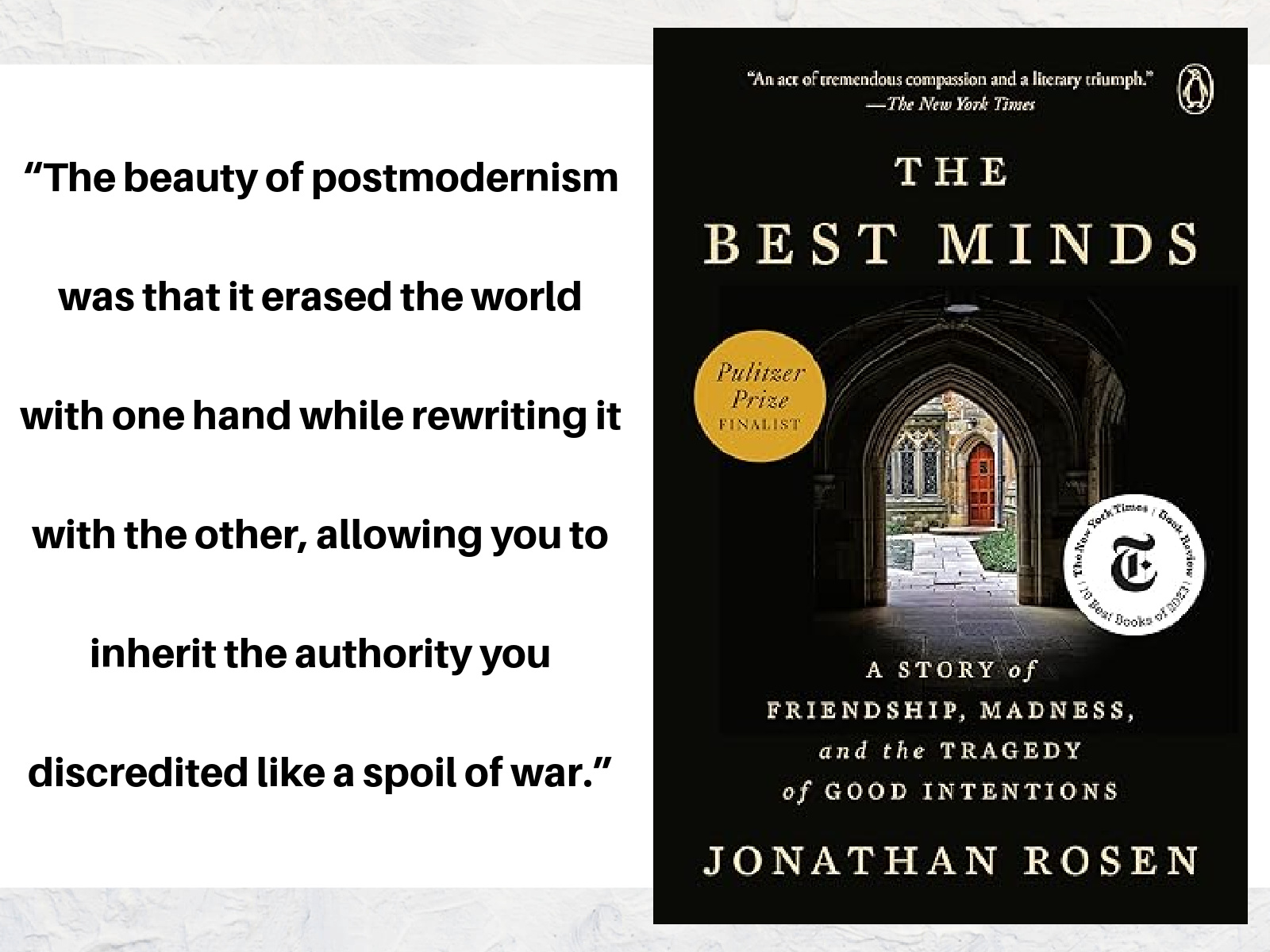
The Best Minds: A Story of Friendship, Madness, and the Tragedy of Good Intentions, by Jonathan Rosen—What happens when someone we know and love does the unthinkable? And—even more complicated—what if that action was driven by mental illness? These are the questions that Jonathan Rosen wrestles with as he tells the story of his childhood best friend, Michael Lauder.
From the time the Rosens moved to New Rochelle in 1973, Jonathan and Michael were inseparable. Their friendship and (mostly) good-spirited academic rivalry continued through their teens, when they both were accepted to Yale. Michael succeeded in college, graduating suma cum laude and gaining an acceptance into Yale Law School. And then, one day, Jonathan received news that his friend had suffered a serious psychotic break.
Michael was diagnosed with paranoid schizophrenia, but despite the intrusions caused by his illness, he was able to continue his trajectory towards success, graduating from Yale Law and ultimately having his story told in The New York Times, where he was heralded as a role model genius. His memoir was even auctioned, with Ron Howard in talks to turn his story into a film. That all came to a screeching halt when Michael, in the grips of a paranoid fantasy, murdered his girlfriend.
This story is very well written, both at the sentence level and also for the ways that Rosen intertwine’s Michael’s story with his own, bringing an overwhelming sense of humanity and compassion to the complex issue of mental illness. The resulting tome reads part friendship/boyhood story and part true crime, but with zero salaciousness and wide swaths of reflection, self-awareness, and empathy. Rosen does an excellent job of portraying Michael as a whole person beyond his diagnosis, while also raising important and challenging questions surrounding schizophrenia and its impact on individuals and a society.
Rosen has clearly done his homework, and this is well-researched, offering us insights into the shifting understanding of schizophrenia. Unfortunately there are still many unknowns surrounding this disease, and even fewer answers as to how it should be addressed in ways that honor the dignity of those with mental illness while also protecting the rest of society. I wish we had better solutions, but stories like this one go a long way towards raising awareness that will hopefully lead to better future outcomes.
My Rating: 4 Stars // Book Format: Audiobook
What have you been reading lately? Any titles to recommend? I’d love to hear about them!
Among my reads this month, were 3 that were kind of mind-blowing for me. I could write a paragraph on each one! First, The Poisonwood Bible by Kingsolver, which I’ve been avoiding for years, even though I love a lot of her other books (I haven’t read them all)—I think it should have won the Pulitzer!, then Audition by Katie Kitamura, which leaves people completely mystified, but has great writing; and then John Boyne’s The Echo Chamber, which is a parody of all the things you mentioned in the book about Influencers—it’s a family that has to deal with being Woke, Cancel Culture, the insidiousness of social media and doing ANYTHING to get followers, as well as online dating and evils that can arise from that—The father is a talk show host in England (he calls himself a “national treasure”) who has to watch what he says, the mother writes books, but doesn’t actually—she has a ghost do all the work; and their 3 kids are mixed up, lazy, privileged, and somewhat criminal, and caught in the social media web. It all implodes (and explodes!) Throw in adultery, and these 5 are mostly unlikeable, and it’s a long book—I almost DNF’d it several times, but I persevered, and ended up kind of feeling better about the family–(they learned some hard lessons). But it was FUNNY and SO TRUE! I highlighted the ridiculously true parts like mad.
I read the Poisonwood Bible for a class in college and still think about it a lot! I’ve been so intrigued by Audition, it is certainly a polarizing book. I had not heard about The Echo Chamber, it sounds very interesting!